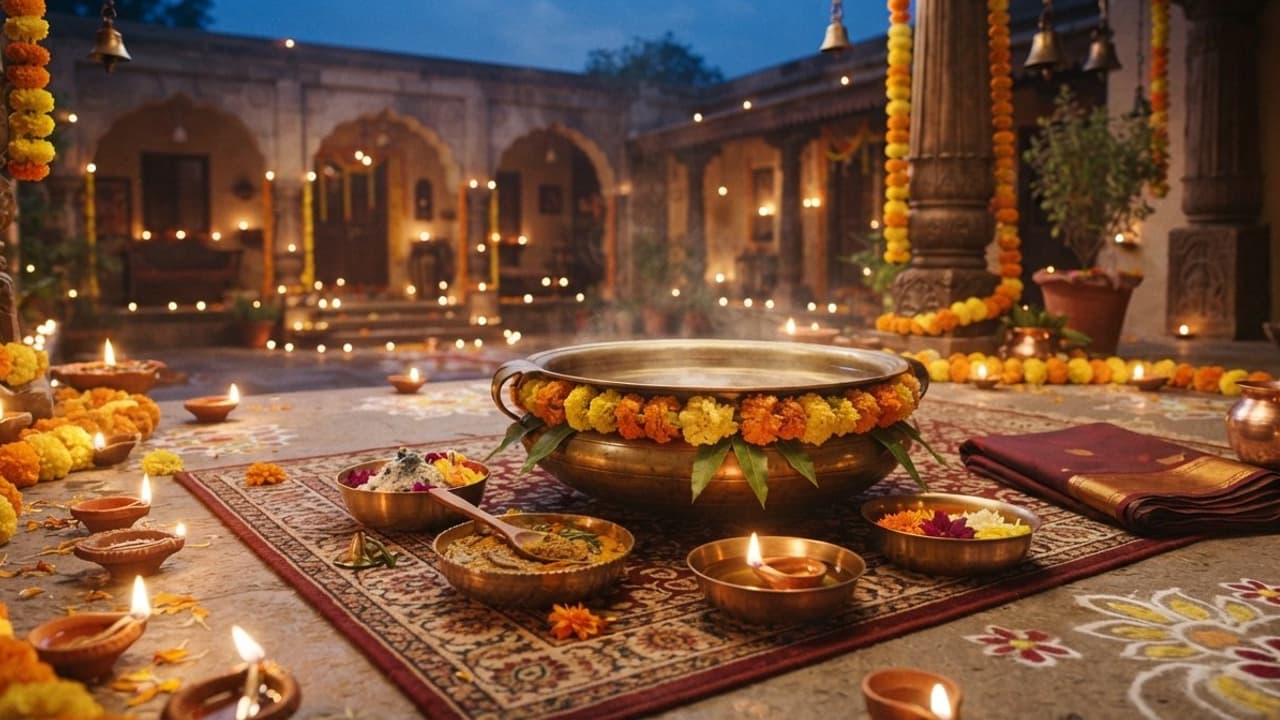
Abhyanga Snan 2026 falls on Sunday, November 8, with a 57-minute pre-dawn Shubh Muhurat from 5:41 AM to 6:38 AM. Know the Narak Chaturdashi timing, significance, and step-by-step oil bath rituals.
Sunday, November 8, 2026 — millions across India will wake before dawn for Abhyanga Snan. Ritual oil baths mark Narak Chaturdashi during the annual Diwali festival. Devotees seek spiritual purification. Known also as Roop Chaudas or Roop Snan, the custom coincides directly with Choti Diwali. Vedic panchang calculations bring a rare alignment in 2026. Morning ritual baths and evening Lakshmi Puja both land on Sunday, November 8. Worshippers place immense spiritual weight on this rare pairing.
Date and Calendar Alignment
Primary observances for Abhyanga Snan fall on Sunday, November 8, 2026. Early morning bath rites set the tone. Worshippers celebrate Narak Chaturdashi right in the middle of the broader multi-day Diwali schedule.
Vedic calendar calculations place both the morning holy bath and the evening Lakshmi Puja on the exact same date in 2026. Devotees consider Sunday, November 8, an exceptionally holy day. Families will perform two major religious ceremonies within hours of each other.
Shubh Muhurat and Tithi Timings
57 minutes — that is the exact pre-dawn window devotees get for the ritual bath in New Delhi and northern regions. Between 5:41 AM and 6:38 AM, sacred darkness offers the most auspicious timing before sunrise. Ancient texts call this period Brahmamuhurta. Devotees must act fast.
10:47 AM on Saturday, November 7, 2026 marks the official start of Chaturdashi Tithi. The tithi runs until Sunday morning. Scholars recommend taking the ritual bath on November 8 before 11:27 AM. The lunar phase prevails at sunrise.
Significance of the Sacred Bath
Legend traces the practice back to Lord Krishna and his triumph over the demon ruler Narakasura. After freeing 16,000 captives, the deity cleansed his body with aromatic oils before dawn. Evil fell. Purity returned. The holy oil bath continues to symbolise that ultimate victory of light over darkness.
Sesame oil and herbal pastes do more than clean skin — believers say they drive away negative energy. Popular custom names the day Roop Chaudas or Roop Snan for its emphasis on physical radiance and spiritual renewal. Devotees also honour Lord Yamraj after bathing. They light clay lamps called Yama Deepam for the deity of justice and death, praying for long life.
Devotees across India follow centuries-old steps to complete the dawn ritual.
Step-by-Step Rituals to Follow
Before dawn breaks, preparation begins. Devotees wake early during pre-dawn hours. They massage warm, un-toasted sesame oil thoroughly across the head and body. This deep oil massage relaxes muscles and readies skin for cleansing.
Turmeric, gram flour, and herbal extracts form ubtan — the natural paste applied right after the oil. Devotees scrub the paste across their body. Warm water washes away the paste during the ritual bath.
Dressing in fresh attire completes the morning transformation. Worshippers light clay lamps for Lord Krishna and Lord Yamraj. These prayers seek health, prosperity, and protection from misfortune — carrying forward a cherished Diwali tradition.