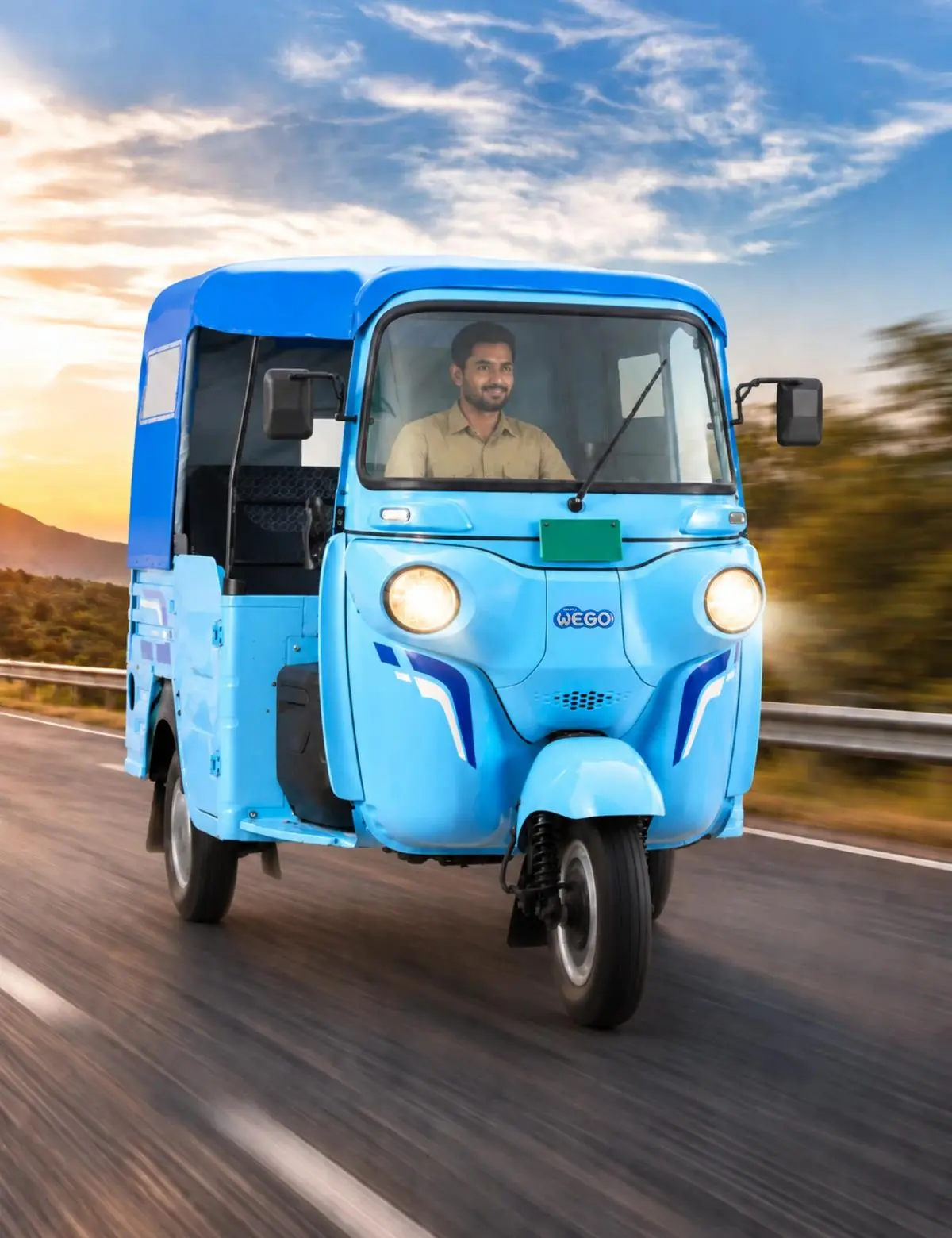
India’s electric three-wheeler registrations surged 85.4 per cent to 3,44,157 units during January–October 2026 from 1,85,627 a year earlier, but the expansion reshuffled competitive positions. Bajaj Auto overtook Mahindra Last Mile Mobility, and TVS Motor grew substantially faster than the market, while several smaller manufacturers and established players struggled to keep pace with rising demand.
Bajaj’s registrations increased 85.2 per cent to 1,17,234 units from 63,306 a year earlier, broadly matching industry growth, according to Vahan data. Mahindra grew at a slower 58.3 per cent to 1,11,146 units from 70,200, giving Bajaj a lead of 6,088 vehicles against a deficit of 6,894 in the corresponding period last year.
TVS emerged as another significant challenger, with registrations jumping 145.7 per cent to 38,664 units from 15,739.
The divergence points to a widening competitive divide in India’s electric passenger and cargo three-wheeler market. While Bajaj has reversed its position against Mahindra, whose growth trails the industry, TVS is gaining market share rapidly.
Leadership reversal
During H1 FY27 (April–September 2026), overall electric three-wheeler registrations nearly doubled to 223,964 units from 1,13,605 a year earlier, an increase of 97.1 per cent.
Bajaj registered 75,886 vehicles, up 91.6 per cent, against Mahindra’s 73,666 units, up 73.4 per cent. TVS more than doubled its registrations to 25,330 units.
October reinforced the shift. Overall registrations increased 86 per cent to 48,755 units. Bajaj led with 15,188 vehicles, up 86.4 per cent, followed by Mahindra at 14,443, up 32.7 per cent. TVS registered 5,067 units, growing 69.7 per cent.
Omega Seiki rides demand.
Omega Seiki Mobility’s October registrations surged 128.4 per cent to 1,094 vehicles from 479 a year earlier. Its January–October registrations increased 50 per cent to 8,292 units from 5,526, although growth remained below the wider market.
Uday Narang, Chairman and Founder of Omega Seiki Mobility, said the increase reflected growing market readiness for electric mobility amid global uncertainty surrounding petrol and diesel prices.
He said the transition could work to India’s advantage by reducing dependence on imported fossil fuels, conserving foreign exchange and helping commercial operators manage running costs.
Euler looks to consolidate in e-LCVs.
Euler Motors’ electric three-wheeler registrations increased 24.8 per cent to 4,193 units during January–October 2026 from 3,361 a year earlier, trailing the overall market’s 85.4 per cent growth. Its H1 FY27 volumes rose 37.7 per cent to 2,734 units, although October registrations declined 33.2 per cent to 251 units from 376 a year earlier.
Saurav Kumar, Founder and CEO of Euler Motors, told businessline that the company is looking to consolidate its position in electric light commercial vehicles (e-LCVs), where it is witnessing a strong uptick in demand, while continuing to focus on electric passenger and cargo three-wheelers.
However, e-LCV registration data was unavailable at the time of filing, limiting an assessment of its wider electric commercial vehicle performance.
Smaller players struggle to keep pace
Even as the market expanded, several smaller manufacturers and established players struggled to keep pace with the overall uptick in demand.
TI Clean Mobility’s January–October registrations remained virtually unchanged at 5,426 units against 5,432 a year earlier, while Atul Greentech recorded a 66.5 per cent decline to 477 units from 1,423. Kinetic Green’s registrations plunged 84.6 per cent to 95 units from 615.
The divergence highlights a widening competitive divide, with market leaders and fast-growing challengers benefiting from rising electric mobility adoption while some smaller entrants and legacy players have yet to translate growing demand into higher registrations.