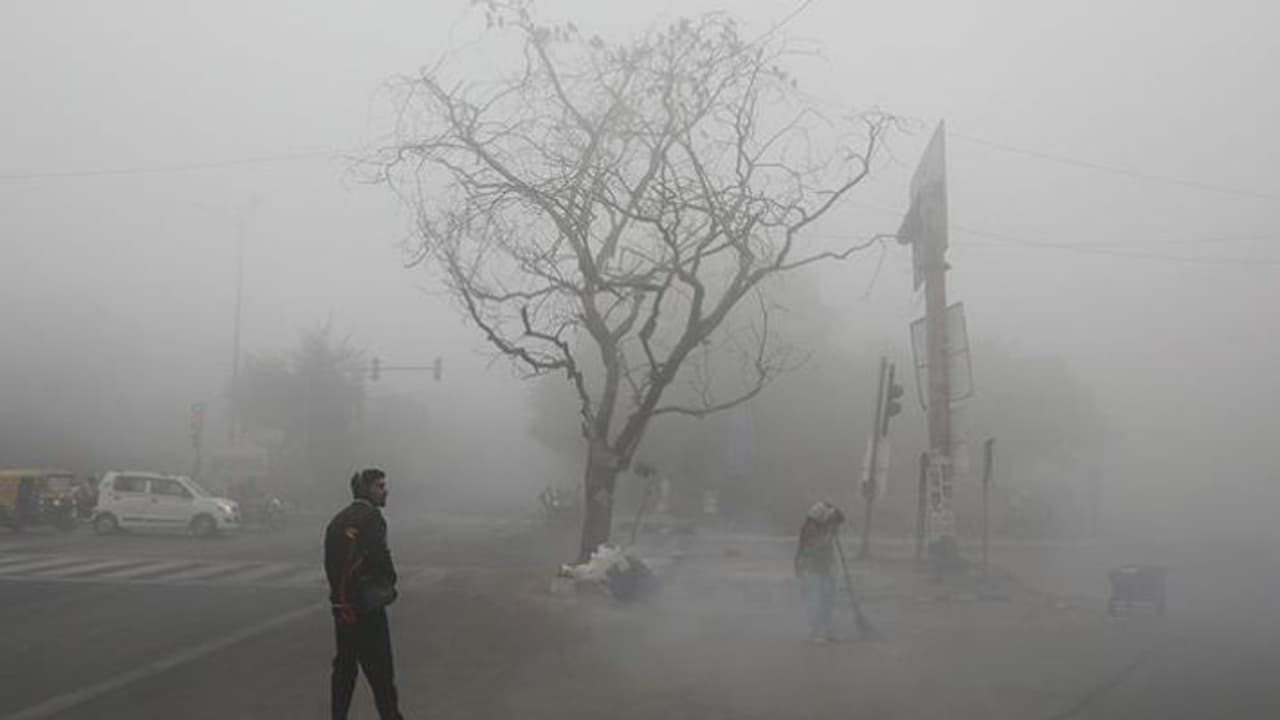
Delhi Weather LATEST Update: Delhi’s air quality has deteriorated sharply ahead of Diwali, prompting authorities to enforce GRAP Stage II across the NCR. With pollution levels rising, residents face stricter curbs and growing health concerns
Delhi is witnessing a fresh deterioration in air quality as Diwali approaches, with pollution levels rising across several parts of the national capital. The worsening conditions have prompted the Commission for Air Quality Management (CAQM) to activate Stage II of the Graded Response Action Plan (GRAP) across Delhi-NCR.
The move comes amid unfavourable weather conditions, sluggish winds and increasing concerns about pollution from multiple sources. With the festival season approaching, authorities are stepping up measures to prevent air quality from deteriorating further.
Delhi AQI Enters Severe Category As Pollution Levels Rise
Delhi’s air quality witnessed a significant decline on November 3, with the overall Air Quality Index (AQI) reaching 451 at 8 am, according to reports citing Central Pollution Control Board (CPCB) data. The reading placed the national capital in the severe pollution category.
Several monitoring stations across the city also recorded alarming pollution levels. Rohini registered an AQI of 429, while Punjabi Bagh recorded 424 and Bawana reported 408. Other locations, including Patparganj, RK Puram, ITO, Chandni Chowk and Okhla Phase 2, remained in the very poor category.
The deterioration has raised concerns as Delhi prepares for Diwali celebrations on November 8. The possibility of additional emissions from firecrackers could further aggravate the existing pollution situation.
Neighbouring NCR cities have also experienced deteriorating air quality, with Noida recording very poor conditions.
GRAP Stage II Implemented Across Delhi-NCR: What Changes?
In response to the worsening pollution, the Commission for Air Quality Management invoked Stage II of the Graded Response Action Plan across the National Capital Region on November 2.
The restrictions are aimed at controlling dust pollution, reducing vehicular emissions and encouraging people to use public transport. Authorities have been instructed to strengthen enforcement and intensify pollution-control activities.
Some of the key measures under GRAP Stage II include:
– Road dust management: Municipal authorities will increase mechanical and vacuum-based road sweeping, along with water sprinkling and the use of dust suppressants.
– Higher parking charges: Parking fees may be increased to discourage people from using private vehicles.
– Restrictions on solid fuels: The use of coal and firewood in hotels, restaurants and open eateries, including for operating tandoors, will be restricted.
– Diesel generator regulations: Authorities will enforce stricter measures governing the use of diesel generator sets.
– Construction site inspections: Monitoring of construction and demolition sites will be intensified to ensure compliance with pollution-control guidelines.
– Public transport: Authorities will encourage commuters to shift towards public transportation to reduce traffic-related emissions.
The CAQM has also asked governments and municipal bodies across Delhi-NCR to consider staggered working hours for public offices to manage traffic congestion and reduce pollution.
Why Is Delhi’s Air Quality Deteriorating Ahead Of Diwali?
Several environmental factors are contributing to the worsening pollution situation in Delhi. Unfavourable meteorological conditions, particularly low wind speeds, are making it difficult for pollutants to disperse from the atmosphere.
As temperatures begin to decline, pollutants can remain trapped closer to the ground, contributing to the formation of a thick layer of smog over the city.
Stubble burning in neighbouring agricultural regions is another factor adding to the pollution burden. Smoke from farm fires, combined with vehicular emissions, construction dust and other local sources, is worsening the situation.
The timing is particularly concerning because Diwali celebrations could add another layer of pollution through firecracker emissions.
With the festival approaching, residents are likely to face continued air quality concerns. Authorities are expected to maintain stricter monitoring and enforcement of pollution-control measures to prevent conditions from deteriorating further.