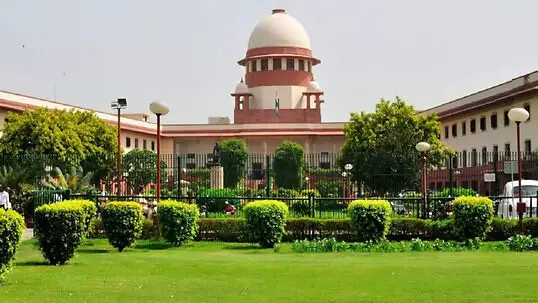
New Delhi: The Supreme Court on Tuesday expressed displeasure over 23 states and Union Territories failing to provide information sought by the Centre in a case related to discrimination inside prisons.
Calling the delay “very sad”, the court gave the states and UTs one last opportunity to respond.
In a landmark verdict delivered in October 2024, the Supreme Court had struck down jail manual rules in 10 states that allowed caste-based discrimination. These included the division of manual labour, segregation of barracks and discrimination against prisoners from de-notified tribes and those labelled habitual offenders. The court had held such practices to be unconstitutional.
A bench of Justices J B Pardiwala and Manmohan was hearing a suo motu case titled ‘In Re: Discrimination inside prisons in India’. It noted that the Centre had filed a fresh status report detailing the progress made in the matter.
The report also raised concerns over police regulations similar to the Madhya Pradesh Police Regulations, 1937, and the formation of district-level boards of visitors under the Model Prison Manual, 2016.
The bench said the report had been filed in compliance with its directions issued on July 30 and September 10 this year.
In its July 30 order, the Supreme Court had directed all states and UTs to set up district-wise boards of visitors within four weeks. These boards were to be headed by the principal district judge of the respective district.
During Tuesday’s hearing, the bench noted that the Union Home Ministry had written to the additional chief secretaries, principal secretaries (home), home secretaries and directors general of police (DGPs) or heads of police in all states and UTs.
“Unfortunately, 23 states/ UTs are yet to reply to the information called for by the home department of the Union of India,” the bench said.
The court also noted that senior advocate S Muralidhar, who is assisting it as an amicus curiae, had pointed out that states and UTs were required to submit affidavits or reports detailing the steps taken to set up the district-wise boards of visitors.
“It is very sad that the states highlighted in the report are not responding to the home ministry of the Union,” the bench said.
The Supreme Court gave the states and UTs one final opportunity to respond to the Centre’s queries immediately. This would allow the government to submit a consolidated report on the steps taken so far to comply with the court’s directions.
The bench warned that if the states failed to respond by the next hearing, their chief secretaries or principal secretaries could be directed to appear personally before the court.
“We make it clear today that by the next date of hearing, if the states do not respond, we shall be compelled to direct the chief secretaries/ principal secretaries of the states/ UTs to personally remain present before this court,” the bench said.