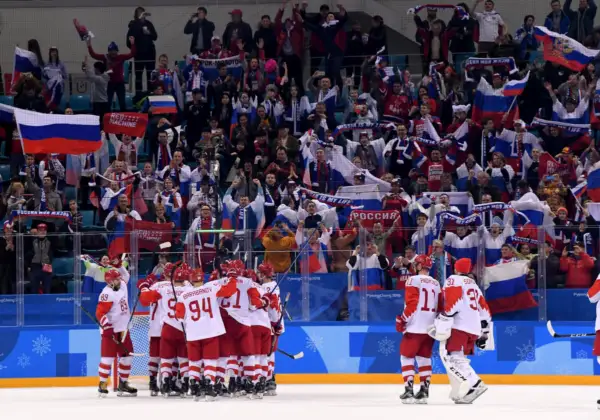
Russia’s status as a pariah state within ice hockey may legally be over but the battle over its place in the sport shows no signs of abating.
Last week, international sport’s highest court, the Court of Arbitration for Sport (Cas), overruled the International Ice Hockey Federation (IIHF) in determining that Russia must be allowed to compete in its events over the 2026-27 season.
The judgement came after an appeal from the Russian Ice Hockey Federation, which Cas upheld, arguing the IIHF’s safety and security concerns over its participation “were not supported by sufficient evidence”.
Russian teams are now free to enter all major ice hockey tournaments; the first is the World Junior Championship in Canada, which begins on 26 December, with the most notable – and most obvious flashpoint – the men’s World Championships in Germany next May. Ukraine has qualified for the 16-nation tournament for the first time in 20 years and its ice hockey federation made a pointed response to Cas’ dismissal of the IIHF’s security concerns: “The threats that were the reason for suspending Russian teams in 2022 have not disappeared. On the contrary, they have only intensified.”
Like most sporting bodies, the IIHF had banned Russia since the invasion of Ukraine four and a half years ago, but that hard stance across the sporting world has been slowly chipped away. The most seismic indication that the tide was turning came when the International Olympic Committee (IOC) ended its ban on the Russian Olympic Committee this July, paving the way for pressure on individual sports to allow its teams back.
Perhaps most significantly, Cas also ruled there was no need for “alternative measures, such as a neutrality regime” within IIHF events. Russian athletes have competed as ‘neutrals’ in several sports and the 2024 and 2026 Summer and Winter Olympics, although they remained absent from the ice hockey, but this ruling means the Russian flag will fly again and its teams will compete in their usual colours.
The IIHF was swift to state its “disappointment” in the ruling and to reiterate its existing concerns, as well as to express practical worries about the logistics of fitting Russia into tournaments which have been long in the planning – most obviously the World Junior Championship just weeks away. The Ukrainian federation condemned it too, saying: “We believe that the safety of participants and the integrity of international sport cannot be considered separately from the realities of the war that Russia continues to wage against Ukraine.”
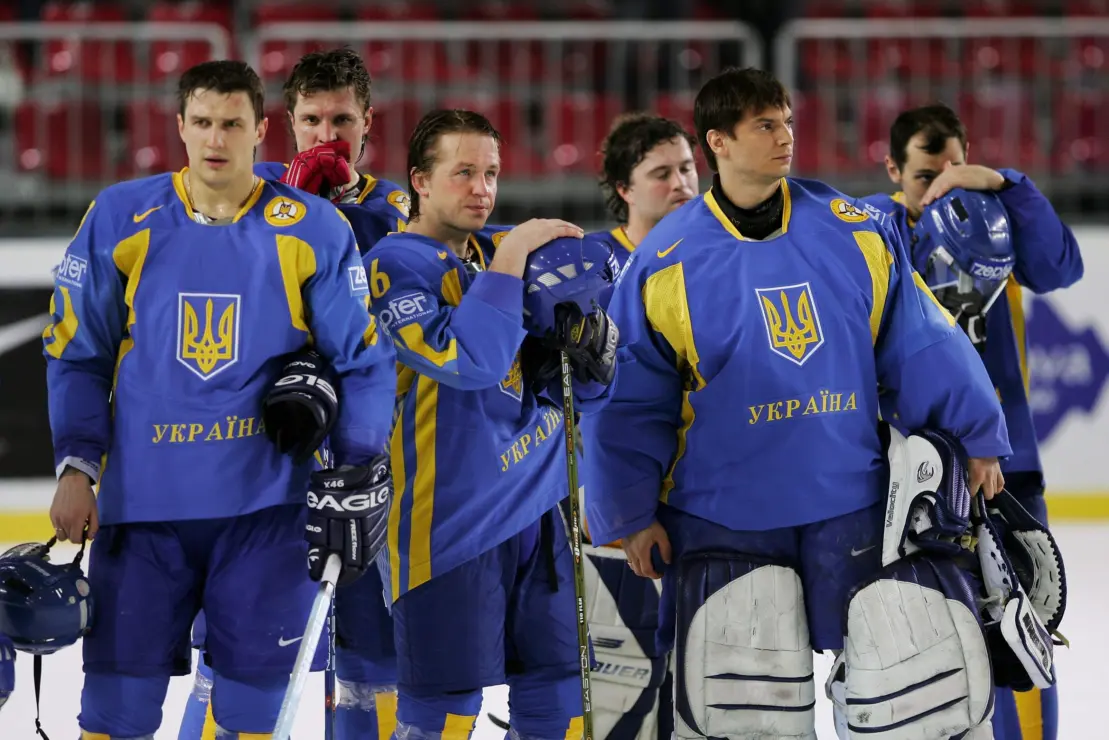
But the depth of disappointment and outrage at Russia’s return is not confined to Ukraine. The IIHF, itself unhappy about the decision, now faces a rebellion from several countries. The reaction has been delivered in no uncertain terms, with a meeting of the IIHF Executive Board taking place this week where the Russia issue will be hashed out.
The Norwegian Ice Hockey Association told the IIHF on Monday that it would not participate in the 2027 World Championship due to Russia’s participation. Latvian law forbids its sports teams from competing against Russia; that already eliminates two of the 16 nations in the event with Ukraine and defending champions Finland likely to boycott too. Heikki Hietanen, president of the Finnish Ice Hockey Association, called the Cas ruling “incomprehensible” and said: “We are currently gathering as many countries as possible together to tell the IIHF that none of us will play against Russia in this situation.
“This weighs much more in the balance than just announcing it on our part. Our policy is that we will not play against Russia as long as the war of aggression against Ukraine continues.”
Frank Lutz, chairman of the German Ice Hockey Federation, said: “Our position is unchanged: We reject the return of Russian national teams to international ice hockey tournaments.” Swedish Ice Hockey Association chairman Anders Larsson said: “Our position is that Russia cannot participate in international championships in the current situation”. Czechia, which hosts the women’s under-18 world championship in January, said it was “very unpleasantly surprised” by the decision and that its position had not changed.
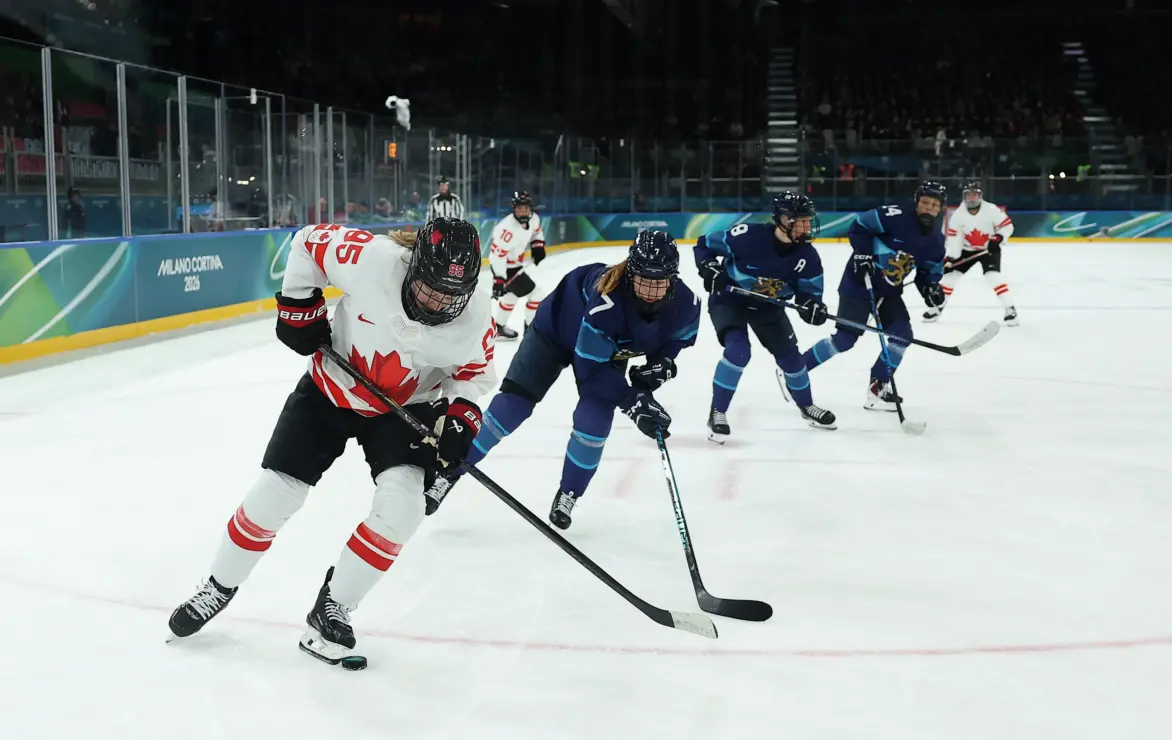
The Finnish city of Turku has threatened to pull out of hosting the World Junior Championship in 2028, with its mayor saying: “We act in accordance with our values even when it means giving up significant events and the opportunities they offer”. Lutz suggested Germany would also consider withdrawing from hosting the 2027 men’s World Championship.
And the Canadian government has made it clear that it will take extreme measures. Its secretary of state for sport, Adam van Koeverden, said it would “maintain restrictions” on Russian athletes entering Canada – in effect refusing to grant visas – “and explore further options to ensure that the Russian government is held accountable”. Germany could potentially follow a similar path, with a government spokesperson saying it “will discuss possible consequences of the ruling” with the German Ice Hockey Federation.
The geopolitical state dominates headlines but there are significant commercial implications for ice hockey too: Swedish company AJ Products, which has sponsored the men’s World Championship for 37 years, said it would no longer sponsor next May’s edition because of Russia’s involvement. “This [decision] was very easy to take,” its chief executive told Reuters.
The entire sport faces a reckoning, with the response to this Cas decision potentially setting in motion far-reaching ramifications on other sports as they continue to grapple with the question of what to do about their Russian exiles.