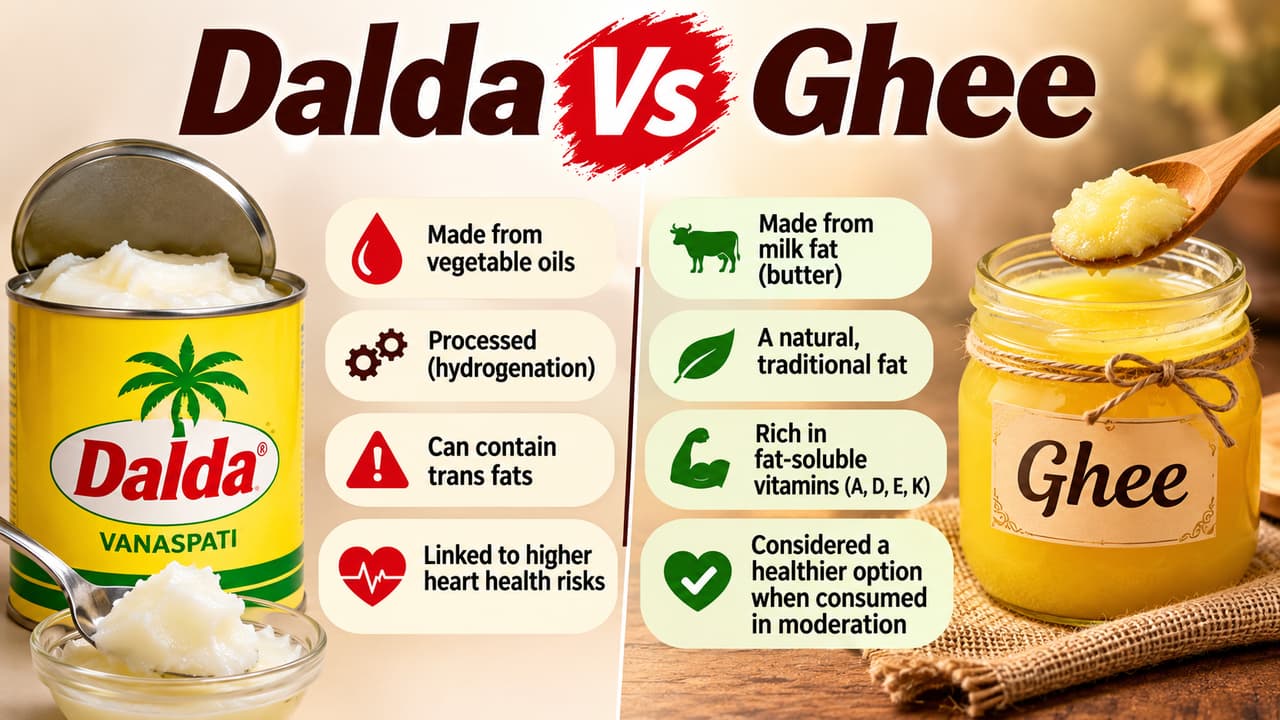
People used Dalda in almost every dish back in the day. But why do doctors tell you to avoid it now? We explain what goes into making Dalda and why it disappeared from our daily cooking.<img>Cooks used Dalda heavily in weddings, bakeries, and parotta stalls back in the day. Middle-class families bought it as a cheap alternative to pure ghee. The food smelled great and tasted rich. People used it regularly in their kitchens. But doctors soon discovered the health risks of Dalda. Families eventually stopped using it. We break down how factories make Dalda and why it harms your body.<img>Dalda looks exactly like pure ghee. But factories do not use milk to make it. They call it vegetable ghee and produce it through a chemical process. Factories take cheap vegetable oils like palm oil, soybean, and sunflower oil. They pump hydrogen gas into these oils using a metal called nickel. This process turns the liquid oil into a thick, yellow solid. It looks and smells just like real ghee. You must avoid Dalda because this making process destroys the natural goodness of the oils. It creates harmful trans fats instead.<img>Dalda brings multiple health problems to your body. The trans fats in Dalda increase bad cholesterol and decrease good cholesterol. This blocks your blood vessels and leads to heart attacks and strokes. Eating it regularly slows down your metabolism and causes obesity. Trans fats also increase insulin resistance. This leads to Type-2 diabetes. Your liver struggles to break down these cheap fats. This causes a fatty liver. Dalda digests very slowly and causes bloating and indigestion. Heating Dalda again and again creates cancer-causing chemicals. Many street vendors still use Dalda for bakery items, parottas, samosas, and sweets. You should avoid outside food and use pure ghee at home.