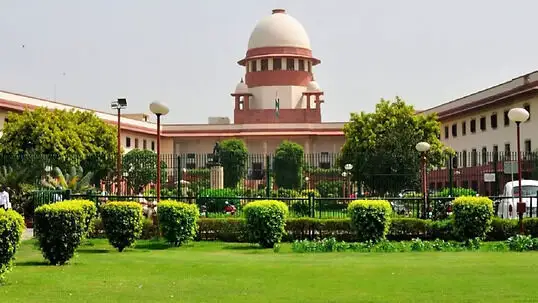
New Delhi: The Supreme Court has cleared the way for income-tax assessments of the two businessman sons of former Chief Justice of India (CJI) YK Sabharwal over share transactions linked to their purchase of a prime property on Delhi’s Sikandra Road in 2010. A bench comprising Justices JB Pardiwala and K Vinod Chandran dismissed four appeals filed by Chetan and Nitin Sabharwal, upholding the income-tax reassessment notices for the assessment years 2008-09 and 2009-10, PTI reported.
Justice Sabharwal was the 36th , serving from November 1, 2005, to January 14, 2007. His judicial career spanned several decades, during which he served in the Delhi High Court, Bombay High Court and the Supreme Court.
The apex court said the notice issued by the Income Tax Department on March 31, 2015, was based on valid “reasons to believe” under Sections 147 and 148 of the Income-tax Act, 1961.
In its October 28 judgment, the top court said the probe report submitted by the Director General provided tangible material for the Assessing Officer to form a reasonable belief that income chargeable to tax had escaped assessment.
It observed that “reason to believe” means cause or justification, and the officer need not have conclusively established that income had escaped assessment.
The court said that judicial scrutiny cannot extend to assessing the sufficiency of the reasons and rejected the argument that overvaluation cannot result in income escaping assessment.
“The escapement of income at the hands of the seller of the shares, the proceeds of which were later utilised to acquire capital assets to thus claim deduction, could as well be a diversion of income, assessable to tax under the guise of sale proceeds which, in the present case, assumes relevance for reason of the sale proceeds being far above the actual value of the shares….
“The present case is not one wherein it could be said that the Assessing Officer had only a vague feeling on the basis of which he recorded that proper investigation was necessary. We are of the view that a conclusion that the truth of the alleged transactions needs to be investigated is not the same thing as having reasons, post investigation, to issue a notice,” the bench said.