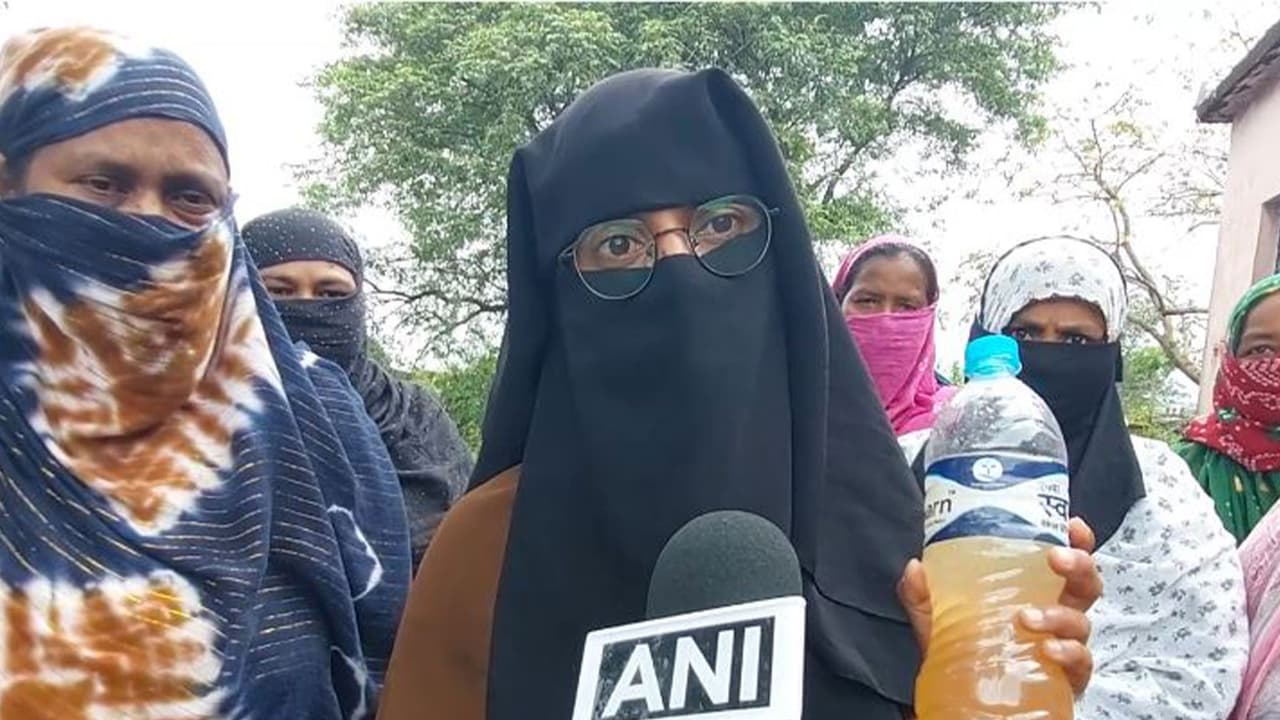
Villagers in Mayurbhanj, Odisha, locked the panchayat office protesting a severe drinking water crisis, contaminated supply leading to illnesses, and a lack of basic civic amenities, demanding immediate government action and accountability.
Protest Erupts in Mayurbhanj Over Water Crisis
Residents of Badadundu Gram Panchayat under Jamda block in Odisha’s Mayurbhanj district locked the panchayat office for nearly four hours, protesting against the prolonged drinking water crisis, alleged administrative apathy and lack of basic civic amenities. The protesting villagers alleged that contaminated water, supplied directly from the river without proper filtration, had been causing serious health problems, including diarrhoea, jaundice, stomach-related illnesses and kidney ailments. They also claimed that several residents had fallen ill and one person had recently died of jaundice allegedly linked to the consumption of contaminated water.
Expressing concern over the deteriorating situation, residents said that despite repeated complaints to the authorities, no permanent solution had been provided for the past four to five years. Mehrun Nisa, a resident of Badadundu, alleged that villagers were being forced to consume dirty water while the local administration had failed to address their grievances. Speaking to ANI, she said, “The water we drink is extremely dirty. The Sarpanch (village head) does not do anything for us here. We don’t know how much government funds came, what happened to that money, or where it went. Our drainage system is completely ruined. Recently, many people have died from jaundice. People’s kidneys are failing, and no one from the administration comes to conduct inspections or check on us.”
Lack of Infrastructure and Accountability
Residents Question Water Quality and Fund Usage
Another resident, Firdous Kausar, questioned the quality of the water being supplied to the villagers and alleged that there was no filtration system or adequate sanitation infrastructure. “Look at this water—this is what is supplied to us, pumped directly from the river. Can we actually drink this? There is no filtration system, nothing at all. Our question to the Sarpanch is: can she drink this water? Our question to the local officials: would they drink this? If not, why are they supplying it to us?” she said.
The villagers also questioned the utilisation of approximately Rs 1.66 crore reportedly allocated for the development of the village, alleging that the funds had not been effectively used to address their basic requirements. Apart from the drinking water crisis, residents highlighted the poor condition of drainage systems, inadequate sanitation facilities and the absence of essential civic amenities. They also raised concerns over delays in receiving benefits under various government welfare schemes.
Unresolved Welfare Grievances
Raunaq Parveen, a widow from the village, said that despite repeated visits to the authorities, she had not received financial assistance under the Harishchandra Sahayata Yojana or widow pension benefits. She also alleged that her children had fallen ill after consuming contaminated water. “My husband is no longer around, and I have no support system. All I am asking is that the 3,000 rupees under the Harishchandra scheme be granted to me and that proper, clean drinking water facilities be provided to us,” she said.
Official Response and Demands
During the protest, the villagers surrounded the Sarpanch and locked the panchayat office, demanding answers and immediate action. Police personnel from Bahalda police station subsequently reached the spot and held discussions with the protesters. Following the protest, police personnel from Bahalda police station reached the spot and held discussions with the agitating residents to address the situation. The lock was subsequently opened after Sarpanch Sukumani Soren submitted a written assurance, promising that the drinking water problem would be resolved within 15 days.
The villagers have demanded that the authorities take immediate steps to ensure access to safe drinking water, improve sanitation and drainage facilities, and address the shortage of basic civic amenities in the panchayat. The residents have also called for accountability in the utilisation of development funds and timely delivery of government welfare benefits.
(Except for the headline, this story has not been edited by Asianetnews Editorial staff and is published from a syndicated feed.)