The CAQM has issued an advisory to halt construction and demolition activities in Delhi-NCR from November 5 to 20 to tackle seasonal pollution as efforts to manage stubble burning and industrial emissions continue to scale up.
CAQM Announces Construction Curbs in Delhi-NCR
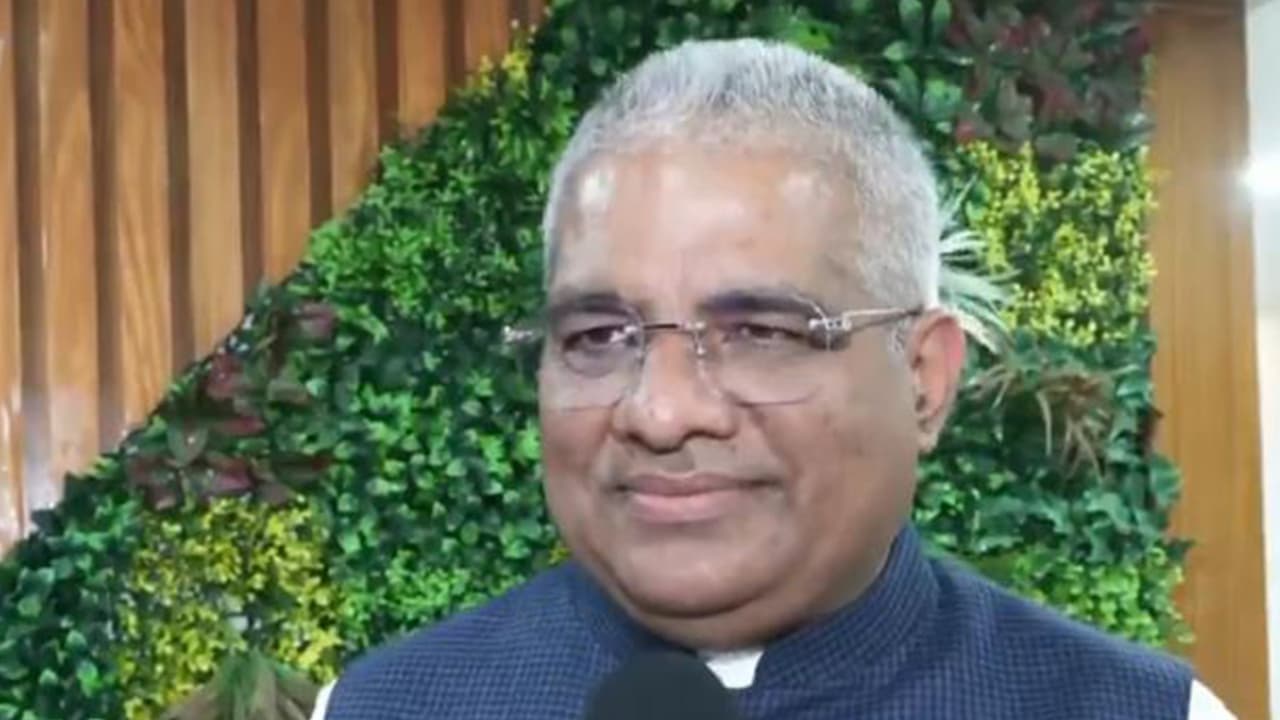
As the National Capital Region (NCR) braces for seasonal air quality challenges, Union Minister for Environment, Forest and Climate Change Bhupender Yadav on Monday stated that the Commission for Air Quality Management (CAQM) has decided to issue an advance advisory to halt construction and demolition (C&D) activities in the national capital between November 5 and 20.
Speaking to ANI, the Union Minister highlighted significant progress in managing stubble burning, noting that nearly 50 per cent of harvesting has been completed and the government is nearing its 40 per cent ex-situ utilisation target. “Fifty per cent of the harvesting is complete. We had set a target that at least 40 per cent of the stubble—instead of being burned—should be utilised for other purposes, which would also provide additional income for the farmers; this represents a positive step in that direction. Data from the first 50 per cent of the harvest indicates that we have come very close to achieving this 40 per cent utilisation target. We are now fully deploying our resources to address the remaining 50 per cent of the harvest,” Yadav said.
Progress in Circular Economy and Crop Residue
Lauding the farming community in neighbouring states, the Minister stressed that commercial utilisation of crop residue is vital for bolstering the circular economy. “This time, farmers in Punjab and Haryana have done a commendable job regarding ‘ex-situ’ utilisation. My focus is on this because once stubble begins to be used for commercial purposes, we will be able to move past this problem, while also strengthening the country’s circular economy. This time, approximately 40 per cent [of the stubble] will be diverted toward ‘ex-situ’ utilisation,” he added.
Strategic Enforcement and Dust Management
Speaking on the curbs on construction activities and dust management, Yadav noted that CAQM arrived at specific conclusions based on historical air quality trends. “Regarding Construction and Demolition waste, while Delhi has implemented a complete ban for the month of November, the CAQM—based on historical data—has reached certain conclusions regarding the period from the 5th to the 20th of the month. In anticipation of challenges, the CAQM has decided to issue an advance advisory to halt construction and demolition activities in Delhi, and to ensure that road dust is managed effectively,” the Minister explained.
Technological Monitoring with PAVAN
Yadav also detailed the deployment of the CAQM’s newly developed Integrated Command and Control Centre (I3C), named PAVAN, which enables real-time tracking and grievance redressal across the region. “The need for an Integrated Command and Control Centre arose because, over the past year, action plans have been developed for all the municipal corporations and states involved. We have now reached the stage where these action plans must be executed on the ground. It includes comprehensive online monitoring covering issues like vehicular pollution, dust pollution, and a hotspot-based approach. Most importantly, if any concern is raised by citizens, it is routed directly to the relevant agency for action,” he said.
Addressing Vehicular and Industrial Emissions
Outlining broader measures taken to tackle vehicular emissions and enforce industrial compliance, Yadav underlined the Centre’s proactive, root-cause approach. “We cannot ignore the challenges, but we have taken proactive measures to address their root causes. For instance, regarding vehicular pollution, we have mandated that no vehicle in the NCR region can refuel unless it has a valid pollution certificate. Furthermore, we have taken steps to discourage the use of older vehicle categories (such as those predating BS-IV or BS-VI standards). The Central Government has also introduced a transition-oriented scheme, encouraging a shift toward electric buses (e-buses) for commercial transport. Various agencies have been tasked with traffic management,” he said.
“We are also working on the ground-level implementation of the Construction and Demolition (C&D) Waste Rules and the Solid Waste Management Rules. Furthermore, real-time monitoring has been established for 98 industrial units—a system you also observed today at the command centre. We have directed that if pollution levels from these units exceed limits, a formal notice must be issued to them. This monitoring compliance framework is designed to be citizen-friendly and administratively efficient, ensuring that the monitoring process is effectively implemented at the ground level,” Yadav added. (ANI)
(Except for the headline, this story has not been edited by Asianetnews Editorial staff and is published from a syndicated feed.)