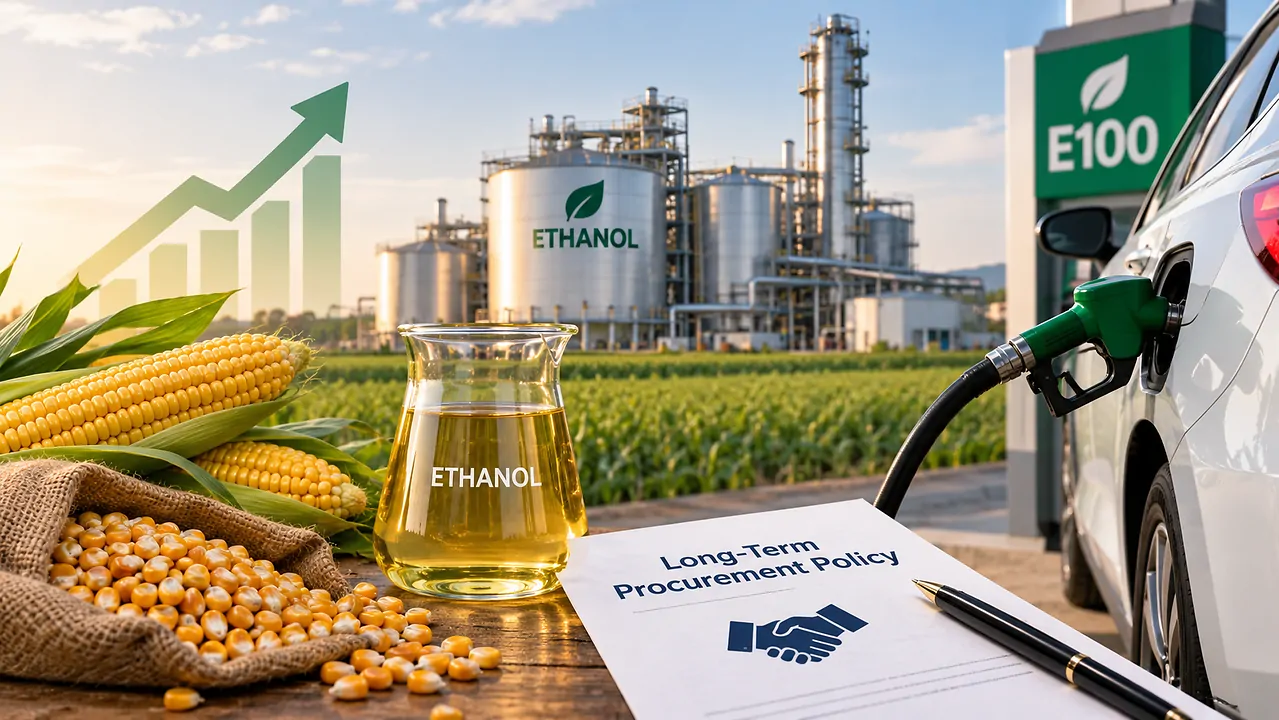
Ethanol producers have called for a clear, long-term procurement policy as India prepares to expand the use of E100-compatible vehicles, saying predictable demand and consistent policy support will be crucial to sustaining investments in production capacity.
In an exclusive conversation with Times Now Digital, Dr. C.K. Jain, President, Grain Ethanol Manufacturers Association (GEMA) emphasised the need for a clear long-term direction for ethanol procurement, arguing that manufacturers need confidence in future demand before committing to investments in additional production capacity.
“The regulatory clearance for E100-compatible vehicles is an encouraging development for India’s ethanol ecosystem. As the country works to reduce its dependence on imported fuels, greater adoption of ethanol can create a stronger domestic market for ethanol producers while opening up additional opportunities for farmers. However, translating this potential into meaningful outcomes will require a coordinated approach across vehicle manufacturing, fuel availability, distribution infrastructure, and feedstock supply,” he added.
E100-compatible vehicles presents significant opportunity:
Jain said for GEMA, the expansion of E100-compatible vehicles presents a significant opportunity to scale up production and strengthen domestic demand.
“However, this opportunity must be matched by consistent policy support and a clear long-term direction for ethanol procurement. Investments in capacity can only be sustained when manufacturers have confidence in future demand, and farmers have a viable market for the crops they grow,” he added.
With the right policy support and infrastructure in place, E100-compatible vehicles can become an important step towards a more diversified energy mix, stronger domestic manufacturing, and greater value creation across India’s agricultural and ethanol value chains, he added.
Maize: A key contributor
Jain further added that Maize can be a key contributor to India’s ethanol ambitions, but its potential will be realised only if procurement policies recognise its importance as an industrial feedstock and ensure that grain-based ethanol remains economically viable.
“A growing E100 ecosystem must create value across the entire chain, from farmers and distilleries to fuel suppliers and consumers,” he said.
The next phase will depend on how effectively the ecosystem comes together to enable consumer adoption, ensure adequate fuel availability, and maintain consistent demand for domestically produced ethanol.