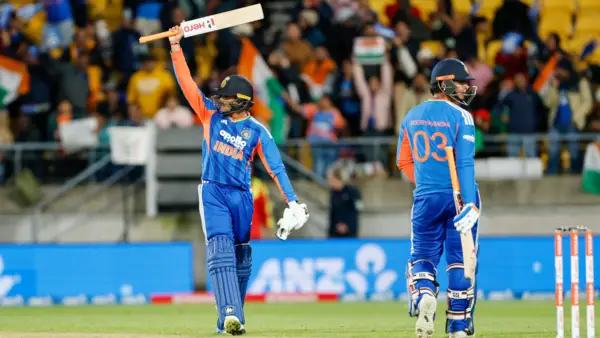
Cricket’s future gleamed from the contents of the India-New Zealand match at Wellington’s Hnry Stadium: Abhishek Sharma and Vaibhav Sooryavanshi plundered 133 runs in just 7.1 overs; India chased down 199 with 40 balls and six wickets to spare to seal the five-match T20I series at the first opportunity; a batsman reached 50 in 15 balls and 100 in 35; a 15-year-old tore apart men twice his age; a free-spirited phenom made bowlers curse and question their existence.
The match was a vision of how the sport would be over the next decade, or the one after, where T20 might have delinked fully from its parent sport and stood as a singular, autonomous sport.
A script from fiction unfolded. The contest was effectively over after three searing overs as 64 runs were ransacked in 18 deliveries. Runs arrived in a blur of limbs and hits.
Sooryavanshi set the tone, thumping the first ball of the chase from Jacob Duffy over the mid-on fielder to the fence. The teenager was playing his seventh international game; Duffy was until recently the highest-ranked T20I bowler. But adults sigh when they are lost for words to describe a youngster’s bravado: “Well, kids these days!”
Bowlers would now stop looking at the fresh-faced batsman like a teenager. Rather, they wouldn’t spare any tactic to get him out.
Third ball, Sooryavanshi slapped Duffy over point. The shot was a triumph of game awareness. After a slew of full and good length balls, he knew Duffy would go short or short of length. So he waited and flashed his hands at the ball. Duffy let out a loud sigh of relief as Abhishek took guard for the final ball of the first over. He, or New Zealand’s bowlers, had little premonition that they were stepping from hellfire to an inferno. Abhishek backed away and swung the ball over extra cover – a characteristic stroke, facilitated by quick hands, imperious bat-swing and glorious balance at the crease. He smiled at Sooryavanshi, the smile of a man who knew the night would be his.
Often with Abhishek, it’s the first shot that indicates his mood and touch. He loves to charge or back away straightaway; he has hit several first-ball sixes. But this was arguably the sweetest of his first-ball sixes. Everything was in place, fleetness of feet, lightness of hands, clarity of thought, belief, and the agility of impulses. The bowlers could only watch, wilt and wonder.
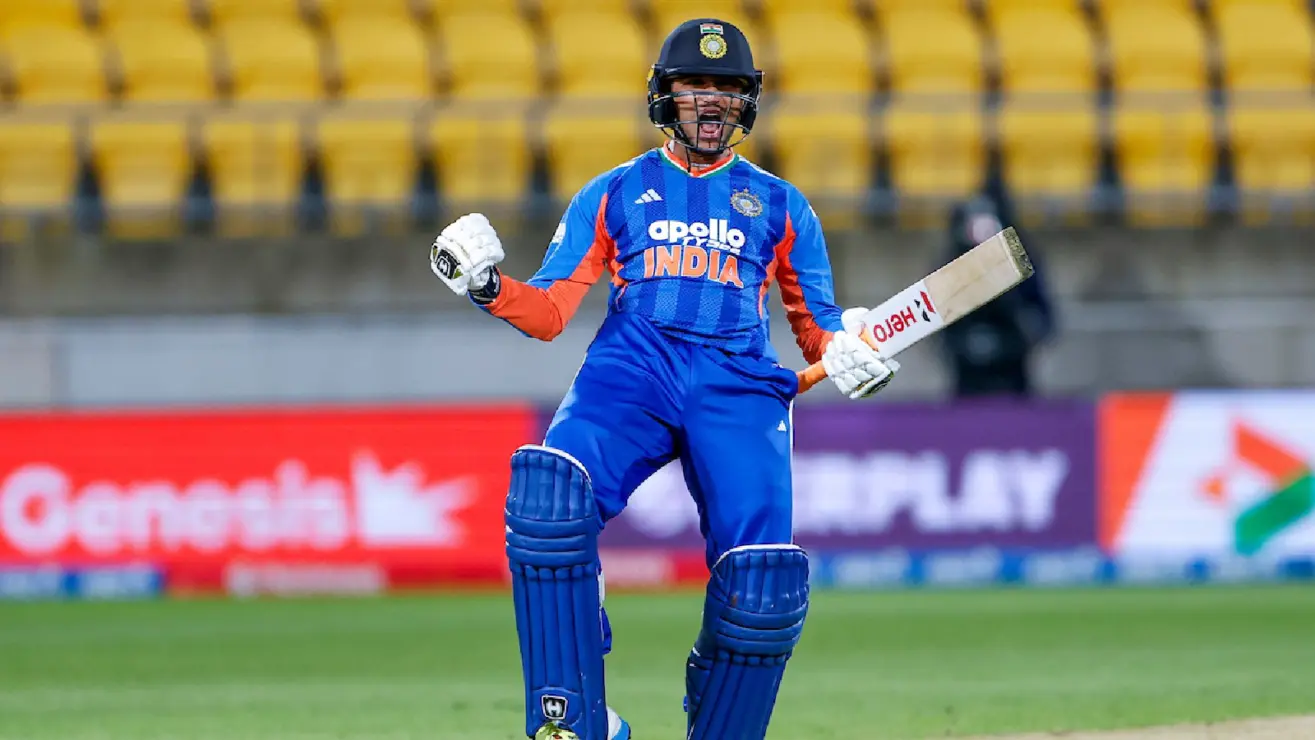 Abhishek Sharma celebrates his century during the 3rd T20I match between New Zealand and India at the Hnry Stadium in Wellington. (CREIMAS)
The grisly Adam Milne laid a snare in his first bout with Abhishek. He placed a deep point and packed the ring on the off-side. He bowled the full ball that angled away. There was only a modicum of width to free his arms. Most batsmen would have looked to tap the ball to third man, or even leave it. An aerial shot carried risk. But Abhishek was unhindered, and let his arms through the ball and sent it flying over the fielder’s left.
Milne went back of length next ball, and was creamed over cover. The next ball was smeared through cover point. Milne and his allies wished that someone would stop the game to save them from further blushes. Or pure humiliation.
No one did. Abhishek shoved them to an abyss of despair. New Zealand captain Mitchell Santner employed the match-up trick that has troubled him in the past, summoning off-spinner Michael Bracewell.
But Abhishek manufactured room by backing away and fleeced him through cover, his favourite piece of real estate on a cricket ground. He hit a six and four more, and left two balls for Sooryavanshi to flog the dead horse. The Bracewell ploy was sensible, but not the length. Abhishek murders anything short or on a good length. It’s the off-spinner’s full-length ball, which drifts and drops, that torments him.
No contest
A whiff of resignation floated among the Kiwis. The total of 198 seemed competitive, although they were 20 runs short, thanks to India’s bowlers sneaking in a tidy over or two in the middle overs and at the death.
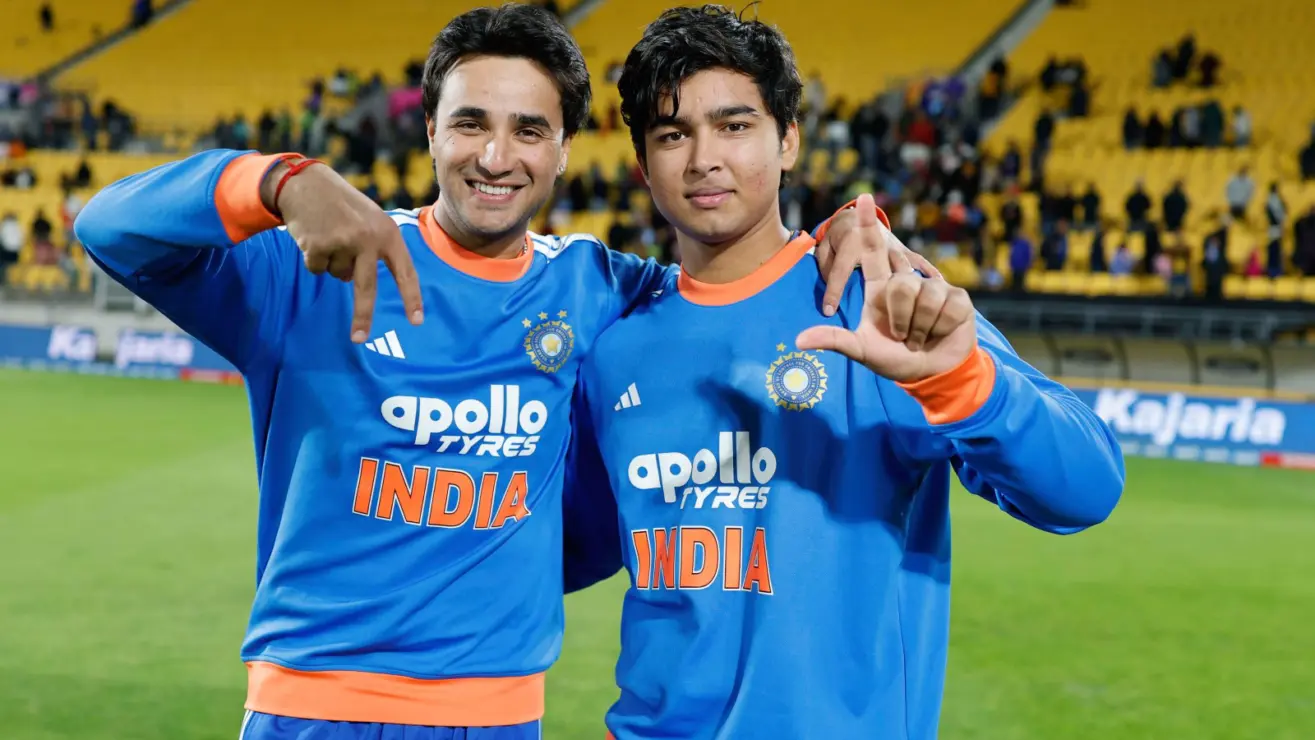 Abhishek and Vaibhav added 133 off just 43 deliveries for the opening wicket. (CREIMAS)
Prince Yadav produced a stingy last over, just nine runs without a boundary. Bhuvneshwar Kumar allowed only nine runs in the 18th; as did Arshdeep Singh, who bowled the previous over. Despite wickets in hand and set batsmen Daryl Mitchell (89*) and Bevon Jacobs (39*), the hosts only managed 42 in the last four overs. Axar Patel fought back after being hit for 14 runs in his first over. He conceded only 22 in his next three.
Still, New Zealand would not have foreseen a carnage of this savage proportion. Abhishek and Sooryavanshi completed their century stand in the fifth over. When the Powerplay ended, the score read 118 for no loss, the highest by any side, including Associate nations, in this format. Only milestones and formalities remained. Sooryavanshi perished five runs short of the 50-mark. Abhishek, though, converted his 15-ball half-century into a 35-ball ton, his fourth.
He departed for 113 (38 balls!), and soon after the ball began to misbehave a trifle. Shreyas Iyer and Sanju Samson found it a different wicket and staggered.
“When Sanju and I went to bat, the ball was swinging and seaming, and I was like, ‘how did they manage this!’ the skipper wondered.
But when Sooryavanshi and Abhishek batted, there was only one distinct swing. The sweet swing of the bat, in a match from the future.