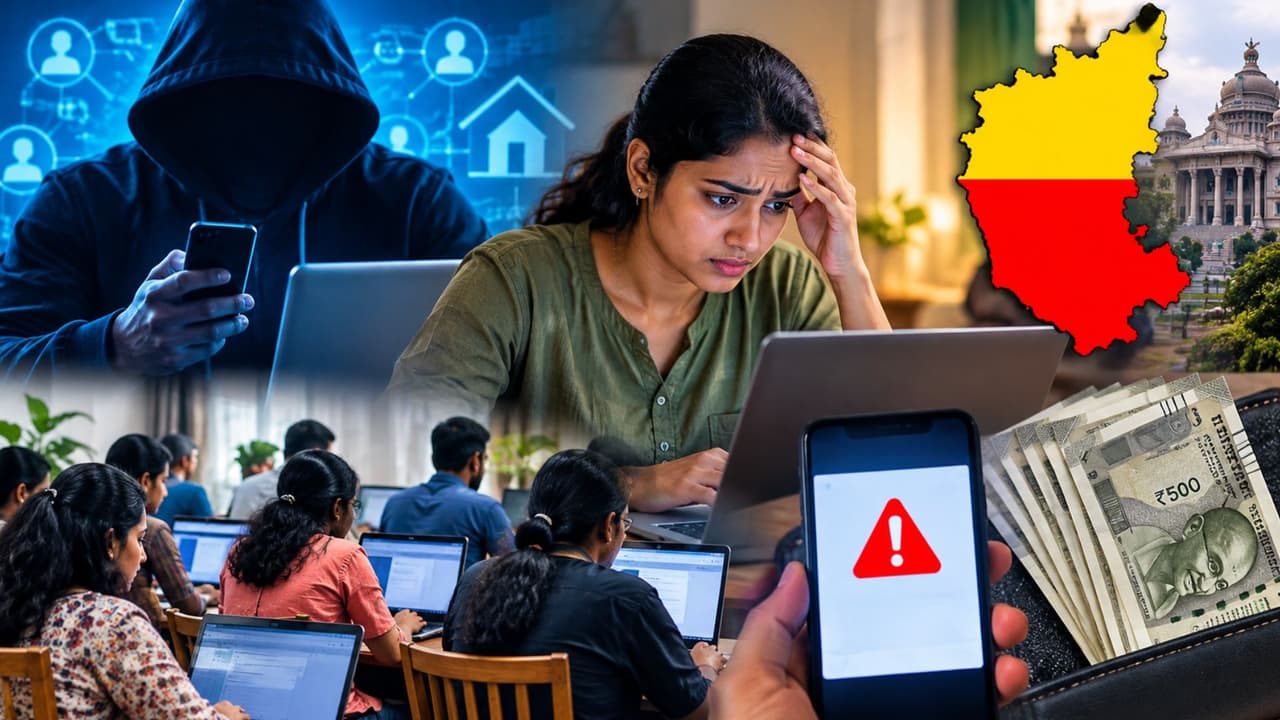
Fake work-from-home job scams are targeting women, students and unemployed youth in Karnataka. Fraudsters promise easy earnings through packing and data entry jobs but demand advance fees, leaving victims with financial losses and no employment.
Many people are looking for ways to work from home and earn an additional income while managing family responsibilities, pursuing their studies or searching for employment. For homemakers, students and unemployed youth, jobs that promise flexible working hours and a steady monthly income can seem particularly attractive. However, cyber fraudsters are exploiting this demand by circulating fake work-from-home job advertisements on social media platforms, WhatsApp groups and fraudulent websites.
These scammers promise easy earnings for simple tasks but often demand advance payments before disappearing with the money, leaving job seekers facing financial losses and no employment.
Pay First, Work Later: The Classic Scam Tactic
These scams typically follow a similar pattern. Fraudsters advertise work-from-home opportunities, claiming that no special qualifications or prior experience are required and that the work can be completed in just a few hours a day.
When interested candidates contact them, the fraudsters demand an upfront payment to get started. The amount is described as a registration fee, security deposit, training fee or processing charge. Since the initial payment may appear relatively small, many job seekers transfer the money without suspecting fraud.
In some cases, the fraudsters stop responding immediately after receiving the payment. In others, they build trust by assigning small tasks and making initial payments. Once victims believe the opportunity is genuine, the scammers persuade them to pay larger amounts by promising higher earnings or better returns. Eventually, victims lose their money and receive neither the promised work nor the expected income.
Work-From-Home Job Scams Reported Around ,Bengaluru
Cases involving fraudsters who collect advance payments by promising home-based employment have reportedly emerged in several districts of Karnataka. According to reports, more than 600 people were allegedly cheated on the outskirts of Bengaluru after being promised agarbatti and candle-making or packing jobs in exchange for advance payments.
Similar allegations have surfaced in Haveri, where fraudsters were accused of collecting crores of rupees by offering fake home-based packing jobs. Complaints have also reportedly emerged from the Hoskote area, where women allegedly paid money for employment opportunities and were subsequently cheated.
Determining the exact number of victims remains difficult, as not everyone who loses money files a police complaint. Some victims may hesitate to report such incidents because of embarrassment or concerns that they will not recover their money. As a result, the actual scale of these scams may be difficult to establish based on reported cases alone.
Women, Students And Unemployed Youth Among Those Targeted
Fraudsters often target people seeking additional income or flexible employment. Homemakers hoping to earn money alongside household responsibilities, students looking for part-time work and unemployed youth searching for job opportunities may be particularly vulnerable to advertisements promising easy earnings.
A woman from Doddaballapura reportedly shared her experience after falling victim to one such scheme. According to the report, she paid money for a book-writing job and completed the assigned work. However, when she contacted the organisers to receive her payment, they stopped responding. She realised she had been cheated only after repeated attempts to contact them failed.
How To Identify And Avoid Fake Work-From-Home Job Offers
Job seekers should remain cautious when responding to online advertisements that promise easy money for simple tasks. The following precautions can help reduce the risk of falling victim to such scams.
Avoid Paying Advance Fees: Be wary of recruiters who demand registration charges, training fees, processing fees or security deposits before offering employment.
Verify Company Details: Independently check the company’s official website, registered address, contact details and job information. Do not rely solely on documents, testimonials or links shared by the recruiter.
Be Cautious Of Unrealistic Salary Promises: Treat offers that promise unusually high earnings for simple tasks requiring little time or experience with suspicion.
Protect Personal And Banking Information: Never share one-time passwords (OTPs), banking credentials or other sensitive information with unverified recruiters. Do not approve payment requests or install unfamiliar applications at their request.
Report Suspected Fraud Promptly: If you have transferred money, contact your bank or payment service provider immediately. You can also report the incident through India’s cybercrime helpline at 1930 or the official National Cyber Crime Reporting Portal at https://cybercrime.gov.in/. Preserve payment receipts, phone numbers, messages and other evidence that may help investigators.
Work-from-home opportunities can offer flexibility and additional income, but job seekers should verify an offer before sharing personal information or making any payment. A genuine employment opportunity should provide clear details about the employer, the work involved and the terms of payment, without relying on pressure tactics or unrealistic promises.