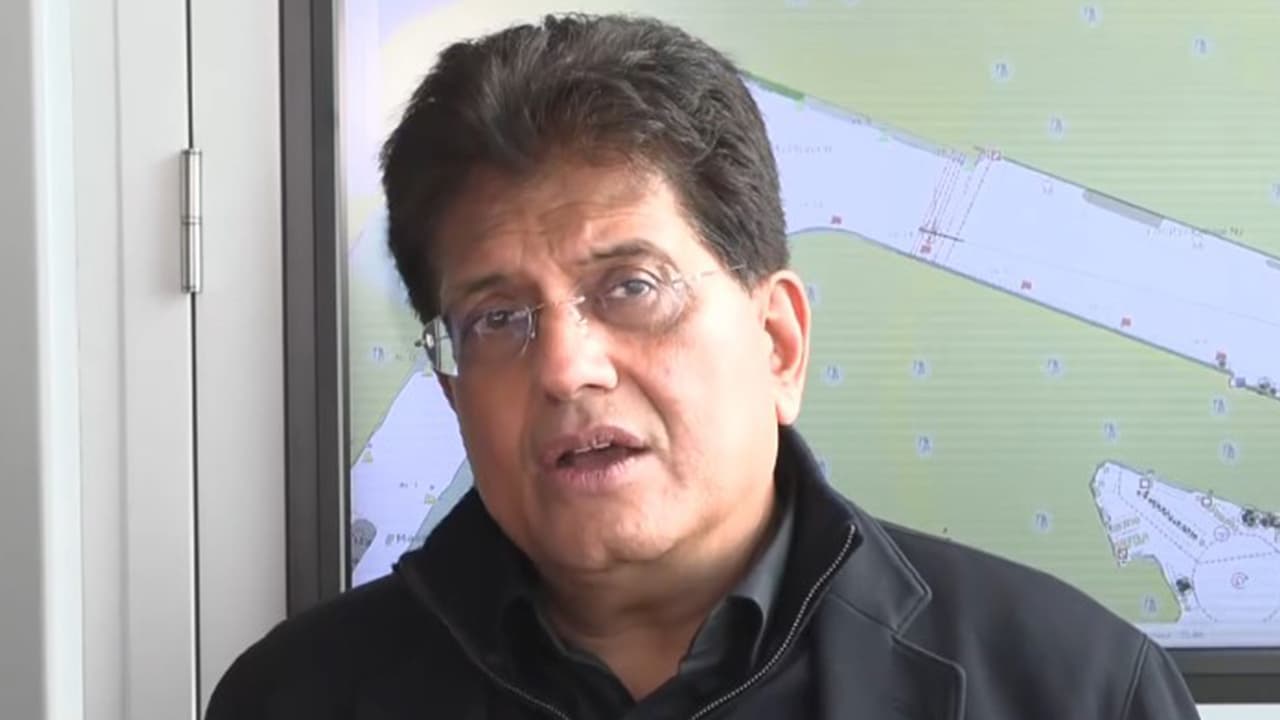
Union Minister Piyush Goyal announced plans to quadruple India’s port capacity by 2047, focusing on green energy, carbon capture, and strategic maritime partnerships with the Port of Rotterdam to boost global trade and economic growth.
India’s Ambitious Maritime Expansion Plans
Union Commerce and Industry Minister Piyush Goyal has outlined India’s ambitious plans to expand its port capacity fourfold by 2047, highlighting significant opportunities for collaboration with the Port of Rotterdam in maritime infrastructure, green energy, carbon capture and sustainable trade. Speaking in Rotterdam during his visit to the Netherlands, Goyal said that India’s rapidly expanding economy and growing international trade would require substantial investments in modern port infrastructure and maritime connectivity.
“Despite doubling our port capacity over the past decade, India still needs more capacity. By 2047, we expect port capacity to double twice over the next two decades to support GDP growth and international trade,” Goyal said.
Strengthening International Cooperation
Highlighting the potential for closer maritime cooperation between India and Europe, the Union Minister said India could benefit from Rotterdam’s expertise in developing world-class port infrastructure and improving operational efficiency. “As we modernise existing ports and develop state-of-the-art facilities, we see great opportunities to work with the Port of Rotterdam, learn from its experience and strengthen cooperation between India and Europe,” he said.
Goyal also underscored the growing importance of sustainable maritime development, particularly in areas such as carbon capture and green energy, which could create new opportunities for international trade while addressing environmental challenges. “We focus on carbon capture and green energy that offers significant environmental benefits and opens new opportunities for green energy trade,” he said.
Driving Growth Through Sagarmala and Education
Describing India as the world’s fastest-growing large economy, Goyal said the country had developed high standards of quality, efficiency and productivity, positioning it as an increasingly important player in global trade and logistics. Expressing confidence in India’s maritime ambitions under Prime Minister Narendra Modi, Goyal emphasised that the country must continuously strive for greater achievements. “I think we should never be satisfied. We should always want more. ‘Yeh Dil Maange More’ is our motto,” he said.
The Union Minister also highlighted the government’s efforts to strengthen India’s maritime ecosystem through the Sagarmala initiative, aimed at improving port infrastructure and maritime connectivity. “I have full confidence in India’s maritime journey under Prime Minister Narendra Modi. Through the Sagarmala project, we are expanding and improving our maritime ecosystem,” Goyal said.
Developing Maritime Talent
He further spoke about plans to establish a major maritime education and training institution in his Mumbai constituency to develop a highly skilled workforce capable of meeting the growing requirements of the global shipping industry. “In my Mumbai constituency, we are establishing the country’s largest maritime institute of excellence, a university to develop seafarers. The idea is to provide highly skilled seafarers across the world,” he said.
Goyal’s remarks highlighted India’s efforts to strengthen its position in global maritime trade by expanding port infrastructure, embracing sustainable technologies and deepening cooperation with major international logistics hubs such as Rotterdam. The Port of Rotterdam, one of Europe’s most important maritime gateways, plays a crucial role in connecting global shipping networks with European markets, making it a significant potential partner for India’s expanding maritime sector. (ANI)
(Except for the headline, this story has not been edited by Asianetnews Editorial staff and is published from a syndicated feed.)