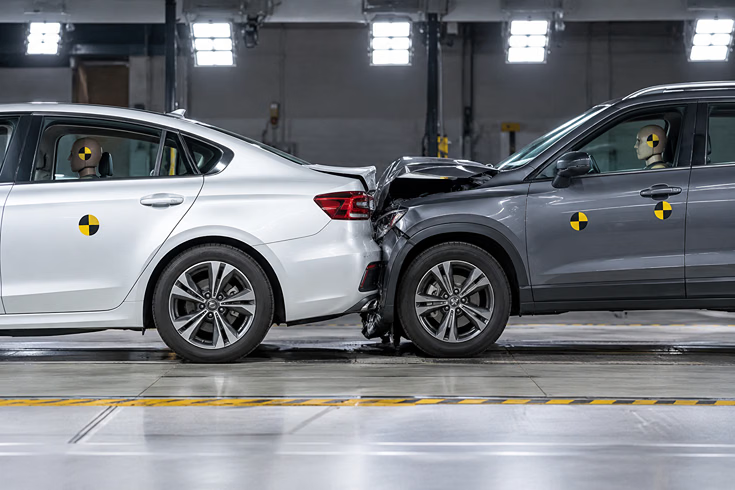
All new cars manufactured in India from April 2029 will have to pass a rear-impact crash test that shows no fuel spillage in petrol and diesel models and no battery damage in electric vehicles, according to The Times of India.
The road transport ministry has made the automotive industry standard mandatory, with the aim of preventing fires after rear-end collisions.
An official quoted by the paper said that the cars will have to be designed and built so that a rear-end collision does not damage the fuel tank or battery.
The rear-impact norm is one part of a wider safety package. The Times of India reports that the ministry has also set mandatory compliance timelines, from April 2027 onwards, for other Automotive Industry Standards covering occupant protection in offset frontal and lateral collisions, protection of pedestrians and other vulnerable road users, and the fitment of immobilisers.
In a separate notification, the ministry has made AIS-192 mandatory for event data recorders installed in cars from October 2029. The paper notes that these recorders remain optional equipment.
They log crash-related data to help establish what happened immediately before and during a collision, and their function is similar to that of an aircraft’s black box.
Taken together, the dates give carmakers a phased runway. The first wave of requirements arrives in April 2027, the rear-impact fuel and battery rule follows in April 2029, and the recorder standard completes the sequence six months later.
The rear-impact requirement appears to correspond to the ministry’s AIS-101 (Rev.1), which covers protection of the fuel system and safety of the electric powertrain in a rear impact and was listed on the ministry’s AIS page in draft form.
The same listing includes draft revisions of the offset frontal collision, lateral collision and pedestrian protection standards, alongside AIS-192 for event data recorders. The final notification will confirm which versions now apply.
For manufacturers, the dual wording matters. Combustion cars must keep fuel contained after a rear hit, while electric vehicles must protect the battery pack, so platforms with rear-mounted tanks or packs will face the closest scrutiny.
The long lead time to April 2029 allows companies to build compliance into new platforms rather than retrofit existing ones.
The recorder standard is likely to draw attention to data privacy. Under the comparable international rule, UN Regulation 160, the vehicle identification number, location, driver information and the date and time of an event are excluded from the recorded data.
The European Union goes further, requiring that the data be anonymised and protected against manipulation, and that recorders cannot be deactivated. How India’s AIS-192 treats access to, and ownership of, crash data will be worth watching as October 2029 approaches.