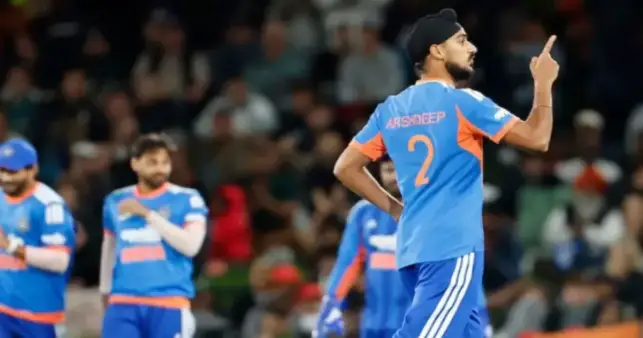
Arshdeep Singh struck early as India looked to restrict New Zealand in the second T20I at Hagley Oval in Christchurch on Saturday. New Zealand lost an early wicket after Tim Seifert and Finn Allen opened the innings, giving India an opportunity to build pressure during the powerplay.
The match was part of the five-match T20I series between the two sides, with India entering the contest after winning the opening game. The early breakthrough provided the Indian bowling attack with an encouraging start as it sought to limit New Zealand’s scoring and prevent the hosts from establishing a strong opening partnership.
India captain Shreyas Iyer won the toss and elected to bowl, opting to put New Zealand in to bat. The decision gave India’s bowlers the first opportunity to exploit the conditions and make early inroads into the home side’s batting order. New Zealand began their innings with Seifert and Allen at the crease, looking to provide a solid platform. Arshdeep’s early success, however, put the hosts under pressure and gave India an opening to target the remaining top-order batters.
India made two changes to their playing XI for the match. Vaibhav Sooryavanshi came into the side in place of Ishan Kishan, while pacer Prince Yadav replaced Mayank Yadav. The changes brought a reshuffle to India’s line-up as the team looked to maintain its advantage in the series. The selection decisions also gave Sooryavanshi and Prince Yadav an opportunity to contribute in the second encounter, with India aiming to deliver another strong performance against New Zealand.
New Zealand also made one change to their team, bringing Jacob Duffy into the playing XI in place of Adam Milne. The hosts were seeking a response after losing the first match and needed a strong performance at home to level the series. With Seifert and Allen opening the innings, New Zealand’s approach in the initial overs was important to setting a competitive total. India, meanwhile, looked to build on the early wicket and prevent the partnership from developing.
India’s bowling attack entered the contest with the objective of taking wickets at regular intervals and restricting New Zealand’s scoring opportunities. Bhuvneshwar Kumar was also among the bowlers expected to play a key role in the effort to put the hosts under pressure. Early breakthroughs can shape the course of a T20 match by forcing the batting side to rebuild rather than accelerate freely. India’s immediate focus was therefore on capitalising on Arshdeep’s strike and keeping New Zealand’s top order in check.
The second T20I was being played at Hagley Oval in Christchurch as the teams continued their five-match series. India had taken the lead by winning the opening match and were looking to strengthen their position, while New Zealand aimed to respond on home soil. With an early wicket already falling, the contest began with India gaining an advantage in the field. The progress of New Zealand’s innings and India’s ability to sustain the pressure would be crucial in determining the direction of the match.