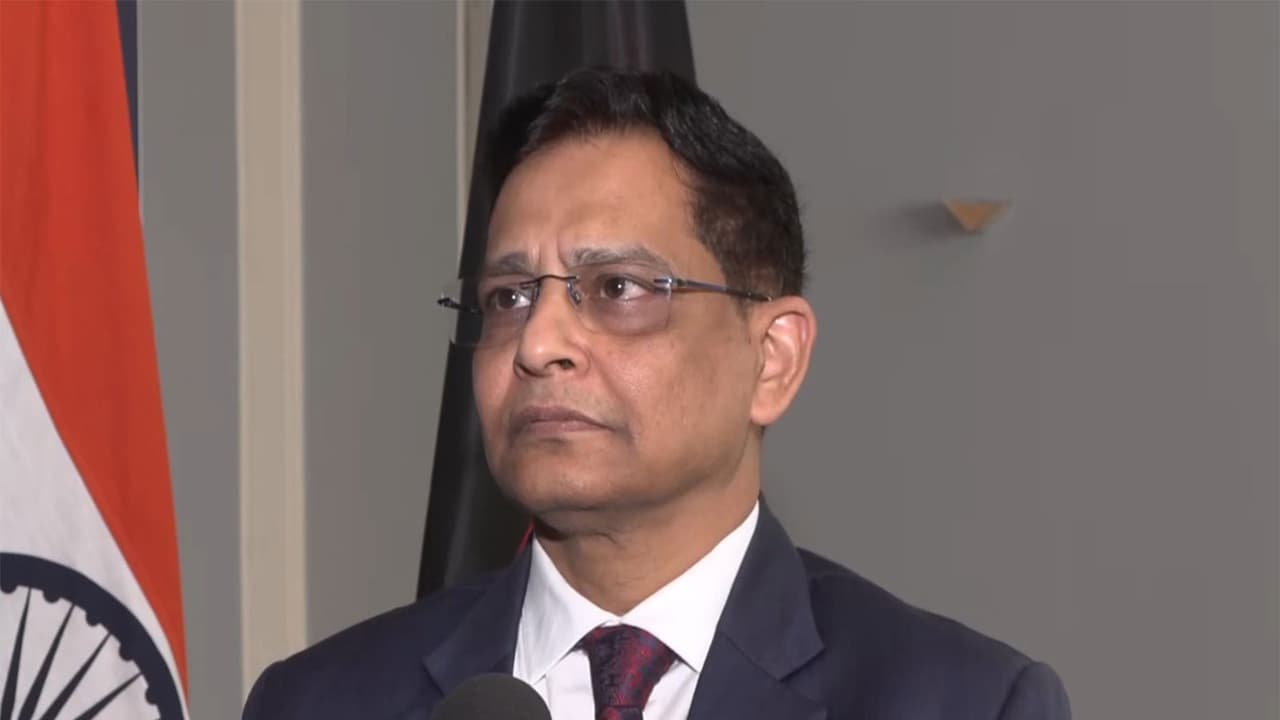
FICCI Secretary General Anant Swarup states that Indian industries must improve product quality and meet EU standards to fully capitalize on the upcoming India-EU Free Trade Agreement for trade, investment, and technology cooperation.
Preparing for the India-EU Free Trade Agreement
Indian industries will need to improve product quality and meet European Union (EU) standards to fully benefit from the India-EU Free Trade Agreement (FTA), FICCI Secretary General Anant Swarup has said, highlighting opportunities for trade, investment and technology cooperation as businesses prepare for the agreement to take effect.
In an exclusive conversation with ANI, Swarup said the agreement could open up significant opportunities for industries on both sides and that the current period was important for companies to identify partners, explore investments and prepare for greater trade. However, Swarup stressed that lower tariffs alone would not be enough for Indian companies to fully benefit from the agreement. Businesses would also need to improve quality and meet European standards to convert the opportunities into actual trade.
Focus on Standards and Industry Education
“What we are doing is popularising the various agreements or various chapters of the agreement, telling the industry the opportunities it is bringing. At the same time, also educating the Indian industry that this opportunity can only be realised once we move up on quality parameters and standards of the European Union,” he said.
He said the agreement would create opportunities across multiple areas, including trade, investment and technology cooperation, and had generated interest among businesses in India and Europe. He noted that India and the European Union represented major economies and said bringing them together through a common market would create significant opportunities for businesses.
“The minister said that coming into effect of the India EU deal is a few months away. So I think it is very timely that the industries on both sides are meeting and preparing themselves when the opportunity actually comes into effect,” Swarup said.
Collaboration with the Netherlands
Swarup said FICCI was working to familiarise Indian businesses with the different provisions of the agreement and the opportunities they could create. He emphasised that companies needed to prepare in advance to take advantage of improved market access. He also highlighted opportunities for greater cooperation between Indian and Dutch businesses during the next leg of the minister’s visit to the Netherlands.
According to Swarup, the Netherlands is important to India-EU trade because a significant portion of Indian exports to the European Union passes through the country. He identified Rotterdam port as a key logistics link and said the Netherlands also offered opportunities for cooperation in technology. He specifically mentioned green technology, lithium, batteries and semiconductor manufacturing equipment as areas where Indian and Dutch industries could explore closer collaboration. He also referred to ASML, a major supplier of lithography machines used in semiconductor manufacturing.
Strategic Implementation and Future Outlook
Swarup’s remarks come amid India’s broader efforts to expand trade ties through free trade agreements. According to the Ministry of Commerce and Industry, India has nine FTAs covering 38 countries. The India–European Union Free Trade Agreement (India–EU FTA) was officially concluded at the 16th India–EU Summit on January 27, 2026 by Prime Minister Narendra Modi and European Commission President Ursula von der Leyen, with full signing and implementation targeted through 2026–2027. The two sides have called for its early ratification, followed by timely implementation, to expand trade and investment, strengthen critical value chains and open new markets. The agreement is expected to create opportunities for businesses on both sides, while Indian industries’ ability to meet European quality standards will be an important factor in realising its potential. (ANI)
(Except for the headline, this story has not been edited by Asianetnews Editorial staff and is published from a syndicated feed.)