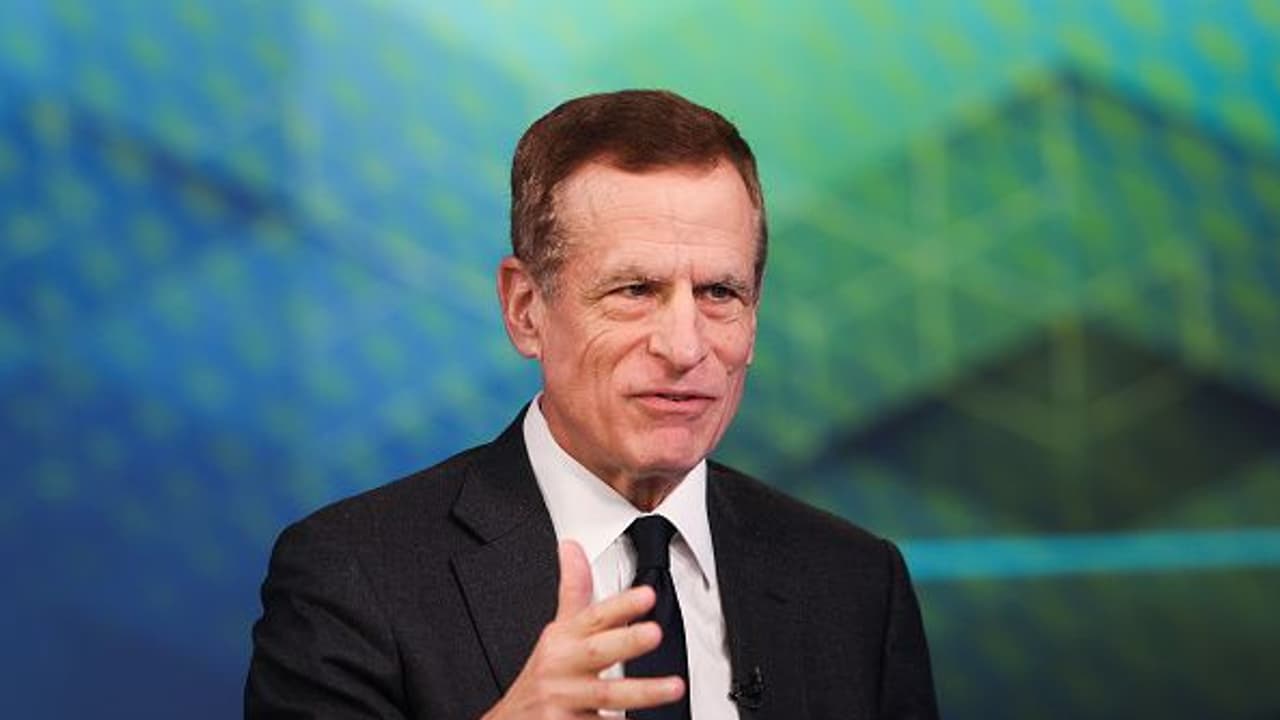
Goldman Sachs Vice Chairman Rob Kaplan said inflation appears more structural than cyclical, warning that excessive Fed tightening could weaken employment without meaningfully reducing price pressures.
- Kaplan expects the Fed to raise rates in December but says policymakers should proceed slowly given the economy’s mixed performance.
- Higher diesel costs have spread to 40 or 50 other items, including food, said Kaplan.
- He warned that a surprise October rate hike could increase Treasury risk premiums as U.S. debt exceeds 100% of gross domestic product.
Goldman Sachs Vice Chairman Rob Kaplan said Thursday that the Federal Reserve will likely raise interest rates in December but warned that aggressive tightening could weaken the economy and raise unemployment without significantly reducing inflation.
Talking to CNBC, the former Dallas Fed president said policymakers should proceed “slowly and deliberately” given the economy’s uneven performance.
Kaplan stated that the US’ inflation problem is more structural than cyclical, pointing to higher oil prices rather than an overheating economy. He said housing, autos, and lower- to moderate-income consumers remain sluggish.
“The danger for the Fed is if you hike too aggressively, you might not actually make a dent in inflation,” he said, warning that policymakers could instead slow the economy and increase unemployment.
Kaplan’s comments come as Thursday’s labor data showed initial jobless claims fell by 6,000 to 194,000 for the week ended Oct. 17. The number of Americans filing new claims for unemployment benefits dropped to near 57-year lows, pointing to low layoffs and labor market stability.
Surprise October Hike Could Raise Treasury Risk Premium
Kaplan also warned that an unexpected rate increase at the October meeting could increase risk premiums in the Treasury market, partly because investors are still assessing how Fed Chair Kevin Warsh responds to economic developments.
“It may actually increase the risk premium built into the treasury market,” he said, adding that higher borrowing costs are particularly expensive in an economy with debt exceeding 100% of GDP.
However, Kaplan viewed widening credit spreads among highly leveraged borrowers positively, saying the market was increasingly scrutinizing credit quality.
Treasury yields moved lower on Thursday as investors monitored developments in the Middle East and assessed economic data. Yields on 10-year U.S. Treasurys fell over 11 basis points to 5.032%, while the yield on longer-dated 30-year U.S. Treasurys fell more than 8 basis points to 5.349%.
The iShares 20+ Year Treasury Bond ETF (TLT) gained 1%, while the iShares 7-10 Year Treasury Bond ETF (IEF) rose 0.6%. On Stocktwits, retail investors’ sentiment remained in ‘neutral’ territory for both ETFs.
Diesel Costs Feed Inflation Beyond Energy
Kaplan told CNBC that rising diesel prices are spreading through the economy, raising business costs even without stronger underlying demand. “The diesel spike has bled to 40 or 50 other items, literally,” he said, citing food as an example.
He added that companies are increasingly passing higher shipping and input costs to consumers despite not seeing excess demand. “The Fed funds rate is very potent when you have a cyclical issue. It is not so potent on structural issues,” Kaplan said.
The latest Consumer Price Index (CPI) rose 3.7% year over year in September, accelerating from 3.4% in August. Producer prices increased 1.3% month over month in September, according to the Bureau of Labor Statistics.
Corporate Profits And Household Finances Diverge
Kaplan also highlighted a disconnect between improving corporate profitability and consumers’ financial experiences.
The Goldman Sachs vice chairman stated that households without financial assets are increasingly pessimistic despite remaining employed, while those holding financial assets have benefited from stock market gains that have more than offset inflation.
According to CME FedWatch, traders priced in an 8.3% chance of a rate hike in October, compared with an 82.5% probability of at least one hike by December. The Fed’s next policy meeting is scheduled for Oct. 27–28, followed by its final meeting of the year on Dec. 8–9.
See Also: LRCX Stock Sinks As Analysts Trim Targets, See Supply Constraints – But Longer-Term Bull Case Remains
For updates and corrections, email newsroom[at]stocktwits[dot]com.<