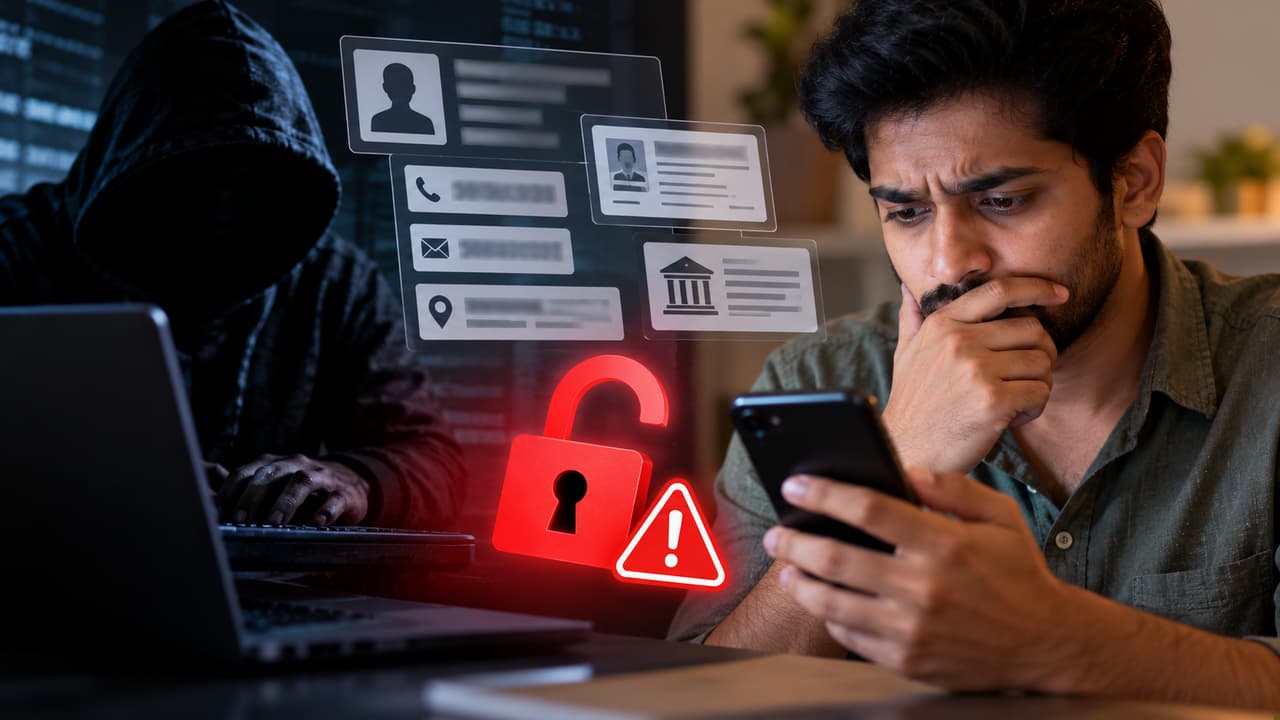
State Bank of India just faced a major cyber attack. Hackers leaked the personal data of 3,897 customers on the dark web. Your passwords and OTPs are safe for now, but scammers can still call you to steal your money. You must not share your PIN or OTP with anyone. Stay alert and follow these safety steps immediately.
Mumbai: State Bank of India (SBI) just got hit by a massive cyber attack. Bank officials confirmed that hackers leaked the personal data of 3,897 customers on the dark web. The bank did not make the customer names public. But the leaked data includes customer names, phone numbers, dates of birth, and loan documents. The bank told the stock exchange about 3.75 lakh records found on the dark web. After a basic check, they confirmed the personal identity details of 3,897 customers got leaked.
Is your SBI bank account safe?
A data leak does not mean hackers broke into your bank account. It also does not mean you will lose your money right away. You need to understand the difference between leaked personal info and unauthorized bank access. SBI checked the data and found only identity details and loan documents. The leaked data does not include account passwords, PINs, OTPs, or transaction details.
Hackers exposing 3,897 records does not mean they hacked 3,897 accounts. But you should not ignore this leak. You do not need to panic immediately. At the same time, you cannot just sit back and think your data is safe among millions of customers. You must take a few precautions right now.
What can scammers do?
Fraudsters now have the complete details of some customers. They can call you and pretend to be bank officials. A caller who knows your name, mobile number, address, or loan details can easily trick you. They might say your account or loan application has a problem. The caller might ask you to verify your identity or update your KYC details. You must not give them any information, no matter what they say. They already have your basic details, so they can easily act like real bank staff. You must never answer their questions. Most importantly, they will ask for your OTP, PIN, or password. You must never share these details under any condition.
Scammers might also use your loan application details to trap you. They can offer you loan waivers or low interest rates. You must not fall for these traps. You should not share any information with them.
What should SBI account holders do now?
You do not need to panic or close your bank accounts because of this leak. But you can follow a few safety steps to reduce the risk of financial fraud.
1. You must never share your OTP, PIN, or password.
You should not share your one-time password (OTP), ATM PIN, internet banking password, or any secret details with anyone claiming to be from SBI. A caller knowing your personal details does not prove they work for the bank.
2. You must stay alert about unexpected calls and messages.
You should treat unexpected calls about KYC updates, account blocks, loan approvals, or urgent checks with suspicion. You must not click unknown links or open unexpected attachments, even if the message shows your correct personal details.
3. You must check your account transactions regularly.
You should look at your bank statements and transaction history for unknown payments. You must turn on SMS and email transaction alerts.
4. You must contact SBI immediately through official channels if you see an unknown transaction.
5. You must use the official SBI website, verified banking apps, or verified customer care numbers. You should not trust phone numbers or links sent by unexpected callers or messages.
6. You must never install screen-sharing or remote-access apps if a caller claiming to be a bank employee asks you to.
7. You must monitor your credit report.
Customers who applied for loans or credit cards should check their credit reports regularly. You should look for unknown loan accounts or credit inquiries. You must report any suspicious entry to the lender and the credit bureau.
8. You must secure your email and mobile number.
You should use a strong, unique password for your email account. You must turn on two-factor authentication wherever possible. You should change your passwords if you can. Otherwise, scammers might use the leaked info to change your passwords.
9. You must contact your telecom operator if your mobile network suddenly stops working. You must rule out SIM swap fraud if your SIM loses service unexpectedly.
10. You must report suspected financial fraud immediately.
Contact SBI right away if you notice an unauthorised transaction or think someone tricked you into sharing banking details. Ask them to take the necessary protective steps.