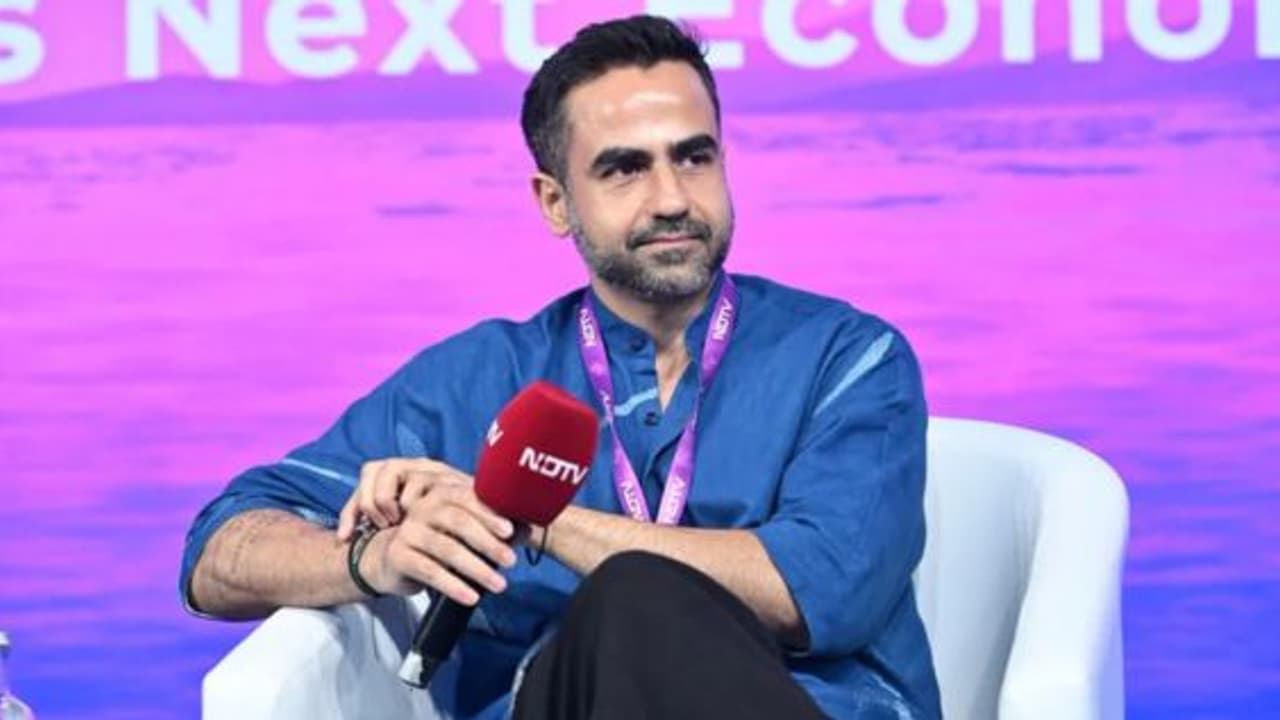
Zerodha co-founder Nikhil Kamath dropped some major truth bombs about his marriage and future plans at the NDTV summit. He made it clear that freedom and peace of mind are his top priorities right now, adding that he has no fixed plans for the future.
Are you choosing a life without marriage and kids, just like Congress leader Rahul Gandhi? NDTV CEO Rahul Kanwal threw this exact question at Zerodha co-founder Nikhil Kamath during the ‘NDTV World Summit 2026’. Kamath straight up refused to give a fixed yes or no. He said he doesn’t even know what he wants in the next six months, let alone five years down the line. But he did make his current priorities very clear.
“I am optimising for freedom and peace of mind,” Kamath said. He explained that he wants a life where he has the time to get involved in different things and keep his options open for every possibility.
People without rigid certainty appeal to me
Uncertainty in life does not freak him out at all. Instead, the mindset that everything is ‘certain’ is what actually worries him. Kamath mentioned that he finds people who are not rigidly ‘certain’ about things much more interesting.
A lot of people get emotionally attached to a specific belief. This makes it super hard for them to change their decisions or opinions later because their ego gets in the way. “I am fighting that rigid certainty for as long as I possibly can,” he pointed out. This answer basically keeps the door open for traditional family life, without completely ruling out marriage and kids in the future.
China’s growth model and CMs acting as CEOs
Kamath showed this same open mindset while talking about the Chinese economy. China might call itself communist and reject the capitalist tag, but their local governments compete exactly like hardcore corporate companies, he explained. He noted that the mayor of every municipality or province in China competes with other provinces like the head of a capitalist firm.
Pitching this exact model for India, Kamath shared a big idea. “Chief Ministers of every state in India should function like the CEOs of their respective states. They need to compete to expand their state’s economy and attract capital investment,” he said. He added that this push will get even stronger if states get to keep the financial benefits of their own economic growth.
He gave a solid example to back this up. Back in 2008, the Chinese city of Hefei invested $500 million—which was one-tenth of its annual revenue—into a display panel maker called BOE Technology. BOE eventually became the world’s largest display panel manufacturer. Similarly, Shanghai city helped Tesla build a factory and kickstart production in just one single year. “We should learn from whoever has done a good job in any sector,” Kamath stated.
Coming back to his personal life, he clearly has no set blueprint. Rather than deciding right now how his next five years should look, keeping his time and options completely open is what matters the most to him.