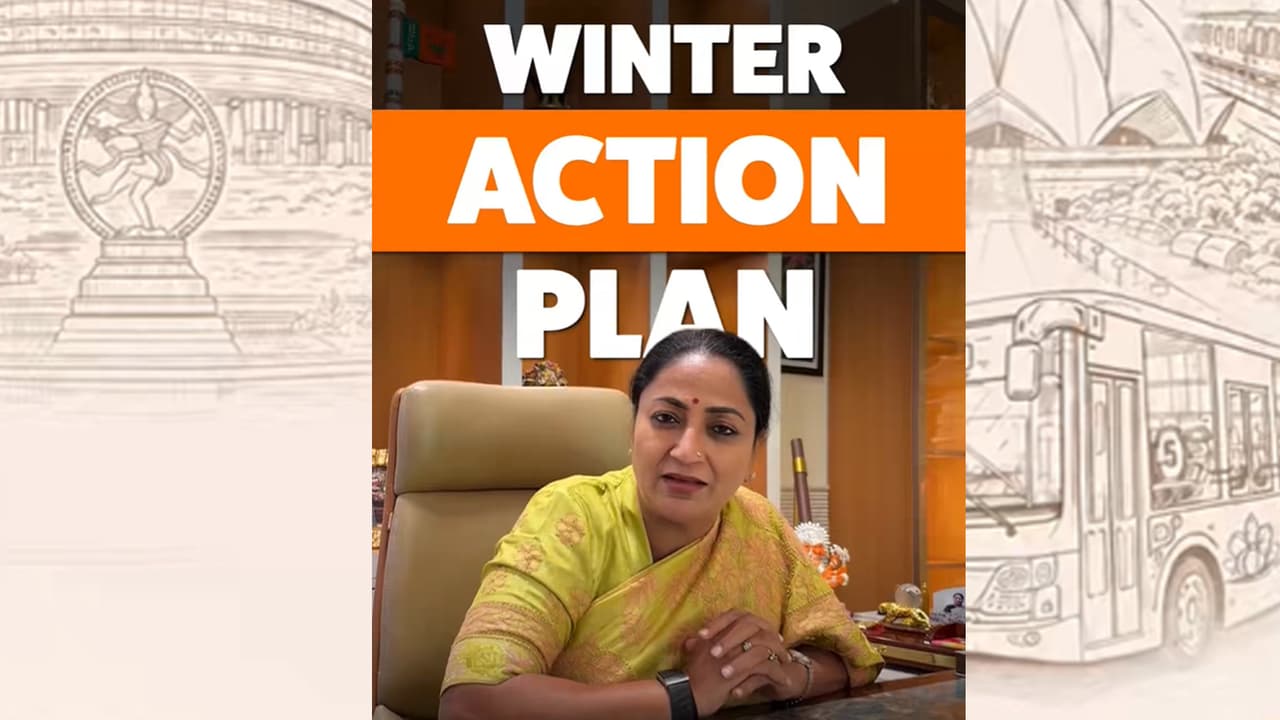
Delhi Winter Action Plan 2026 introduces proposed PUC checks, restrictions on older vehicles, construction curbs, work-from-home measures and higher parking charges to tackle pollution from November 1.
Delhi has formulated a comprehensive plan to counter the menace of rising air pollution in the winter season. Led by Chief Minister Rekha Gupta, the Winter Action Plan by the Delhi Government will be implemented from November 1, 2026, to February 28, 2027, covering vehicle emissions, dust, vehicular emissions, traffic, and open burning of waste.
Efforts to promote cleaner transport, electric buses, Delhi Metro connectivity, and work-from-home arrangement are also included in the plan with the objective of reducing the number of vehicles in Delhi for better air quality in winters.
Delhi Winter Action Plan: No Fuel Without a Valid PUC Certificate
An important part of this action plan relates to the use of fuel by vehicles that do not have a valid Pollution Under Control (PUC) certificate. As per the plan, such vehicles would not be allowed to get petrol or diesel from any fuel station from November 1. The system of automatic number plate recognition (ANPR) will be helpful in enforcing the rule at selected fuel stations.
It is recommended that vehicle owners should ensure that they have a valid PUC certificate.
Entry Restrictions on Older Vehicles in Delhi
Entry restrictions are envisaged on those vehicles registered outside of Delhi and which are non-compliant with BS-VI norms during November 1, 2026, to January 31, 2027. CNG and electric vehicles along with specific vehicles of emergencies and essential services will get exemption under relevant guidelines.
It intends to reduce pollution levels in the form of emissions from older, more polluting vehicles entering the city.
Dust Controlling Measures During Demolition & Civil Construction
This policy includes restrictions on demolition and open civil construction which is a dust-generating activity during November 1 to January 31. Certain exemptions are planned in favor of essential public infrastructure projects.
Also, there will be a more stringent blanket restriction on demolition and civil construction activities from December 10, 2026, to January 20, 2027.
Alongside, use of smog guns, misting systems, etc., by construction companies will also have to be done to minimize dust, which will be monitored using technology-based means.
Further, 50% physical presence of workers will be restricted in government and private offices from November 1 to January 31.
Boost for Electric Buses and Delhi Metro
The government aims to increase the usage of electric buses and Delhi Metro as well as last mile connectivity services. The government will also promote the Metro Saarthi application that would allow commuters to commute conveniently between metro stations and their homes/ places of work.
It can prove useful in minimizing reliance on private modes of transport as well as traffic pollution.
Parking Fee Hike and Waste Incineration to be Curbed
Between November 1, 2026 to February 28, 2027, the parking fee at authorized parking lots in Delhi is to be doubled. Parking fee at Delhi Metro Rail Corporation’s parking lots is not subject to the said measure.
Waste incineration would also have to be strictly controlled through actions by the concerned departments as well as resident welfare associations.
Effectiveness of Pollution Plan for the Winter Season in Delhi
Air pollution during winters depends upon various aspects such as vehicular pollution, dust created from construction activities, waste fires, and favorable weather conditions. The plan works on more than one aspect of air pollution instead of depending on only one action.
Effectiveness of this plan will depend upon strict implementation, dust management, and public participation. More actions can be taken in case of increased pollution according to the Graded Response Action Plan (GRAP).