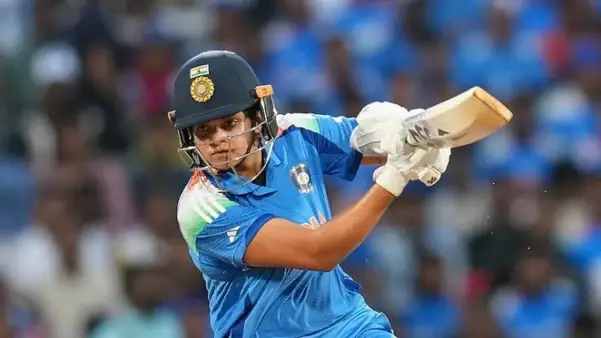
The incident took place during Zimbabwe’s innings when Shafali failed to hold on to a catch offered by Mugeri-Tiripano at mid-off. The chance came off Sree Charani’s bowling in the 12th over.
Following the missed opportunity, Shafali threw the ball to the ground in frustration. The reaction was considered a breach of the ICC’s rules governing player conduct and the treatment of cricket equipment during international matches.
Article 2.2 of the ICC Code of Conduct covers the abuse of cricket equipment, clothing or ground equipment during an international match. Such incidents can attract disciplinary action even when they occur in the heat of competition.
Shafali accepted responsibility for the offence, allowing the match referee to impose the proposed sanction without convening a formal hearing. The official reprimand and demerit point were therefore recorded under the ICC’s disciplinary framework.
The episode serves as a reminder that players are expected to maintain professional standards on the field, including when they make mistakes or experience moments of frustration. The Code of Conduct applies to players throughout international matches and is intended to uphold discipline and respect for the game.
What the ICC rules say about Level 1 breaches
Level 1 offences are among the lower categories of breaches under the ICC Code of Conduct, but they can still result in formal disciplinary consequences.
The prescribed sanctions for a Level 1 breach include an official reprimand and, depending on the circumstances, a fine of up to 50 per cent of a player’s match fee. Players can also receive one or two demerit points.
Demerit points remain on a player’s disciplinary record for 24 months. If a player accumulates four or more demerit points during that period, they are converted into suspension points under the ICC’s rules. Suspension points can result in a player being barred from participating in future matches, depending on the applicable provisions.
In Shafali’s case, the one demerit point is her first in the relevant 24-month period. The sanction does not automatically result in a suspension, but further offences during the period could increase her disciplinary record.
The system is designed to ensure that repeated breaches carry escalating consequences. It also allows match officials to deal with lower-level incidents without necessarily requiring a lengthy disciplinary process.
By admitting the offence and accepting the proposed sanction, Shafali avoided a formal hearing in connection with the incident.
Shafali bounces back with an unbeaten 55
Despite the disciplinary setback, Shafali had a productive outing with the bat in the second T20I, helping India clinch the three-match series with a match to spare.
The opener had struggled in the first match, scoring just four runs as Zimbabwe spinner Nyasha Gwanzura troubled India’s top order. India were reduced to 19/4 in that encounter, putting pressure on the batting line-up.
Shafali responded emphatically in the second match, smashing an unbeaten 55 off just 25 deliveries. Her aggressive innings featured boundaries and sixes as she attacked the Zimbabwe bowlers and gave India a flying start in the chase.
She found strong support from captain Smriti Mandhana, who remained unbeaten on 47 off 25 balls. The pair put together a 96-run opening partnership, effectively ending Zimbabwe’s hopes of defending their total.
The stand demonstrated the impact of an aggressive opening partnership in a short-format match. Shafali’s ability to score quickly allowed India to maintain a high run rate from the outset, while Mandhana’s contribution ensured the chase remained firmly under control.
The performance was particularly significant after Shafali’s disappointing score in the series opener. Her response helped India recover from the early setback and confirmed the team’s batting strength in the second match.
India seal series with nine-wicket victory
India’s bowlers had earlier restricted Zimbabwe to 102/8, leaving the hosts with a modest target to chase.
The Indian batters completed the chase in just 8.5 overs, winning by nine wickets. The result gave India an unassailable 2-0 lead in the three-match series and secured the series victory before the final game.
The comprehensive win reflected India’s control over both innings. The bowlers limited Zimbabwe to a manageable total, while the opening partnership between Shafali and Mandhana ensured there was little pressure during the chase.
For Zimbabwe, the defeat followed a difficult outing against an Indian side that capitalised on its opportunities with the bat. The hosts’ quick scoring also meant that the contest ended well before the scheduled completion of India’s innings.
India will now look to maintain their momentum in the third T20I in Raipur on Tuesday, October 20, with the opportunity to complete a 3-0 series sweep.
Focus shifts to the series finale
Shafali’s performance in the second match highlighted her ability to respond strongly after a poor outing, although the dropped catch and subsequent reaction also resulted in a disciplinary sanction.
The official reprimand and demerit point remain part of her ICC disciplinary record, but the incident did not prevent her from playing a decisive role in India’s series-clinching win.
With the series already secured, India will aim to carry their confidence into the final match and finish the contest unbeaten. Shafali will have another opportunity to contribute with the bat as the team seeks a clean sweep against Zimbabwe.