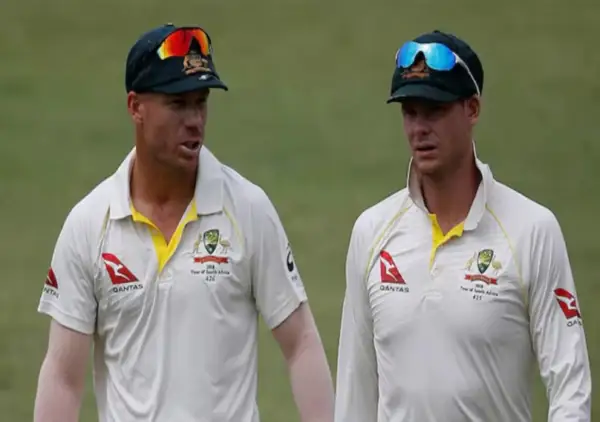
Melbourne: Former Australia head coach Justin Langer has reignited the debate surrounding the 2018 Sandpapergate ball-tampering scandal, defending Steve Smith, David Warner and Cameron Bancroft while criticising the treatment they received in the aftermath.
Langer’s comments come as Australia return to South Africa for their first Test series in the country since the infamous controversy in Cape Town in March 2018. The scandal remains one of the most significant incidents in modern Australian cricket, resulting in lengthy suspensions for three players and widespread scrutiny of the team’s culture.
The former coach argued that the three players bore a disproportionate share of the consequences for an issue that, in his view, extended beyond the Australian dressing room. He also questioned the impact of the controversy on the way bowlers and teams approached reverse swing, a traditional skill in Test cricket.
Langer defends Smith, Warner and Bancroft
The 2018 controversy involved Cameron Bancroft attempting to alter the condition of the ball with sandpaper during the third Test against South Africa at Newlands in Cape Town. Television cameras captured the incident, triggering a major disciplinary and reputational crisis for Australian cricket.
Steve Smith, who was captain at the time, and vice-captain David Warner were also implicated in the scandal. Cricket Australia subsequently imposed 12-month bans on Smith and Warner, while Bancroft received a nine-month suspension.
Smith was removed from the captaincy, and the incident prompted questions about the team’s leadership, standards and approach to the game.
Langer, who became Australia’s head coach later in 2018, has now revisited the fallout. He defended the players and suggested that they carried the burden of an issue that affected cricket more broadly.
His comments have brought renewed attention to the consequences of the scandal, particularly the intense public criticism faced by Smith and Warner when they returned to international cricket.
The episode had consequences beyond suspensions. It damaged Australia’s reputation and prompted the team to reassess its behaviour and expectations. The players involved continued to face questions about the incident long after serving their bans.
Debate over reverse swing returns
One of the central points raised by Langer concerns reverse swing, a bowling technique in which an older ball moves through the air in the opposite direction to conventional swing.
The technique has long been an important feature of Test cricket, particularly in conditions that favour fast bowlers. However, the Sandpapergate scandal intensified scrutiny of how players maintained and handled the ball.
Langer suggested that the consequences of the controversy extended across international cricket, with players becoming more cautious about techniques associated with changing the ball’s condition.
The debate has resurfaced during Australia’s current Test tour of South Africa. Australia demonstrated the effectiveness of reverse swing during the opening Test in Durban, renewing discussion about the role of the skill in the modern game.
The distinction between legal ball maintenance and deliberate tampering remains crucial. Players are permitted to use approved methods to maintain the ball, but deliberately altering its condition in violation of the laws is prohibited.
The return of reverse swing to the discussion does not change the findings of the 2018 investigation. Instead, it has reopened questions about whether the scandal had wider effects on the way teams approached the technique.
2018 controversy continues to shape Australia-South Africa rivalry
The Sandpapergate incident took place during a fiercely contested Test series between Australia and South Africa. Tensions between the teams had already risen following several confrontations involving players from both sides.
The controversy at Newlands transformed the tour into a major international cricket scandal. Bancroft was caught on camera attempting to alter the ball, while the subsequent investigation implicated Smith and Warner in the team’s leadership decisions surrounding the incident.
Australia eventually lost the four-Test series 3-1. The final result was overshadowed by the disciplinary action and the questions raised about the team’s conduct.
South Africa’s victory was significant, but the series became most widely remembered for the events in Cape Town and their consequences for Australian cricket.
The current tour marks Australia’s return to South African Test cricket for the first time since 2018. The renewed sporting rivalry has inevitably brought the old controversy back into public discussion.
The two teams are meeting in a different period, with Australia operating under a new leadership structure and South Africa entering the series as reigning World Test Championship winners.
Smith and Warner faced intense public backlash
The fallout from Sandpapergate extended well beyond the official suspensions. Smith and Warner faced significant public criticism, while Bancroft also had to rebuild his career after serving his ban.
The players’ returns to international cricket in 2019 attracted considerable attention. Smith and Warner were subjected to hostile reactions from sections of the crowd during the World Cup in England, highlighting how strongly the controversy had affected public opinion.
Langer has criticised the treatment they received, arguing that the backlash went beyond the punishment imposed by cricket authorities.
His defence of the players has reopened debate about accountability in professional sport, including the distinction between imposing formal sanctions and continuing to punish individuals through public hostility.
However, the controversy also involved questions of leadership and responsibility. Smith was captain, Warner was vice-captain, and Bancroft was the player caught handling the sandpaper. The official penalties reflected the findings and responsibilities attributed to each individual.
The scandal remains a defining episode for the players and Australian cricket, even as the team has moved through several leadership changes since 2018.
Australia return to South Africa amid renewed scrutiny
Australia’s current tour has brought the teams back to venues associated with the 2018 series. The opening Test in Durban ended in a 214-run victory for Australia, putting South Africa under pressure ahead of the next match.
South Africa’s performance has attracted scrutiny, while the return of reverse swing and the history between the sides have added another layer to the contest.
Langer’s remarks have ensured that the discussion is not limited to the cricket being played. By defending Smith, Warner and Bancroft and questioning the wider impact of the scandal, he has brought attention back to an episode that continues to influence how Australian cricket is viewed.
The debate also underlines the lasting impact of major sporting controversies. Although the suspensions imposed in 2018 have long since ended, the incident continues to shape conversations about fair play, leadership, accountability and the treatment of players.
As the Test series progresses, the focus will remain on performances on the field. Yet Langer’s comments demonstrate that Sandpapergate remains an unresolved subject for many associated with Australian cricket, eight years after the incident first shocked the sport.