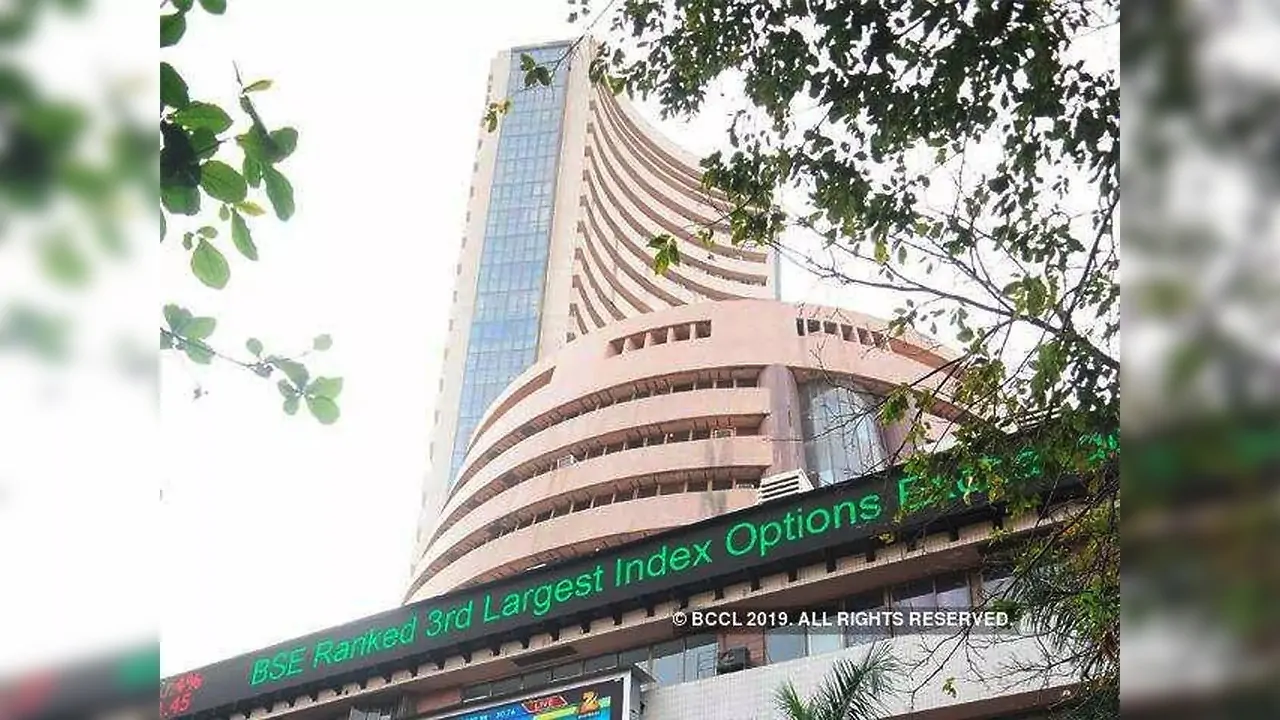
The Indian stock markets on Monday came under heavy selling pressure, with Sensex plunging nearly 900 points as investors turned cautious amid a volatile market environment.
The sharp decline weighed on investor sentiment, with market participants tracking global cues, developments in West Asia, crude oil price movements and the rupee-dollar trend for further direction.
At close, Sensex was down 876.37 or 1.17% at 73,852.90 while Nifty was at 22,888.95, down by 257.20 points or 1.11%.
The sell-off comes as investors remain watchful of corporate earnings, foreign institutional investor (FII) activity and developments surrounding the proposed Jio Platforms initial public offering (IPO). Rising geopolitical uncertainty and fluctuations in crude oil prices could also influence market sentiment, particularly given their potential impact on India’s inflation outlook, corporate costs and the broader economy.
Selling in banking stocks continue to intensify with the largest private bank lenders such as HDFC Bank, ICICI Bank and Axis Bank were the top index drags today on Dalal Street.
The decline came following their September quarter results. These three stocks together accounted for over 50 per cent of the selling in the Sensex.
What it means for investors?
For investors, a sharp market correction can lead to short-term volatility and a decline in portfolio valuations, but it does not necessarily signal a prolonged downturn.
Financial experts generally advise long-term investors to avoid panic-driven decisions, review their asset allocation and stay focused on their investment goals.
Investors considering fresh purchases may also benefit from assessing company fundamentals and valuations rather than attempting to time the market during periods of heightened uncertainty.
Crude Oil prices continue to remain a challenging factor for the markets but the commodity has shown a downward trend as the brent crude fell 1.5 percent to $108.27 a barrel, while West Texas Intermediate declined 0.6 percent to $100.83 a barrel.
Despite Monday’s decline, crude prices remained elevated, with geopolitical tensions continuing to influence the outlook.
As the markets volatility continue to persist, the investors need to review their asset allocation and avoid making concentrated bets in individual stocks or sectors in an attempt to recover losses quickly.
Further, for the investors with portfolios heavily tilted towards equities may need to assess whether their exposure is consistent with their financial goals and ability to withstand volatility.
Vinod Nair, Head of Research, Geojit Investments Limited said, “Indian equities came under renewed selling pressure, reversing the recent recovery as weak global cues and selling in private banks and IT stocks weighed on investor sentiment. Global markets remained cautious ahead of a busy week of corporate earnings. Private banks remained under pressure following quarterly earnings and concerns over margin trends, while PSU banks bucked the broader weakness, supported by expectations of relatively resilient margins and asset quality.”
“Crude oil prices eased after the US waived key sanctions linked to Russia, raising expectations of increased Russian fuel supplies to the global market. However, crude prices remained elevated, with geopolitical tensions continuing to influence the outlook. The Nifty slipped below the psychologically important 23,000 level, while broader market breadth remained weak, reflecting cautious investor sentiment amid earnings-related volatility and uncertain global cues.”