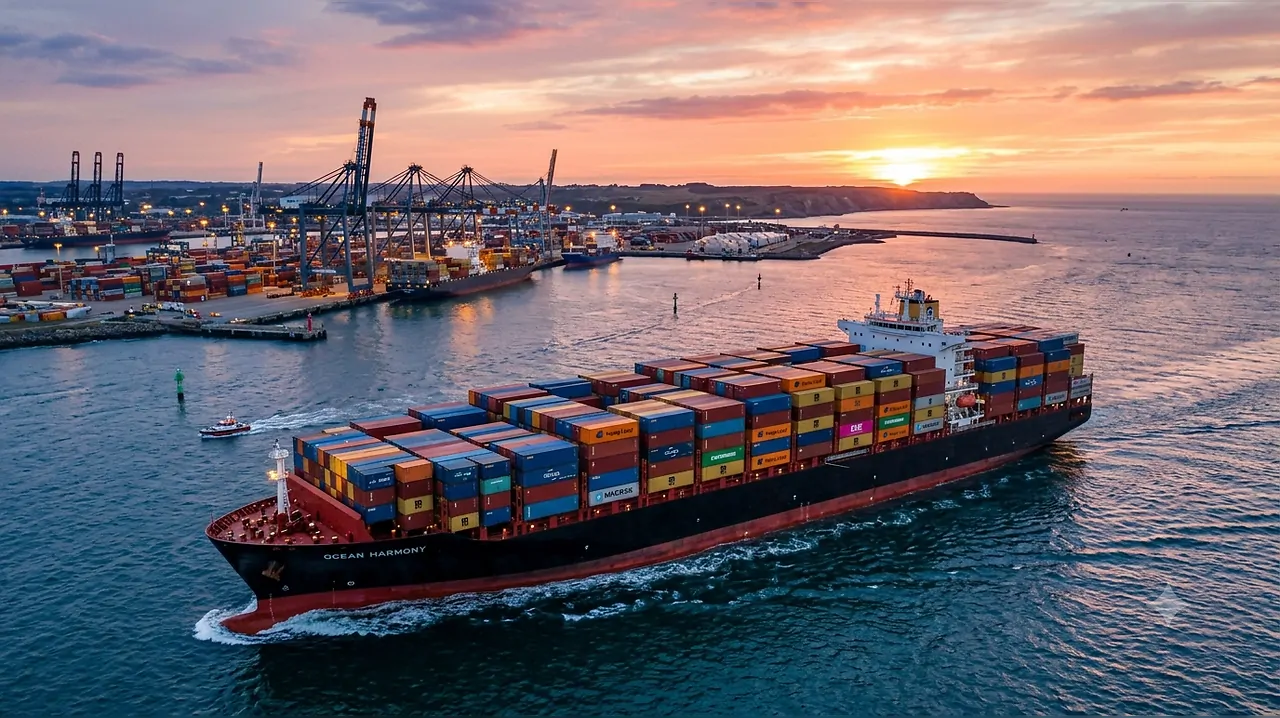
Global container freight rates have surged 130 percent since February 2026 amid renewed tensions in West Asia, raising concerns over shipping costs as India’s container-based export-import trade continues to grow, according to a report by Jefferies.
The report stated global freight rates rebounded after steadily declining from early 2025, when elevated rates in 2024 began easing amid an improving demand-supply balance. The renewed increase in shipping costs has brought freight rates back into focus for businesses involved in global trade. Jefferies said the potential impact of shipping lines returning to the Suez Canal, despite continuing tensions in West Asia, remains an important factor to monitor.
“Freight rates have spiked 130 percent since February 2026 due to the impact of the Middle East tensions. The potential impact of shipping lines’ return to the Suez Canal, despite Middle East tensions, is a key monitorable,” the study highlighted. The data showed that global container freight rates rose from around $2,000-2,500 in February 2026 to approximately $4,000-4,500 in October 2026. This increase comes after rates remained relatively low in early 2026.
The report also mentioned that the increase in freight rates comes as India’s export-import trade recorded strong growth in September 2026.
According to the report, the value of this trade rose 23 percent year-on-year during the month, supported by a 22 percent increase in exports and a 23 percent rise in imports. Exports to the United States grew 48 percent year-on-year in September. However, exports to the United Arab Emirates and Saudi Arabia declined by 12-15 percent year-on-year, according to the report. Jefferies highlighted the potential return of shipping lines to the Suez Canal as a key factor to watch amid continuing Middle East tensions. Changes in shipping routes could affect global freight rates, making developments in the region important for businesses dependent on international cargo movement.