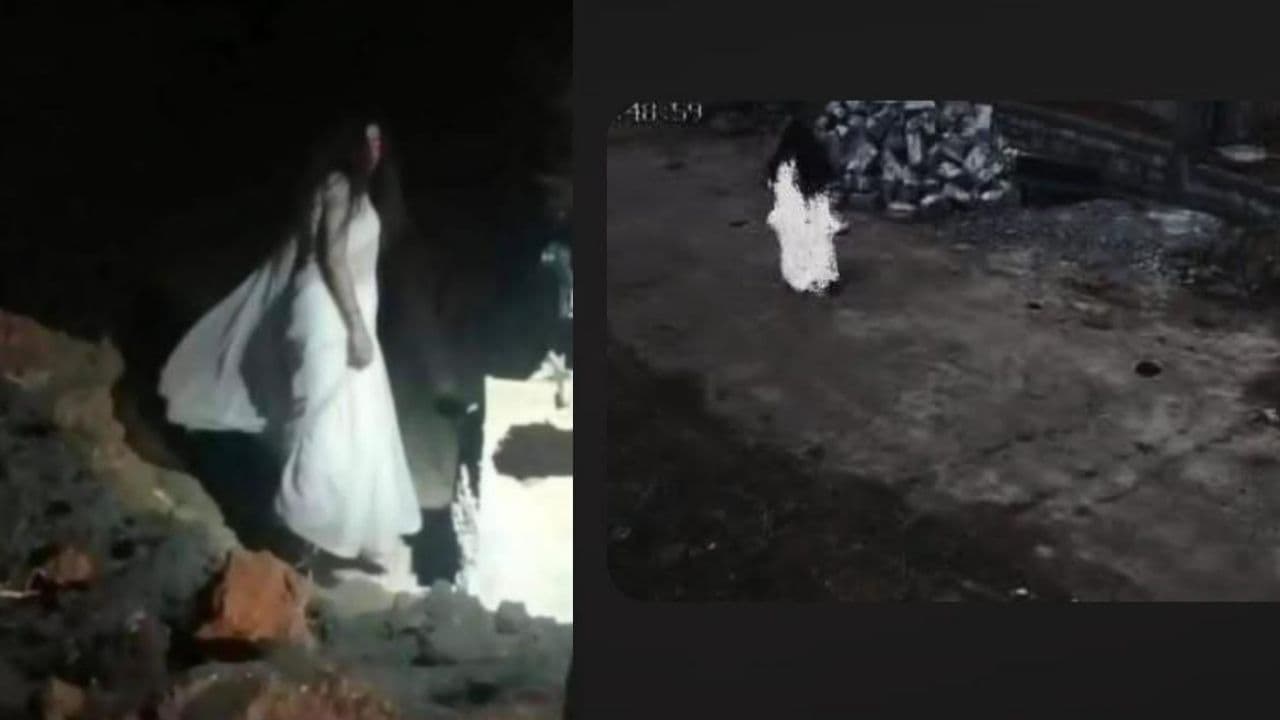
Police in Karnataka’s Channagiri have debunked viral rumours claiming that a ghostly woman in a white saree attacked three labourers near a bypass. Police suspect AI-generated images were used to spread panic and are investigating the Instagram account.
Road construction work is under way on the Channagiri town bypass in Karnataka’s Davanagere district. However, the stretch has recently become the subject of social media rumours claiming that a ghostly woman dressed in a white saree haunts the area. A photograph allegedly showing the woman standing beside the road at night has gone viral, raising concerns among some local residents who travel through the area. The police have dismissed the claims as false and warned the public against spreading unverified information.
White Saree Woman’s Photo Goes Viral
Messages circulating on social media claim that a ghost attacked three labourers operating a JCB machine near the bypass on the night of October 12. A photograph purportedly showing a woman in a white saree standing beside the road at night has been widely shared online.
Images allegedly showing scratch marks and injuries on the workers’ backs and hands have also circulated, adding to public concern. However, the police have dismissed the claims as false.
Police Confirm Ghost Rumours Are Fake
After becoming aware of the rumours, Channagiri Police Circle Inspector Ravish visited the location to assess the situation. He confirmed that no such attack had taken place and dismissed the claims that a woman in a white saree haunts the area.
According to the police, the images and messages were allegedly created or circulated using artificial intelligence (AI) to spread fear among the public. The police are investigating the Instagram account that first shared the claims.
Police Warn Against Spreading Fake News
The police have warned that strict action will be taken against those found spreading false rumours and creating panic among the public.
Residents have been urged to avoid sharing unverified photographs and messages on social media. The incident highlights how misleading digital content can spread rapidly online and cause unnecessary fear in local communities.