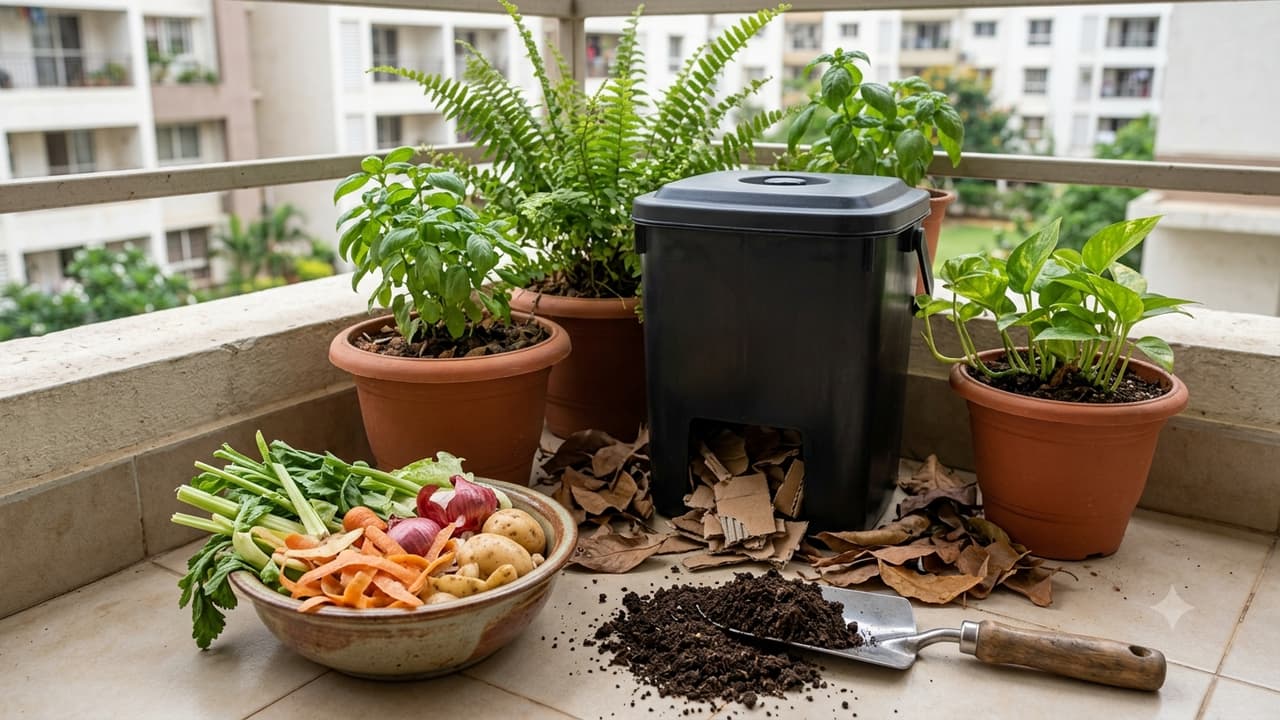
Vegetable peels and kitchen scraps can be transformed into valuable compost to enrich your home garden. By properly managing these everyday leftovers, you can improve soil structure and reduce household waste. However, it is crucial to compost them correctly rather than burying raw scraps to avoid pests and mould.
Vegetable peels often end up in the kitchen bin, but some of these everyday scraps can be put to good use in your home garden. Potato peels, carrot tops, onion skins and other kitchen leftovers can contribute to compost, helping turn household waste into a useful soil amendment.
However, not every peel should be buried directly around plants. Some scraps attract pests, take time to break down or may encourage mould if they are left in damp pots. The key is knowing how to use them properly.
Here are 7 ways vegetable peels and kitchen scraps can help your garden.
1. Turn Vegetable Peels Into Compost
One of the most useful ways to reuse vegetable peels is to add them to a compost bin. Peels from carrots, potatoes, cucumbers and other vegetables provide organic material that breaks down with the help of microorganisms.
Chop the scraps into smaller pieces to help them decompose faster. Mix them with dry materials such as dry leaves, shredded cardboard or untreated paper to balance the moisture and structure of the compost.
Keep the pile damp like a wrung-out sponge, rather than soaking wet, and turn it periodically to allow air to circulate. Finished compost should look dark and crumbly and have an earthy smell.
2. Use Banana Peels in Your Compost
Although banana peels are fruit waste rather than vegetable peels, they are common kitchen scraps that can be useful in a garden compost pile.
They contain organic matter and plant nutrients, including potassium. Chop the peels into small pieces before adding them to compost so they break down more readily.
Avoid assuming that burying a banana peel beside a plant will deliver an immediate nutrient boost. Decomposition takes time, and composting helps make the material more suitable for use in the garden.
3. Add Potato and Carrot Peels to Your Compost Bin
Potato and carrot peels can be added to a well-managed compost system. They break down into organic matter that can improve the structure of garden soil when the compost is ready.
Cut thick peels into smaller pieces and mix them with dry leaves or other carbon-rich materials. Avoid adding diseased plant material or large quantities of scraps that are mouldy or spoiled.
Do not leave piles of raw peels on the soil surface around pots. They can attract flies and other unwanted visitors, especially in warm or humid weather.
4. Reuse Onion Skins in Compost
Onion skins are often discarded because they are thin and papery, but they can be composted along with other vegetable scraps.
Add them in moderate amounts and mix them into the compost rather than allowing them to form a dry layer. Like other kitchen waste, onion skins need moisture, air and time to break down.
Avoid using a concentrated onion-skin soak as a guaranteed plant fertiliser. Homemade liquids vary in nutrient content, and their effects on plants are not always predictable.
5. Make Leaf Compost With Vegetable Scraps
Dry leaves collected from the garden can be combined with vegetable peels to create a useful compost mixture. The dry leaves provide carbon-rich material, while fresh peels add moisture and nitrogen-rich organic matter.
For a simple home setup, alternate layers of chopped kitchen scraps and dry leaves in a compost bin. Keep the mixture aerated and lightly moist, and cover it to discourage pests while still allowing airflow.
This method can reduce household waste while producing compost for pots, planters and garden beds.
6. Use Finished Compost to Improve Potting Mix
Once vegetable scraps have fully decomposed, the resulting compost can be used to enrich garden soil. It adds organic matter and can help improve soil structure and moisture retention.
Mix mature compost into potting soil in moderate quantities rather than filling a container entirely with compost. Plants still need a balanced growing medium with good drainage and enough air around their roots.
For balcony gardens, use only fully finished compost. Fresh scraps can rot inside containers, produce unpleasant smells and create conditions that encourage pests.
7. Start a Small Kitchen Composting System
You do not need a large garden to compost vegetable peels. A covered compost bin or suitable home composting system can work in a balcony or utility area, provided it is managed correctly.
Collect vegetable peels, fruit scraps and coffee grounds, then balance them with dry leaves, shredded cardboard or other appropriate dry materials. Avoid adding meat, dairy products, oily food or heavily seasoned leftovers to a basic home compost bin, as these can cause odours and attract pests.
Check moisture levels regularly and provide adequate airflow. If the compost smells rotten, it may be too wet or lack air. Add dry material and mix it to help restore balance.
What Not to Do With Vegetable Peels in Your Garden?
- Do not bury large amounts of fresh peels in pots: They can attract pests and decompose slowly.
- Avoid using diseased or mouldy scraps: These may create problems in a poorly managed compost system.
- Do not rely on peel water as a complete fertiliser: It may not supply the nutrients your plants need in suitable amounts.
- Keep compost covered and managed: This helps discourage flies, rodents and unpleasant smells.
- Use compost only when mature: Fresh kitchen scraps are not a substitute for finished compost.
Give Kitchen Waste a Second Life
Vegetable peels do not have to go straight into the bin. With a little planning, carrot skins, potato peels, onion skins and other kitchen scraps can become part of a simple composting routine.
The most reliable approach is to compost them with suitable dry materials, allow them to break down fully and then use the finished compost to support your plants. It is an easy way to reduce kitchen waste while making better use of the resources already available at home.