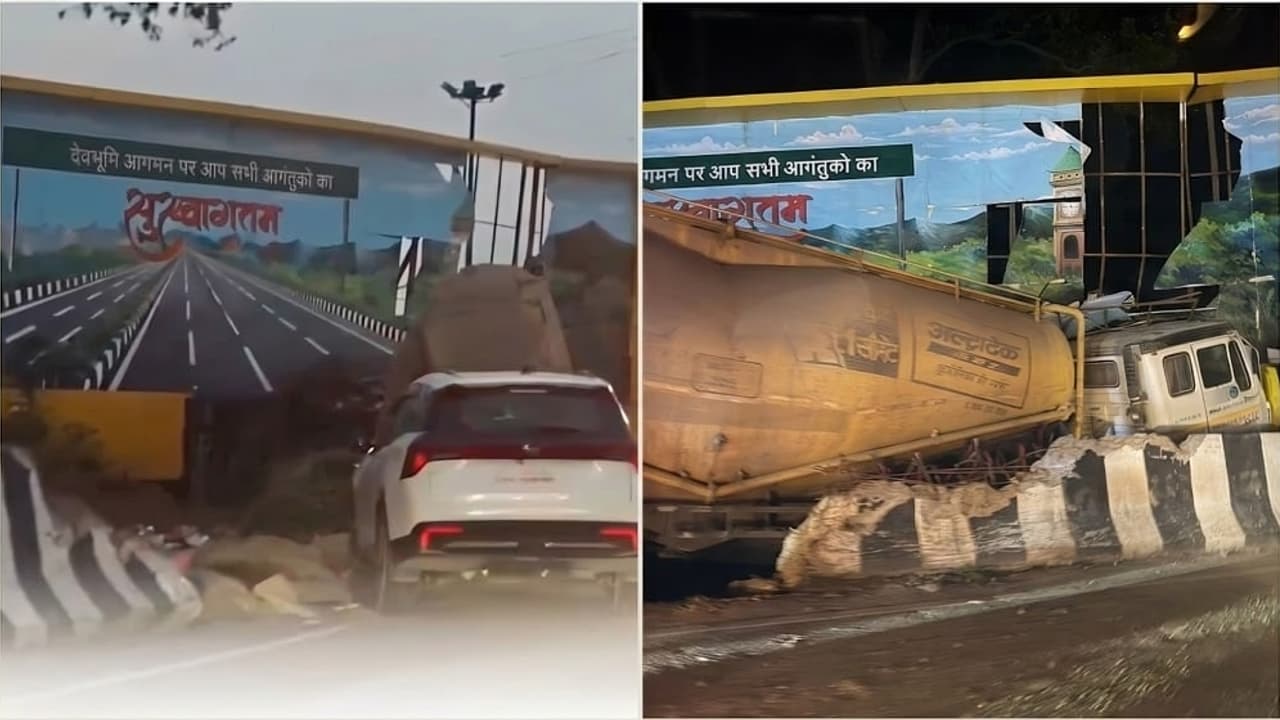
A video showing a container truck which crashed into a wall on Delhi-Dehradun Expressway after its driver reportedly mistook a realistic road mural for an actual roadway has gone viral. The driver survived, but the incident sparked online criticism of the decision to approve the painting.
A container truck driver reportedly mistook a road mural for an actual roadway near the Delhi-Dehradun Expressway in Dehradun, Uttarakhand and crashed into a wall. The impact damaged the truck, but the driver fortunately survived. A video of the incident has drawn wide attention online and several social media users questioned the decision to paint a realistic road scene in an area used by motorists.
According to reports, the driver was angry after the collision. The incident has prompted fresh questions about whether road murals and other decorative designs can mislead motorists if they are not clearly distinguishable from the actual road.
Viral video, sparks debate over road mural
The video triggered criticism on social media, with several users blaming the decision to approve the mural. Reacting to the footage of the damaged truck near the mural, a social media user criticised the authorities responsible for approving the painting. The user described a realistic, life-sized depiction of a road as a poor decision that could put motorists at risk.
Another user also called the decision to approve the design misguided.
One user commented, “When the road looked clear, I turned the steering.” The remark appeared to refer to the driver’s reported confusion over the mural.
Other users responded with sarcastic comments, while some raised questions about whether truck drivers could mistake such artwork for an actual road.
The reactions reflect a wider concern about the use of realistic visual designs near roads, where drivers need clear and immediate information to judge the route ahead.
The incident has also renewed concerns about road safety on the Asharodi-Mohabbewala stretch, where repeated accidents have raised questions about the effectiveness of measures taken to prevent crashes.
More than a dozen major accidents reported in six months
The latest collision has brought renewed attention to the Asharodi-Mohabbewala stretch, where reports indicate that more than a dozen major accidents have occurred over the past six months.
The repeated incidents have raised concerns about the movement of heavy vehicles and the effectiveness of preventive measures along this section of the expressway.
On September 20, a cement-laden truck reportedly overturned, killing a biker. On October 6, a speeding truck hit a police bus, adding to concerns about traffic safety on the route.
These incidents have put the spotlight on the risks faced by motorists travelling alongside heavy vehicles. They have also prompted questions about whether existing road engineering measures, signs and traffic controls are sufficient to prevent further accidents.
While each crash may involve different circumstances, the frequency of reported incidents has increased scrutiny of the safety arrangements on the stretch.
Can realistic road paintings confuse drivers?
Road murals can be used to improve the appearance of public spaces, but designs that closely resemble real roads may create confusion if drivers cannot immediately distinguish artwork from the actual roadway.
Motorists travelling at speed have limited time to interpret what they see ahead. Clear road markings, visible signs and an unobstructed view of the route are therefore important, particularly on roads used by heavy vehicles.
Road safety concerns remain
The recurring accidents on the Asharodi-Mohabbewala stretch underline the need for road safety measures that address the risks faced by all road users.
Clear signage, visible road markings, suitable barriers and stricter enforcement of traffic rules are among the measures that may help reduce risks. Authorities may also need to examine the placement and design of decorative road artwork to ensure it does not distract or mislead motorists.