
Round Hill Investments CEO Dave Maza cited Chinese competition concerns, comments from Broadcom CEO Hock Tan, and macroeconomic uncertainty for the drop in investor sentiment.
- In an interview with CNBC, CEO Dave Maza said memory supply remains tight, with chips sold out through 2027 and customer demand extending into 2028.
- According to Maza, reports that Chinese memory-chip maker CXMT could enter more advanced memory markets remain “unsubstantiated” and “unverified.”
- He added that longer-term customer agreements could make memory-chip revenue more predictable and support higher valuation multiples.
The Roundhill Memory ETF (DRAM) was on track for its longest losing streak since inception on Thursday, even as Round Hill Investments CEO Dave Maza said memory-chip demand remains strong, with supply sold out through 2027.
In an interview with CNBC, Maza said “investor sentiment has turned” against memory stocks, citing concerns about Chinese competition, comments from Broadcom (AVGO) CEO Hock Tan and a challenging macroeconomic backdrop.
He added that memory-chip makers remain at the “tip of the spear” in the AI buildout, adding that “the long-term fundamental case is there.”
DRAM ETF Extends Losing Streak
DRAM stock fell as much as 3.3% in midday trade, set to log its eighth week in the red. On Stocktwits, retail sentiment around the ETF shifted to ‘neutral’ from ‘bearish’ territory over the past day.
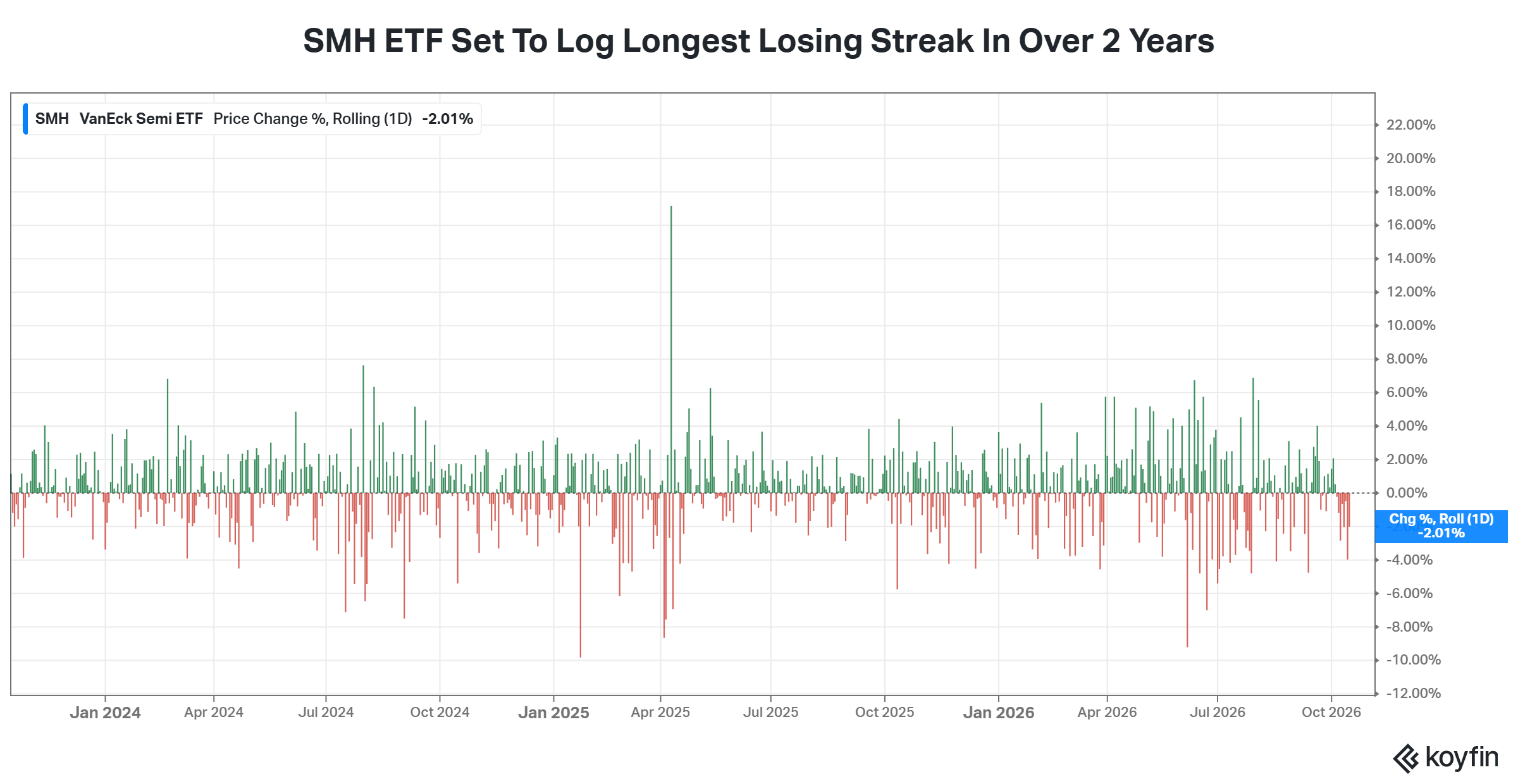
The weakness extended across the semiconductor sector. The VanEck Semiconductor ETF (SMH) dipped over 2% in midday trade, on track for an eighth consecutive session of decline, putting it on track for its longest losing streak in two years.
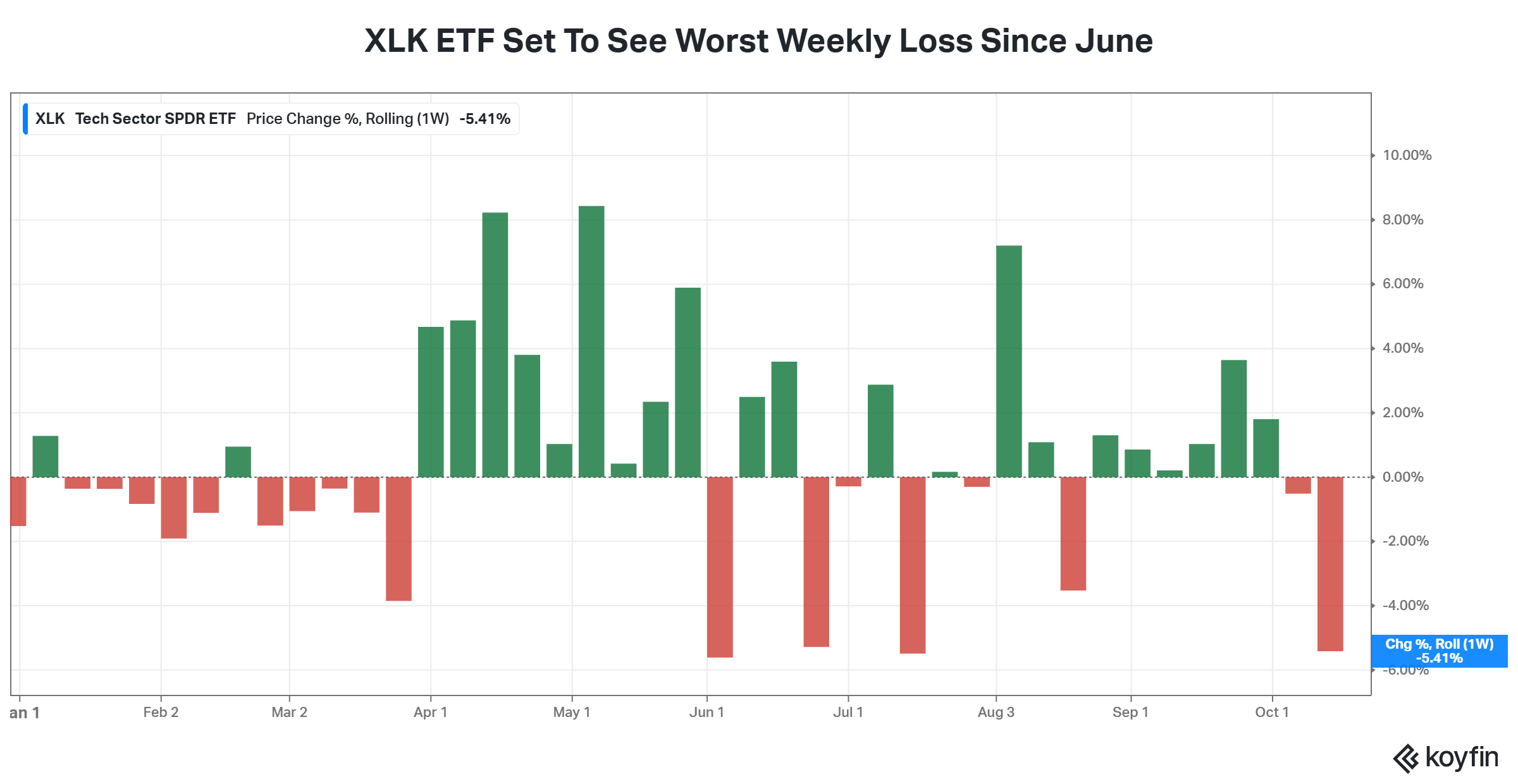
Meanwhile, the Technology Select Sector SPDR Fund (XLK) fell around 1.3%, on track for its worst week since June. Both XLK and SMH saw retail sentiment continue to trend in the ‘bullish’ zone over the past day.
Long-Term Memory Contracts Could Support Higher Valuations
“The long-term fundamental case is there,” Maza said, pointing to persistent supply constraints and the prospect of demand extending well beyond the next few years. According to him, the industry is also undergoing a structural shift that could change how investors value memory-chip makers.
Maza said that, historically, the companies have traded at relatively low price-to-earnings multiples because their businesses are highly cyclical, with earnings swinging sharply between periods of shortage and oversupply.
In the current backdrop, their move toward longer-term customer agreements could help make revenue more consistent and reduce some of that cyclicality. If that is the case, he said it could support higher valuation multiples over time.
CXMT Competition Fears Weigh On Memory Chip Stocks
Maza noted that concerns about Chinese memory-chip maker CXMT were another factor weighing on the sector. Reports that the company could use new technology to compete in more advanced memory markets remain “unsubstantiated” and “unverified,” he said.
He cautioned that developing the technology and bringing it to production at scale could take until 2028, 2029 or even 2030.
Broadcom CEO Comments Add To Memory Market Uncertainty
Maza added that comments from Broadcom CEO Hock Tan have also added to uncertainty. Tan has raised questions about the productivity gains from enterprise AI deployments and suggested memory shortages could ease within a year.
According to him, some of Tan’s comments may have been taken out of context, but he acknowledged that they did little to improve sentiment toward memory stocks.
Beyond industry-specific concerns, Maza said a challenging macroeconomic backdrop is putting pressure on memory stocks. The producer price index (PPI) rose 1.3% in September, above the 0.6% economists expected, and was up 6.3% year over year versus a 5.5% forecast.
The report also followed a stronger-than-expected consumer price index earlier in the week. Given the hotter-than-expected inflation readings, the Federal Reserve may keep monetary policy tighter for longer. For memory-chip makers, higher borrowing costs can weigh on data-center construction and enterprise hardware spending, both key demand drivers.
Read also: CRWV Stock On Track For 4-Day Slide Amid CoreWeave’s Debt Test: Analysts Split On Whether Selloff ‘Grossly Overexaggerated’
For updates and corrections, email newsroom[at]stocktwits[dot]com.<