-
The Supreme Court rules that conversion to Islam alone does not entitle a person to reservation benefits under a notified Muslim Backward Class.
-
The court upholds the Madras High Court’s decision quashing a Tamil Nadu government order on community certificates.
-
It says post-conversion eligibility must be established under the applicable constitutional and legal requirements.
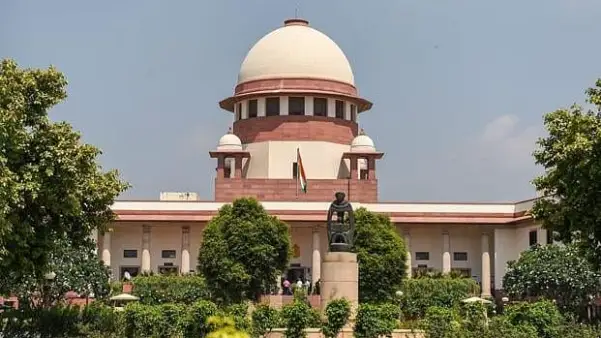
The Supreme Court on Thursday held that a person converting to Islam cannot, solely on the basis of conversion, claim membership of a notified Muslim Backward Class community or seek reservation benefits under that category.
A bench of Justices Prashant Kumar Mishra and Shree Chandrashekhar dismissed the Tamil Nadu government’s appeal against a Madras High Court order that quashed a government order issued on 9 March 2024 concerning the issuance of Backward Class (Muslim) community certificates.
The top court said a person’s former caste or community status could not automatically be transferred to a notified Muslim Backward Class category following conversion. Nor could a private religious body conclusively determine a person’s statutory eligibility for such benefits.
The bench said the government order created a route through which a person could move from a pre-conversion backward social order into a notified Muslim Backward Class without establishing the necessary social and legal connection.
It held that social backwardness associated with a person’s earlier status could not, by itself, establish membership of a different notified Backward Class community after conversion to Islam or another non-Hindu religion.
The court also referred to paragraph 3 of the Constitution (Scheduled Castes) Order, 1950, under which a person professing a religion other than Hinduism, Sikhism or Buddhism cannot be deemed to be a member of a Scheduled Caste.
It said the entitlement to affirmative action under Article 16(4) of the Constitution could not automatically continue where the benefit was specifically linked to membership of a particular Hindu social order.
The bench clarified that reconversion to Hinduism would not automatically restore eligibility for reservation. The competent authority would have to independently examine whether the original caste or social identity had genuinely revived and whether the person met the applicable legal requirements.
It added that a community certificate merely recognises a status and does not create or confer it.
The Tamil Nadu government had argued that its 2024 order was intended to ensure that people from socially and educationally backward communities were not deprived of reservation benefits solely because they had converted to Islam. It had also relied on a report by the Tamil Nadu Backward Classes Commission.
The case originated with a petition by Sameer Ahamed, who converted from Hinduism to Islam in 2015, with the conversion notified through a Gazette notification in 2016. He later married according to Islamic rites and sought a certificate identifying him as belonging to the Muslim Lebbai community to claim reservation benefits.
On 25 June, the Madras High Court ruled that conversion to Islam alone did not entitle a person to reservation under the Backward Class (Muslim) category and declared the government order unconstitutional.
The Supreme Court declined to interfere with that ruling.
Islamic preachers, 10 others sentenced for life in UP religious conversion case