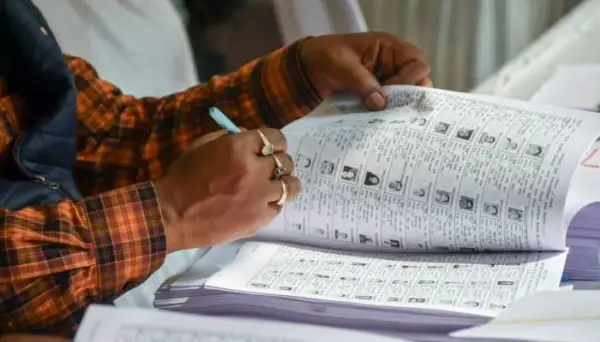
The Election Commission on Thursday ordered a Special Summary Revision (SSR) of electoral rolls in 17 states and Union Territories, giving another opportunity to eligible citizens whose names were left out after the Special Intensive Revision (SIR).
Draft rolls will be published on November 12, while claims and objections can be filed until December 11. The final electoral rolls will be published on January 4, 2027.
What the new electoral roll revision means for voters
The decision marks a return to the Election Commissions annual exercise of updating existing voter lists. Unlike the SIR, under which electoral rolls were prepared afresh through intensive verification, the SSR will take the existing lists as its starting point and process applications for additions, corrections and deletions.
The difference is significant for people who were previously registered but did not find their names on the new rolls. The SSR gives them another opportunity to seek inclusion, although the announcement does not automatically restore any name omitted during the SIR. Every application will still have to be examined by electoral officials.
Which 17 states and Union Territories are covered?
The exercise covers 14 states: Assam, Bihar, Chhattisgarh, Goa, Gujarat, Kerala, Madhya Pradesh, Manipur, Punjab, Rajasthan, Tamil Nadu, Uttar Pradesh, Uttarakhand and West Bengal. The three Union Territories are Andaman and Nicobar Islands, Lakshadweep and Puducherry.
The SIR has been completed in 16 of these jurisdictions. Assam is the exception, as the Commission had opted for a separate revision process there instead of an SIR. The SSR will use January 1, 2027, as its main qualifying date. The Commission will also accept advance applications from people who become eligible on April 1, July 1 or October 1, 2027.
After the draft rolls are published on November 12, electors will have until December 11 to submit claims and objections. Officials will examine these applications before releasing the final rolls on January 4. The review follows an earlier Election Commission direction for special enrolment drives targeting young, first-time and other eligible voters left out of the lists.
Form 6 changes and safeguards against voter deletion
The process follows a dispute over an additional declaration linked to Form 6, which is used to apply for voter registration. During the SIR, applicants were asked to establish a link between themselves, or their relatives, and electoral rolls from an earlier intensive revision.
The Election Commission has removed that additional online declaration in jurisdictions where the SIR has ended, reverting to the prescribed Form 6 for ordinary enrolment.
The latest SSR instructions also address deletions. According to reports, deletions are to be processed through the prescribed Form 7 rather than solely on the basis of a software match. This places a formal application at the centre of the deletion process.
Voters who cannot find their names can check the electoral roll through the Election Commissions voter services portal and apply for inclusion using Form 6. Those seeking a change of address or correction to an existing entry can use Form 8. Filing an application does not, by itself, guarantee inclusion.
Why the revision matters before the 2027 Assembly elections
The announcement affects Uttar Pradesh, Punjab, Uttarakhand, Goa and Manipur, where Assembly elections are due in 2027. Disputes over exclusions have become particularly acute in Punjab.
Rahul Gandhi alleged, in a representation to the Chief Justice, that the number of registered voters in Punjab fell from 2.14 crore in June 2026 to 1.93 crore in the draft roll published in August. These figures form part of his allegation and are not a finding by any court.
Questions over the SIR have already reached the judiciary. In a case concerning a Goa voters missing name, the Election Commission told the Bombay High Court that absence from a draft SIR roll did not technically mean that a voter had been deleted, as the list was being prepared afresh. The court has reserved its judgment.
Separately, on October 15, the Supreme Court sought responses to a petition filed by INDIA bloc leaders alleging irregularities in voter deletions and electoral database decisions. The allegations have not been decided by the court.
When will other states get their SSR schedule?
The Commission said it would announce dates later for areas where SIR work is continuing or has recently concluded, including Delhi, Maharashtra, Karnataka, Telangana and Andhra Pradesh. Separate revision schedules will be issued for Himachal Pradesh, Jammu and Kashmir and Ladakh, taking weather conditions into account.
For voters in the 17 affected states and Union Territories, the next step is to check the draft electoral roll when it is published on November 12 and submit any claims or objections before the December 11 deadline.