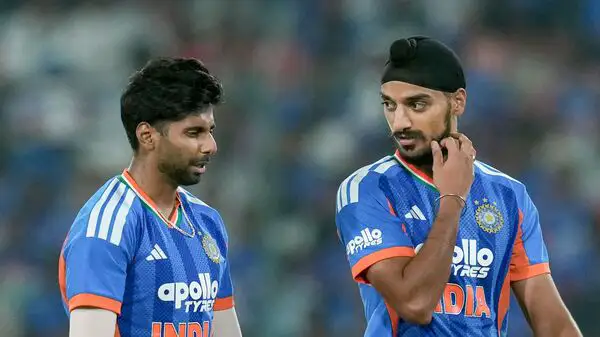
Shreyas Iyer-led India had the perfect opportunity to seal the five-match T20I series against West Indies in Hyderabad on Wednesday. India came into the match on the back of a 2-1 lead, and a win on Wednesday would have sealed the series with a match to spare.
However, India’s death bowling was tested once again after they opted to field first, as West Indies posted a strong total of 247/3 on the back of Shai Hope’s unbeaten 102.
In reply, India were restricted to 223/9 after 19.3 overs, with Arshdeep Singh, the No. 11 batter, retiring hurt after being struck on his left shoulder courtesy of a short-length ball from Shamar Joseph.
The defeat means that the series is now level at 2-2 and the winner will be decided in the fifth T20I in Bengaluru on Saturday.
A costly start in the powerplay
India’s problems began as early as in the powerplay, as West Indies posted 79/1 after six overs. By doing so, West Indies equalled the joint-highest powerplay total against India in T20Is. The opening partnership between Hope and Jewel Andrew yielded 52 runs from 26 deliveries before Axar Patel dismissed the latter for 21 runs off 16 balls.
Arshdeep conceded 17 runs from his second over, whereas Mayank Yadav went for 20 runs in his third over, including five wides.
These expensive overs allowed West Indies to establish a scoring rate of more than 13 runs per over during the early stages. Arshdeep also conceded 19 runs in the sixth over, when Shimron Hetmyer struck a six and two fours.
Prince Yadav provided some relief by dismissing Hetmyer for 33 off 12 balls in the ninth over. However, the West Indies batter had already accelerated the innings with four fours and two sixes, setting up a great platform for a big total. The dismissal did not significantly slow down Hope, who continued scoring boundaries against the Indian attack.
Mayank Yadav and Arshdeep Singh struggle to contain the scoring
Mayank finished with figures of 0/52 from four overs, conceding runs at 13 per over. He bowled six wides and one no-ball, gifting West Indies runs. Hope scored 21 runs from 11 balls faced against Mayank, while Rutherford made 17 from four balls, including two sixes.
Arshdeep also conceded 52 runs in four overs, taking one wicket at an economy rate of 13. His early spell gave Andrew and Hetmyer opportunities to attack, while his later overs failed to contain Rutherford.
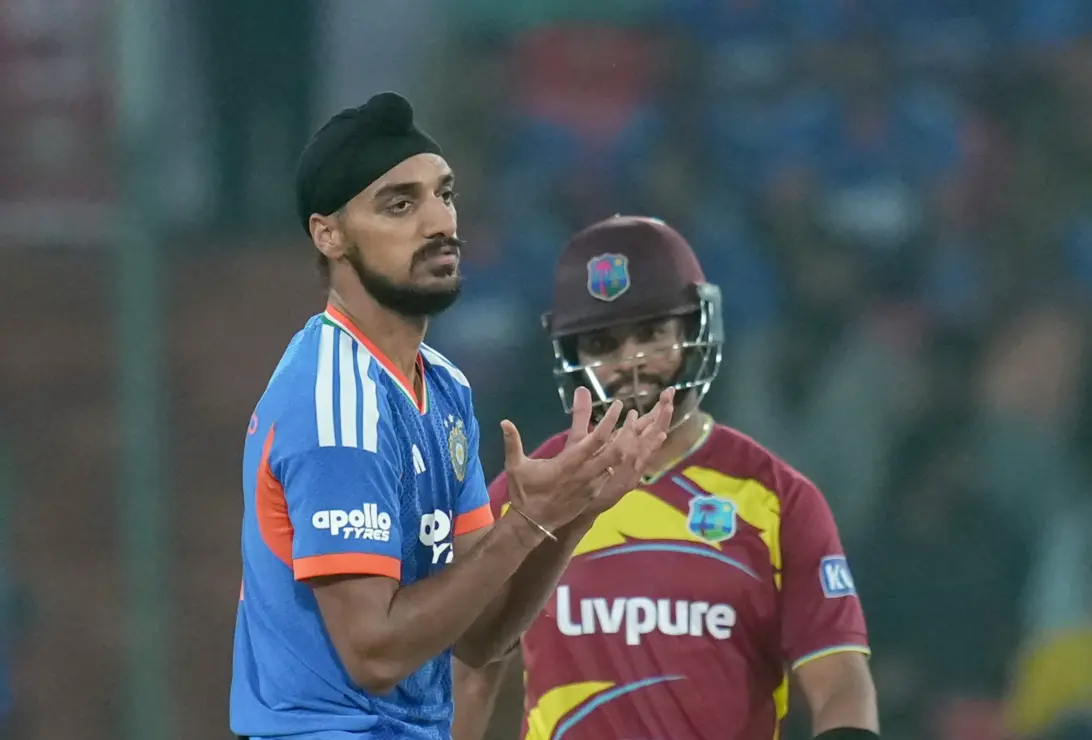
In the 18th over, Arshdeep attempted to bowl full deliveries and yorkers against Rutherford. However, the execution was inconsistent: three wides and a six helped West Indies collect 11 runs from the over. He did produce a yorker that Rutherford failed to connect with on the final delivery, demonstrating that the intended variation could still be effective when executed accurately.
Prince Yadav, India’s most economical bowler
On a day when the rest of India’s bowlers went for economy rates of more than 10, Prince Yadav was the standout bowler. He finished with figures of 1/36 from four overs at an economy rate of nine.

His figures were better than those of his fellow seamers, although he could not prevent the West Indies from finishing strongly.
Axar Patel returned 1/45 from four overs, while Nitish Kumar Reddy conceded 39 runs in three overs. Naman Dhir’s only over cost 19 runs. These figures left India without an economical option to consistently slow the scoring once Hope and Rutherford had established themselves.
Extras compound India’s problems
India conceded 13 wides and one no-ball, accounting for 14 runs in extras. Mayank alone accounted for six wides and the no-ball, while Arshdeep also conceded wides.
The issue was therefore not simply the number of boundaries conceded. India’s inability to consistently execute their planned lines and lengths, combined with wides and a no-ball, made it harder to control the innings.