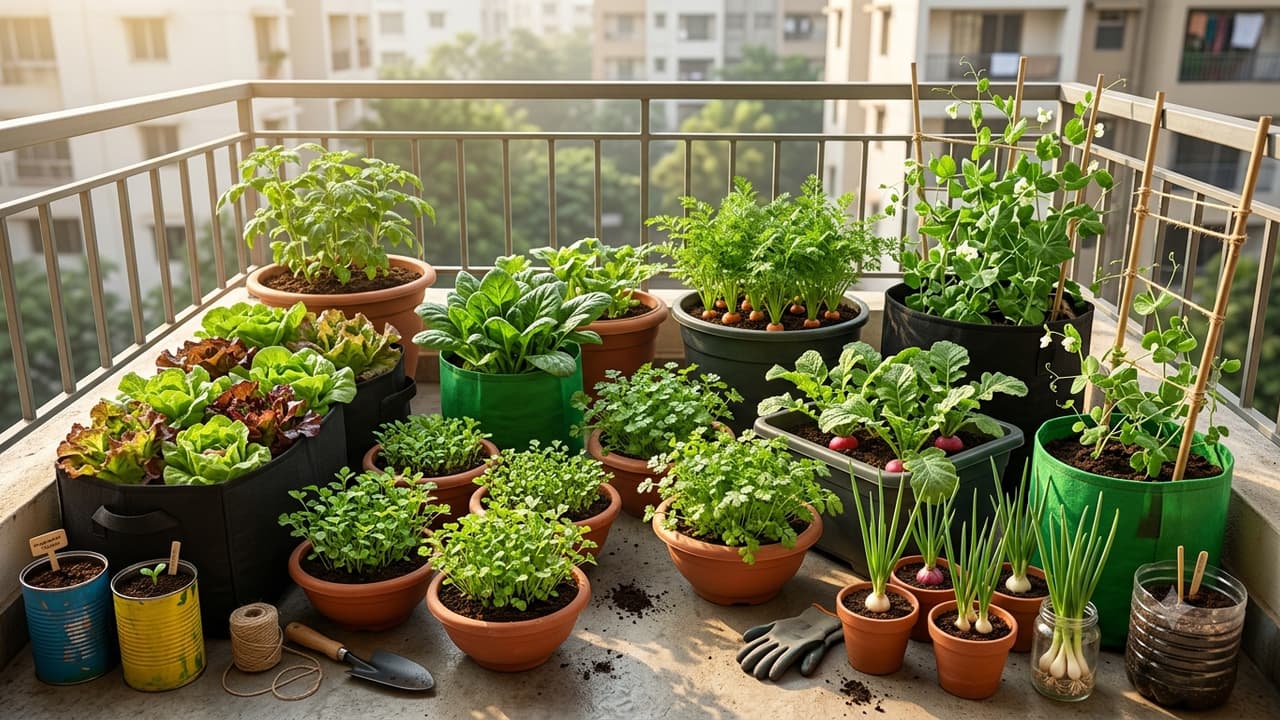
You do not need a large backyard to cultivate fresh produce during the winter months. By utilizing suitable containers, proper soil, and adequate sunlight, you can easily grow a variety of vegetables right on your balcony. This guide provides essential tips and highlights seven vegetables perfect for a compact home kitchen garden.
You don’t need a backyard or a large terrace to grow fresh vegetables at home. A sunny balcony, a few pots and the right plants can help you create a compact winter kitchen garden. From leafy greens to crunchy root vegetables, several varieties can grow well in containers when they receive suitable sunlight, soil and regular care. Winter is a good time to grow many vegetables in parts of India, although planting dates depend on your region and local temperatures. Here are eight vegetables to consider for your balcony garden.
1. Spinach
Spinach is a practical choice for a beginner-friendly balcony garden because it grows well in containers and can provide multiple harvests when cared for properly. Choose a pot at least 6–8 inches deep with drainage holes and fill it with loose, nutrient-rich potting mix. Sow the seeds directly into the soil and keep the mix consistently moist without waterlogging it. Place the pot where the plants receive around four to six hours of sunlight, adjusting for local weather.
Harvest the outer leaves when they are large enough to use, allowing the inner leaves to continue growing.
2. Fenugreek (Methi)
Methi is a familiar ingredient in Indian kitchens and is relatively easy to grow in a balcony planter. Its quick-growing leaves make it a useful option for people who want to start a small kitchen garden.
Scatter fenugreek seeds over moist potting mix and cover them lightly with soil. A wide, shallow container works well because methi is commonly harvested for its leaves. Keep the soil lightly moist and place the planter in a sunny spot. You can begin harvesting tender leaves once the plants are established. Sow small batches at intervals to maintain a steady supply of fresh greens.
3. Coriander
Fresh coriander leaves can add flavour to everyday meals, and growing them at home gives you easy access to a handy kitchen ingredient. Use a pot with good drainage and sow coriander seeds in loose soil. Gently crush the round seeds to split them into two halves before sowing, taking care not to crush them into powder. Cover them with a thin layer of soil and water gently. Coriander prefers bright light and moderate moisture. Avoid keeping the soil soggy, as this can damage the seedlings. Harvest the leaves once the plants have developed enough growth, leaving some foliage behind for continued growth.
4. Radish
Radishes are suitable for container gardening because many varieties mature relatively quickly. Their roots need enough depth and loose soil to develop properly.
Choose a container that is at least 8–12 inches deep, or deeper for long-rooted varieties. Sow the seeds directly in the pot rather than transplanting seedlings, which can disturb root development. Thin the seedlings so each plant has room to grow. Keep the soil evenly moist and provide good sunlight. Harvest radishes when the roots reach the size recommended for the variety. Leaving them in the soil for too long can make some varieties woody or overly pungent.
5. Carrots
Carrots can grow in pots, provided you select a container deep enough for the variety you choose. Short or round-rooted varieties are generally more suitable for shallow balcony containers than long-rooted types.
Fill a deep pot with fine, stone-free soil that allows roots to grow straight. Sow the seeds directly into the container, as carrot seedlings do not always respond well to transplanting. Water gently to keep the soil moist during germination. Carrots need patience and consistent care. Thin crowded seedlings to give the roots enough room and harvest them when they reach a suitable size for the variety.
6. Lettuce
Lettuce is a useful option for balcony gardeners who enjoy salads, sandwiches or fresh leafy greens. Loose-leaf varieties are particularly convenient because you can harvest individual leaves as the plant grows.
Use a wide pot with drainage holes and sow the seeds according to the instructions on the seed packet. Lettuce seeds are small, so cover them only lightly with soil. Keep the growing medium moist during germination. Place the pot in a bright location. In warmer parts of India, protect lettuce from harsh afternoon sunlight and excessive heat, which can cause the plant to bolt or turn bitter. Harvest the outer leaves when they are ready to eat.
7. Spring Onions
Spring onions are an excellent option for compact balconies because they can grow in narrow planters and do not require much space.
You can grow them from seeds or try planting healthy root ends saved from store-bought spring onions. For root ends, place the white base with its roots in a small amount of water until new growth appears, then transfer it to soil for continued development. Use a planter with good drainage and place it in a spot with bright light. Water when needed to keep the soil lightly moist. Snip the green tops as they grow, leaving enough foliage for the plant to continue developing.
Tips for Growing Winter Vegetables on a Balcony
Choose suitable containers: Leafy greens can grow in relatively shallow pots, while carrots and radishes need containers deep enough for their roots. Always use pots with drainage holes.
Use good potting mix: A light, well-draining mixture enriched with mature compost helps plants access nutrients while preventing water from collecting around their roots.
Check sunlight: Many vegetables need several hours of sunlight daily. Observe your balcony throughout the day before deciding where to place each pot.
Water carefully: Containers dry out faster than garden beds, but frequent watering can also cause root problems. Check the soil before watering.
Leave enough space: Crowded plants compete for light, water and nutrients. Follow the spacing guidance on the seed packet.
Choose the right season for your region: Winter temperatures differ across India. In warmer cities, some cool-season vegetables may need morning sunlight and protection from hot afternoon conditions.
A balcony vegetable garden can begin with just a few pots of spinach, methi and spring onions before expanding to carrots, radishes and peas. Choose vegetables suited to your available space and local weather, provide regular care and harvest them at the right stage.
With a little planning, even a small balcony can become a useful corner for growing fresh ingredients at home.