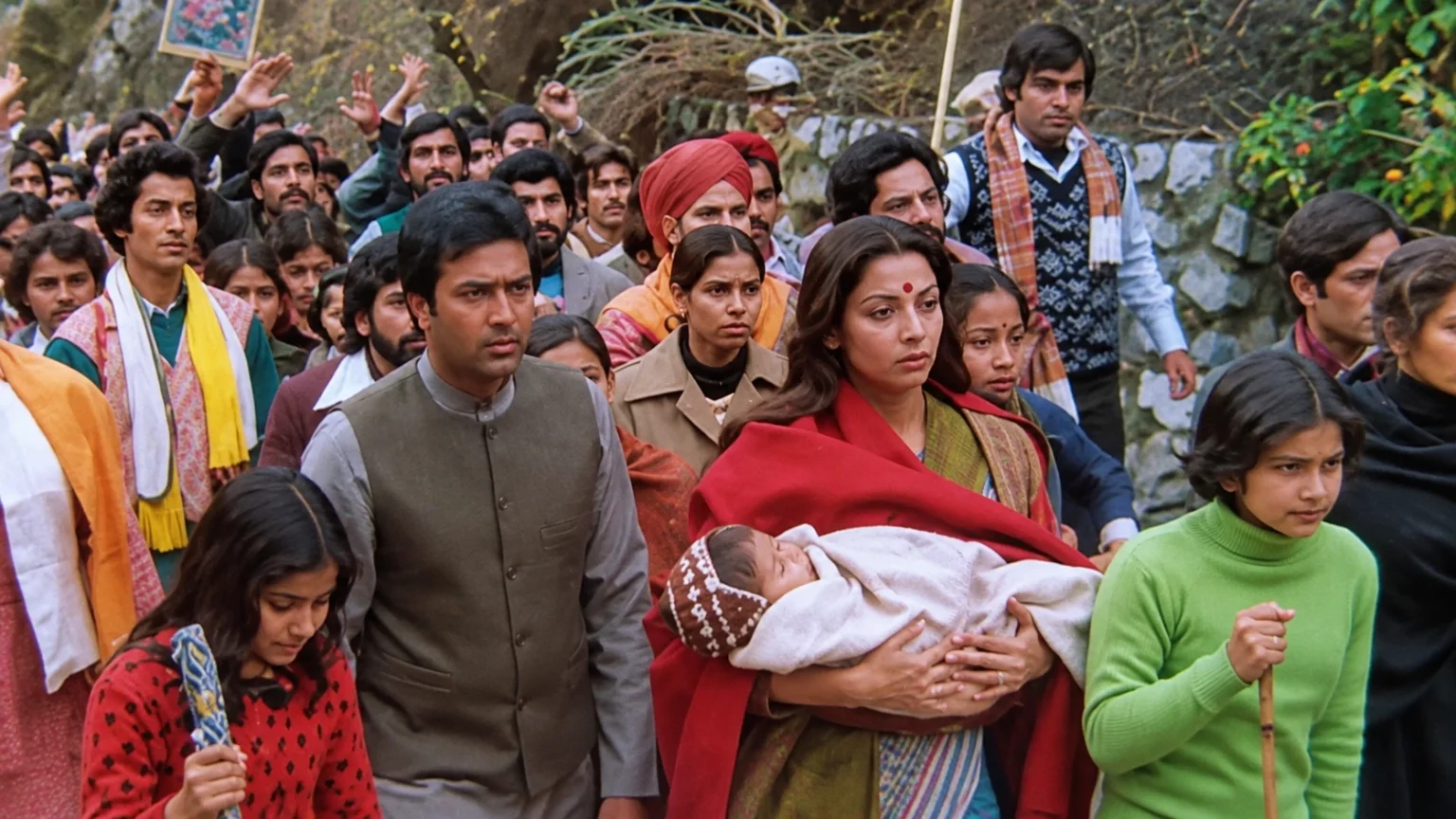
Chalo Bulaya Aaya Hai remains one of the most recognisable devotional songs associated with Mata Rani worship. Decades after its release, the track continues to feature at Navratri celebrations, religious gatherings and Mata ki Chowkis, where devotees come together to sing praises of the goddess. The song appeared in the 1983 film Avtaar, starring Rajesh Khanna and Shabana Azmi. Although the movie was not primarily a devotional drama, this particular composition developed a life of its own beyond the big screen. Its memorable lyrics were written by Anand Bakshi, while Narendra Chanchal, Mahendra Kapoor and Asha Bhosle lent their voices to the song.
Anand Bakshi Wrote the Famous Devotional Lyrics
Released in 1983, Avtaar told a story centred on family relationships and personal struggles rather than religious worship. Yet Chalo Bulaya Aaya Hai became one of the film’s most enduring musical highlights. In the song sequence, Rajesh Khanna is seen making his way towards the goddess’s shrine, bringing a devotional element into the film’s narrative.
The lyrics came from Anand Bakshi, one of Hindi cinema’s most celebrated songwriters. Over a career spanning several decades, he wrote songs across genres, from romance and heartbreak to patriotic themes and devotional music. His ability to express emotions in straightforward, memorable language helped many of his compositions connect with audiences across generations.
Bakshi’s celebrated film songs include Roop Tera Mastana, Sawan Ka Mahina, Ek Ajnabee Haseena Se, Pyar Deewana Hota Hai and Tujhe Dekha To Yeh Jaana Sanam. Chalo Bulaya Aaya Hai demonstrated another side of his writing, showing how he could bring devotion into a mainstream Hindi film without making the song feel disconnected from the story.
Narendra Chanchal’s Voice Gave the Song Its Identity
While the lyrics played an important role in the song’s popularity, the vocal performances helped make it a lasting favourite. Narendra Chanchal sang the track alongside Mahendra Kapoor and Asha Bhosle. Their voices brought together different styles of playback singing, helping the composition reach a wide audience.
Chanchal, in particular, became closely associated with devotional music dedicated to Hindu deities. His powerful singing style and extensive work in religious music made him a familiar name among listeners who attended devotional gatherings. For many devotees, his voice became synonymous with songs performed during Mata Rani worship.
His contribution to Chalo Bulaya Aaya Hai helped the track move beyond its original film setting. Rather than remaining simply a song remembered by movie audiences, it became part of the musical repertoire heard at religious events and community celebrations.
Why the Song Remains Popular During Navratri
During Navratri, devotees across India organise prayers, devotional singing sessions and Mata ki Chowkis. Chalo Bulaya Aaya Hai has become a familiar choice at many such gatherings, where its invitation to visit the goddess’s shrine fits naturally into the atmosphere of worship.
The song’s enduring appeal is rooted in its direct message and accessible melody. Listeners do not need to remember the film’s storyline to connect with it. For many people, hearing the opening lines immediately brings to mind images of a temple visit, a devotional gathering or a family celebration centred on faith.
Its continued presence at religious events also shows how film music can develop a cultural identity beyond cinema. A composition originally created for a movie can become part of everyday religious and social traditions when audiences embrace it over many years.
A Film Song That Became Part of Devotional Culture
Hindi cinema has produced numerous songs inspired by faith, spirituality and devotion. Some remain closely tied to their films, while others become popular independently of the stories in which they first appeared. Chalo Bulaya Aaya Hai belongs to the latter category, having established a lasting connection with devotees through repeated performances and widespread familiarity.
The song’s journey also reflects the contributions of its creators. Anand Bakshi’s lyrics, the voices of Narendra Chanchal, Mahendra Kapoor and Asha Bhosle, and the visual presentation featuring Rajesh Khanna helped shape a memorable musical moment in Avtaar.
More than four decades after the film’s release, the composition continues to find listeners during Navratri and other devotional occasions. Its enduring popularity is a reminder that the relationship between cinema and religious music can extend well beyond the theatre, allowing a film song to become part of a much wider cultural tradition.