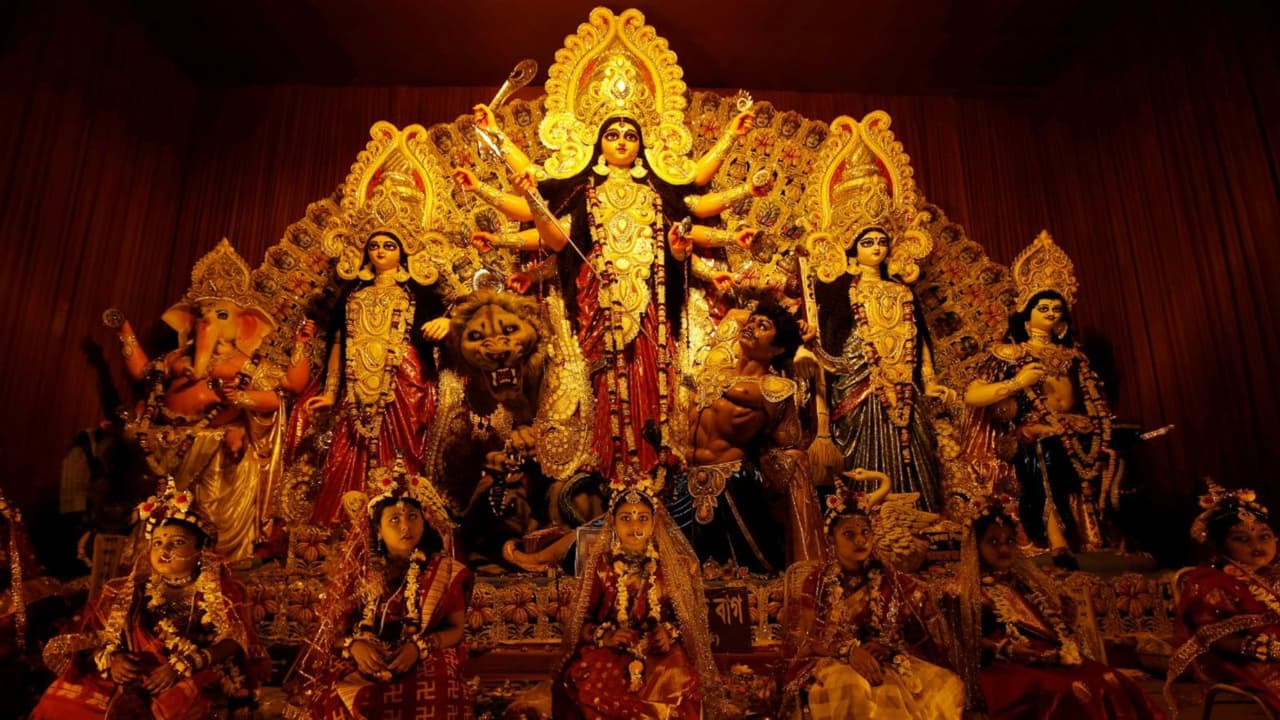
Explore its traditional significance, possible references in the Devi Puran, and its associations with Mahanavami, Tantric practices and the Ashwamedha Yagna.
Durga Puja usually means new clothes, Pushpanjali, and long chats with friends. But a deep desire to protect the world hides behind this grand festival. The Devi Puran actually compares Durga Puja to the ancient Ashwamedha Yagna. Kings performed the Ashwamedha Yagna for power and global welfare in the past. Similarly, Durga Puja acts as a grand victory ritual of good forces over evil forces.
The holy scriptures mention many different rituals to make this grand prayer successful. Ancient Tantric practices hide right behind the bright festive lights. These practices aim to defeat dark forces. The Shatrubali remains one of the most mysterious rituals among them.
What exactly is this Shatrubali or Chhayabali?
Priests do not sacrifice any real animal during this ritual. People therefore call it Chhayabali or shadow sacrifice. This ritual represents the symbolic destruction of evil forces and enemies. These enemies live both inside and outside the human mind.
Many traditional households and ancient temples perform this ritual in complete secrecy. They do this late on Mahanavami night, right after the Sandhi Puja ends.
The head priest creates a symbolic enemy figure during this time. He uses rice powder, black sesame seeds, or a pumpkin for this. He then chants specific mantras and chops the symbol with a heavy sword. This act carries a deep prayer to the Goddess. The devotees pray, “O Goddess, please destroy our inner lust, anger, and greed, along with our outer enemies.”
This entire process works as a Tantric method for self-purification. People rarely discuss it in public. The ritual therefore remains wrapped in deep mystery even today. Durga Puja is clearly not just a regular festival. It stands as an ancient practice of power worship. The symbolic sacrifice of darkness remains absolutely necessary for the final victory of light.