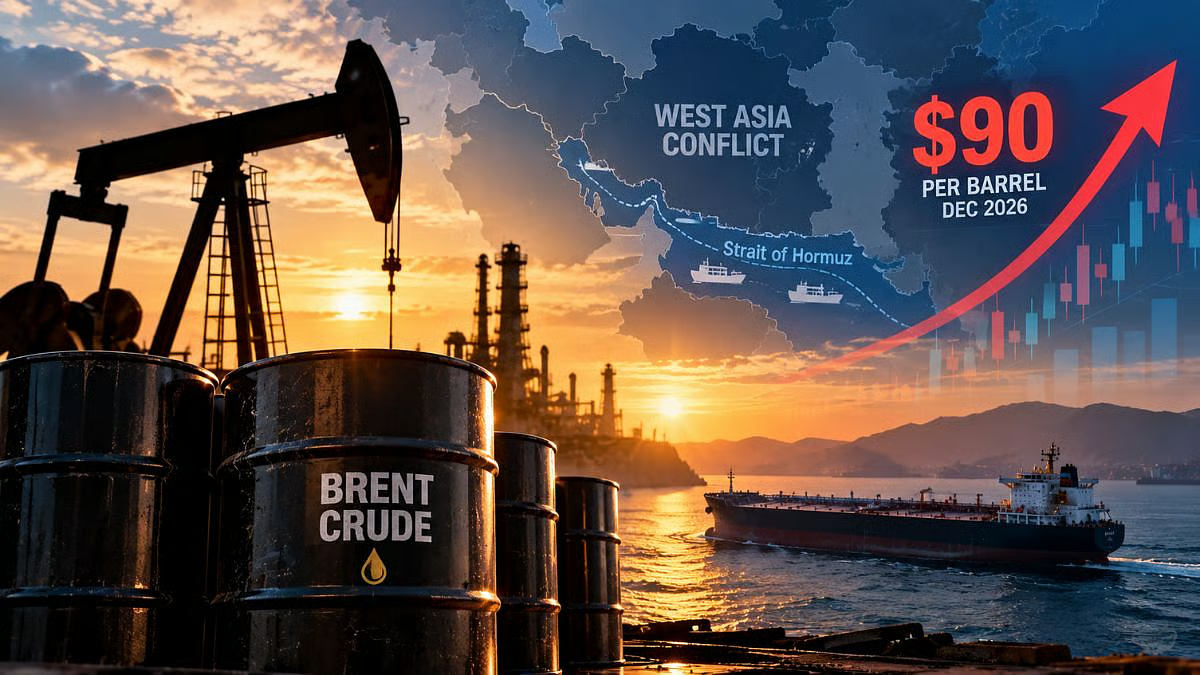
New Delhi, October 12, 2026: The international crude oil benchmark, Brent crude, is expected to reach $90 a barrel in December 2026, up 6 per cent from a previous forecast of $85, a report has said, citing ongoing supply-side risks from the West Asia conflict that are keeping a hefty risk premium in time spreads.
The new December 2026 forecast surged because of “ongoing downside risks to supply likely to slow the moderation in the time spreads risk premium—which we estimate at just over $20 today,” the report from Goldman Sachs said.
However, the next month’s forecast is nearly 13 per cent lower than the current price of around $103 per barrel, and the investment bank’s 2027 average Brent forecast of $80 per barrel was left unchanged.
It estimated the price considering downside risks to supply, low inventories and interest-rate sensitivity to oil supporting physical restocking and financial hedging.
“Our 2027 average Brent forecast of $80 per barrel is unchanged and balances downward price pressure from faster-than-expected adaptation in Gulf supply against a slower moderation in the risk premium,” Goldman Sachs said.
WTI Forecast and Price Differentials
The report also mentioned that West Texas Intermediate (WTI) could average $81 in December 2026 and $73 in 2027, reflecting unusually wide WTI-to-Brent spreads driven by high US-to-Europe shipping costs.
West Asia Conflict and Crude Oil Prices
When the West Asia war started in late February, Brent crude stood at around $70 per barrel, which jumped to over $125 per barrel as shipping through the Strait of Hormuz, a transit point for nearly 20 per cent of the world’s oil shipments, was disrupted.
Gradual reopening led to moderation in crude prices to pre-war levels before oil climbed back to test the $100 per barrel mark.
Supply Risks Could Push Prices Higher
“Brent might average around $125 per barrel in 2027 if 2027 average Gulf output remains 5 mb/d below February 2026 levels, versus 0.3 million barrels per day below in our base case.”
Damage to oil infrastructure, intensified shipping attacks and a more persistent risk premium are the most likely potential triggers of price upside, the report said.