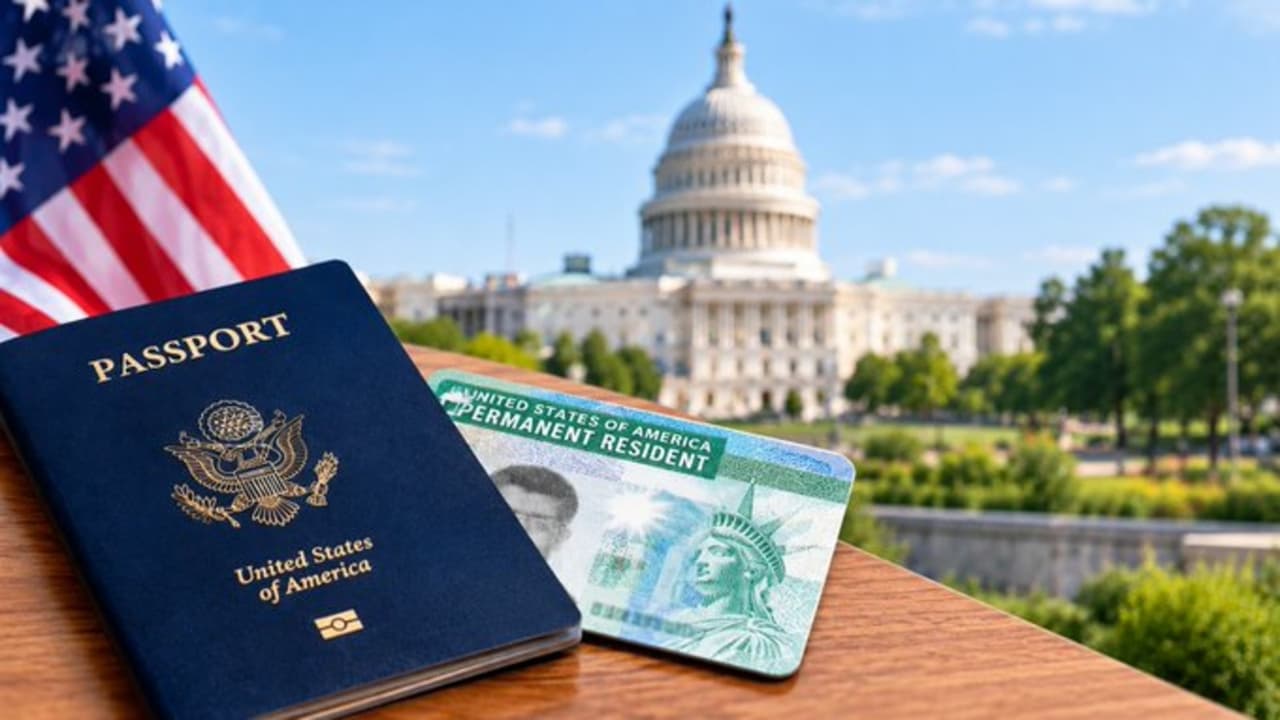
The US administration has suspended major technology and IT outsourcing companies, including Infosys, TCS and Microsoft among 8 firms , from the Permanent Labour Certification (PERM) programme. This crackdown aims to prevent the exploitation of H-1B visas and protect American workers.
President Donald Trump-led US administration has intensified its crackdown on the US immigration system, suspending several major technology and IT outsourcing companies from the Permanent Labour Certification (PERM) programme — a key route through which employers sponsor eligible foreign workers for employment-based green cards.
The companies named in the latest action include Cognizant, Infosys, TCS, Wipro, HCL, Capgemini, Microsoft and Adobe.
The US government is now investigating the exploitation of H-1B visas and other immigration programs, and this step is part of a larger effort to address concerns that employing foreign workers might negatively impact American workers. Along with Vice President JD Vance and other officials engaged in the administration’s anti-fraud initiatives, US Labour Secretary Keith Sonderling announced the move.
“I am hereby suspending from the Permanent Labour Certification Programme some of the largest IT outsourcing firms in the world, Cognizant, Infosys, Tata, Wipro, HCL, and Capgemini,” Sonderling said, news agency PTI reported. He also announced the suspension of Microsoft and Adobe from the programme, saying the Department of Labour would not accept new PERM applications from the companies or process their pending applications.
What Does PERM Suspension Mean For Foreign Workers?
Employers who wish to recruit certain foreign nationals on a permanent basis must first go through the PERM program, which is overseen by the US Department of Labour. Employers are often need to show that there is a shortage of qualified, available, and willing US workers for the job and that hiring an immigrant won’t have a negative impact on the pay and working conditions of similarly employed Americans in order for the procedure to be approved.
Employers are usually able to proceed with an immigration petition before US Citizenship and Immigration Services, usually using Form I-140, once labour certification is authorised.
Hence, PERM is a crucial component of the employment-based green card route for a large number of H-1B employees. It becomes more challenging for qualified foreign employees to apply for permanent residency when their firm is suspended from the program. This is because the company is unable to file fresh PERM applications and their ongoing applications are also affected.
Why This Move Matters The Most To IT Professionals?
For a long time, big Indian IT businesses have depended on US immigration programs to deploy competent workers in the American market, thus this decision is very important for them. In September, US authorities announced they were investigating allegations of fraud and potential harm to American workers; subsequent to that, they took action against Cognizant’s PERM files, leading to the most recent ban.
The subsequent extension of the case to other prominent IT businesses suggests that the investigation into the employment of foreign nationals is becoming more comprehensive.
The H-1B system has been the target of many policies that the Trump administration has either expanded or adopted. When there is a high probability of layoffs among American workers, the White House stated in September that it will scrutinise H-1B petitions more closely.