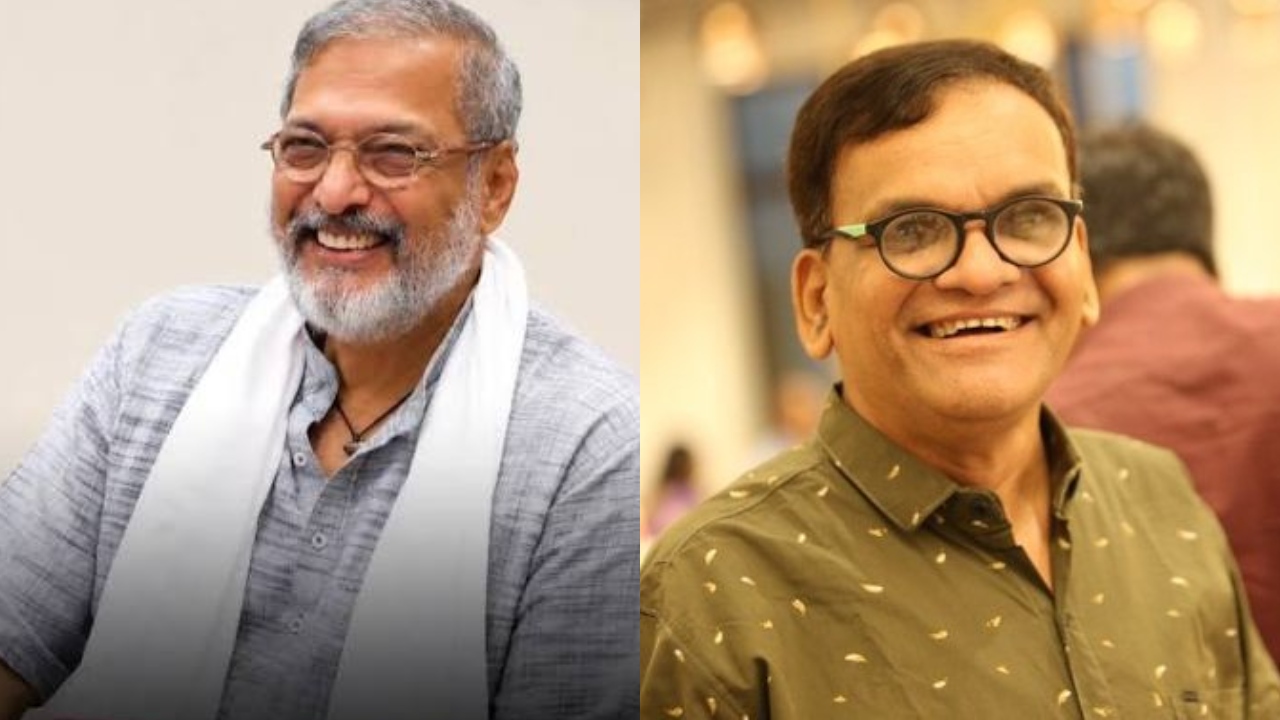
Acclaimed actor Nana Patekar passed away today, leaving behind a legacy defined by fiery performances, solid authenticity, and an arresting screen presence. A powerhouse who transitioned seamlessly from theatre to cinema, Patekar held a special place among Marathi artists who left an indelible mark on Hindi cinema.
Remembering the cinema icon, veteran journalist and film historian Dilip Thakur shared a rich collection of anecdotes that capture the actor’s unapologetic nature, professional discipline, and fiercely independent spirit both on and off the set.
Patekar’s legendary refusal to bow to industry hierarchy became apparent early in his career. When blockbuster director Ramesh Sippy visited Patekar’s Mahim residence multiple times to discuss a film offer, Patekar admired the role but stood firm on his remuneration. When negotiations stalled, Patekar didn’t hesitate to deliver a sharp retort, “Your market value may have soared because of Sholay, but my worth hasn’t diminished either.”
“The encounter quickly became a famous piece of industry lore, widely reported across newspapers and weeklies of the era,” Thakur recalled.
While filming B.R. Chopra’s Awam (1987), Patekar shared the frame with superstar Rajesh Khanna. True to form, Patekar offered his candid appraisal directly to the veteran actor. Nana said, “Kaka, I am willing to watch films like Khamoshi, Anand, Ittefaq, Baharon Ke Sapne, Aradhana, Amar Prem, and Bawarchi any number of times just to witness your true acting prowess—and indeed, I have watched them repeatedly. But after that, that particular class was never seen again.”
“Such unfiltered honesty made him a frequent subject of conversation at film hangouts, drawing comparisons in public imagination to the fiercely individualistic Raaj Kumar,” Thakur added.
Thakur shared another lesser-known incident from the shoot of Mehul Kumar’s Tirangaa (1993) at a Bandra bungalow—later acquired by Shah Rukh Khan and named it ‘Mannat’. “Journalists were invited by the publicity heads of Mehul Kumar—Gaja and Arun—to see Patekar share space with Raaj Kumar,” Thakur remembered. “Despite expectations of friction between two eccentric stars, the shoot ran smoothly, with neither feeling pressed by the other’s stature.”
Thakur notes that while Patekar was often labeled abrasive or mercurial, his behavior was typically a reflection of how others approached him. Behind that tough exterior was a committed craftsman.
While directing and starring in Prahaar (1991) at Filmalaya Studio, Patekar demonstrated absolute discipline on set. Alongside co-stars Dimple Kapadia and Madhuri Dixit, he enforced strict quiet and focus, earning widespread respect across the industry for his uncompromising professionalism.
“While scenes featuring Dimple and Madhuri Dixit were being filmed, Nana would tolerate absolutely no unnecessary chatter or noise—a stance he made clear,” Thakur explained. “Consequently, his disciplined approach began to earn him praise.”
Following his breakthrough performance in Parinda (1989), director Subhash Ghai initially envisioned Khalnayak (1993) as a parallel, art-house cinema project with Patekar in the title role. “However, after a few meetings, Ghai realized Patekar’s distinct vision and strong personality meant the film would take a direction entirely driven by the actor,” Thakur added.
Recognizing the clash in artistic styles, Ghai pivoted, reworking the script into a commercial masala entertainer starring Sanjay Dutt. As Thakur observed, “Forcing an auteur of commercial cinema to make parallel art-house cinema would be like asking a famous batata vada vendor to suddenly make rajgira puris—it simply wouldn’t hold up.”
Patekar’s career remained a masterclass in staying true to one’s craft, leaving behind a cinematic journey as unconventional and powerful as the man himself.