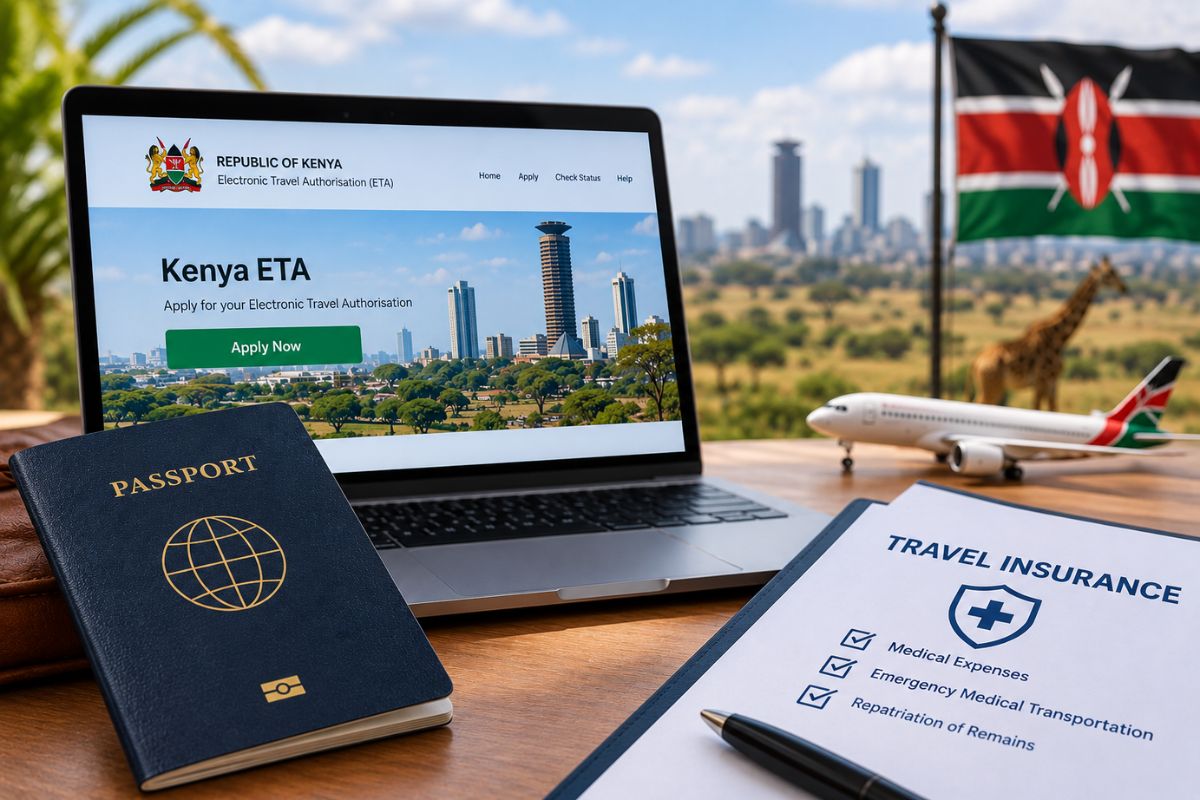
Kenya has started integrating mandatory travel health insurance into its Electronic Travel Authorisation (ETA) process, with the official portal currently directing travellers without recognised coverage to buy a policy for $44.
The change was identified during a test of Kenya’s ETA system on October 6, 2026. The insurance step appears just before payment for the ETA and is listed under Kenya’s Ministry of Health.
Insurance Now Linked to ETA
If the system does not detect existing insurance, applicants see a message stating, “You do not have an existing travel insurance.”
They can then check the status of an existing policy or select “Get Now” to purchase coverage through the portal. The applicant’s details are transferred automatically to the insurance module.
The listed premium is $44 per traveller. A further $1 access fee and payment gateway charge apply, with one test resulting in a total payment of $52.
Foreign Travel Insurance Remains Unclear
This is where the new system gets complicated.
Kenya’s Ministry of Health previously said travellers with insurance purchased in their home country would not need to buy another policy if their coverage met the requirements under Gazette Notice No. 11492. Such travellers were expected to upload their insurance certificate for verification.
The Gazette sets minimum combined coverage of $50,000, including $20,000 for medical expenses, $25,000 for emergency medical transportation and $5,000 for repatriation of remains, alongside specified medication and mental health coverage.
However, the system currently tested does not provide an obvious option to upload a foreign insurance policy when no recognised coverage is found.
That mismatch is likely to create confusion for international travellers, particularly those who already carry comprehensive travel insurance.
What About Existing Kenya ETAs?
Travellers who already received a Kenya ETA before the insurance step appeared are not currently being told to apply for a new ETA.
However, the insurance requirement is separate from the ETA itself. Kenyan rules state that travellers must have appropriate health coverage for their stay, and compliance may be checked through the ETA system or at the border.
Travellers without recognised coverage may potentially be able to purchase insurance from an authorised provider at the port of entry.
For now, there is no clear public guidance explaining exactly how passengers holding older ETAs will be treated.
Legal Questions Remain
The rollout also comes against an unresolved legal backdrop.
Kenya’s High Court ordered the suspension of the operationalisation and enforcement of Gazette Notice No. 11492 on August 24, 2026. The order followed a petition challenging the government’s authority to introduce the requirement and integrate it into the immigration system.
As of October 6, no recent publicly available court ruling had been identified confirming that the suspension had been lifted.
The practical trend is clear: Kenya is moving travel insurance closer to the immigration process, but the legal position and treatment of foreign policies still need clarification.
Tanzania Has a Similar Rule
Tanzania has also introduced a $44 mandatory travel insurance requirement for eligible foreign visitors, with coverage of up to 92 days. Enforcement is pending, and Zanzibar has a separate insurance scheme.
What Indian Travellers Should Know
Indian passport holders travelling to Kenya should check their ETA and insurance arrangements before departure. If applying for a new ETA, be prepared for the portal to require a $44 insurance purchase if it does not recognise existing coverage.
Travellers who already have an ETA should carry proof of their travel insurance and check for official updates before flying, particularly because the rules around previously issued ETAs remain unclear.
Travelobiz Take:
We see the integrated insurance step as an added cost and complication, especially for Indians with existing policies. Until Kenya clarifies recognition, travellers should carry comprehensive coverage and verify requirements.
Follow and connect with us on Facebook, Twitter, LinkedIn, Instagram and Google News for the latest travel news and updates!