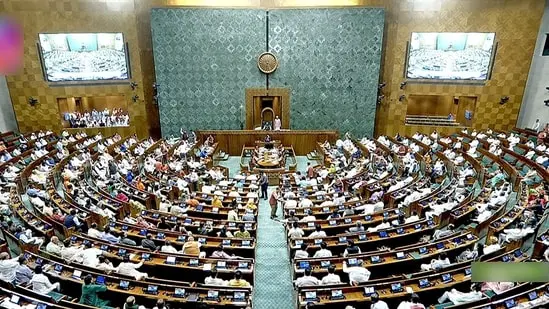
The Bharatiya Janata Party (BJP), which leads the National Democratic Alliance (NDA), can look forward to easier passage of key bills in the Lok Sabha as 20 lawmakers from the Trinamool Congress (TMC) on Monday conveyed their decision to join the coalition as a separate group.
In the Rajya Sabha, where the NDA is already in majority, the party is all set to gain one more seat, as TMC’s Sukhendu Sekhar Roy resigned from the Upper House.
An increased strength in the Lok Sabha will help the ruling coalition in the passage of contentious bills, including the Delimitation Bill that will pave the way for carving out new constituencies and increase the number of seats in Lok Sabha, a prerequisite for the implementation of 33% reservation for women in legislatures. The other important bills that the government need support for are the 129th Constitution Amendment Bill, 2024, and the Union Territories Laws (Amendment) Bill, 2026, that seek to roll out simultaneous elections, which are currently being examined by a joint parliamentary committee.
The NDA has 293 members in the 543-member Lok Sabha and 149 in the 245-member Rajya Sabha. According to people aware of the details, BJP is also banking on support from other non-aligned parties, including the DMK. While 20 of the 28 TMC MPs have announced their support for the NDA in the Lok Sabha, there are 12 members in the Rajya Sabha. The DMK has 22 MPs in the Lok Sabha and eight in the Rajya Sabha and is believed to be talking to the BJP.
“The turmoil in TMC, is a result of dynastic politics, concerns and suggestions of senior party leaders being overlooked. The BJP did not engineer any split…the 20 MPs who have written to the (Lok Sabha) Speaker Om Birla have made it clear that they want to join the NDA…And if anyone wants to lend support to our policies, which are in national interest, we welcome the move,” said a senior BJP functionary who asked not to be named. The leader said the party has also received “feelers” from the DMK as well to support the NDA. “It is premature to talk about DMK’s decision, but it has been conveyed to us that the DMK, which has distanced itself from the INDIA bloc, also wants to support the NDA.”
To be sure, the BJP’s ideological fount, the RSS, is learnt to have expressed reservations over TMC and DMK lawmakers joining the party. “The RSS does not intervene in political decisions, but they feel that a party which has for a reasonable time professed anti-Sanatan sentiments (like the DMK has) cannot be a partner of the BJP. Similarly, they did not want people from the TMC to jump ship in order to curry favour or escape scrutiny (for their alleged corruption),” said a Sangh functionary who asked not to be named.
A DMK lawmaker in the Rajya Sabha also refuted reports of the party aligning with the NDA, while conceding that there could be some issue-based support. “There is plenty of time for the (next) assembly polls and enough time for the Lok Sabha (2029) polls, the DMK has a strong cadre on the ground and stronger leaders, we will bounce back…As for supporting the NDA, the decision will be taken by the party based on the merit of the bills,” the DMK MP said.
Monday’s development will strengthen the government’s hand in passing both the Delimitation Bill as well as the bill for simultaneous elections.
“The government has been in talks with all other parties to support the bills. There were compulsions of being in an alliance which prevented the DMK and the TMC from supporting a bill that was in favour of women. Their opposition to the delimitation bill was political, because the bill assured an increase in the number of seats for each state, so there was no question of the Southern states being penalised,” said a second BJP leader, who asked not to be named.
To be sure, his reference to a bill that was in favour of women is part of the BJP’s effort to pass off the opposition’s scuttling of the amendment to the women’s reservation law and the delimitation bill as anti-women. The women’s reservation law is already in force (and was supported by almost all opposition parties). What was defeated was an amendment to the law and the delimitation bill.