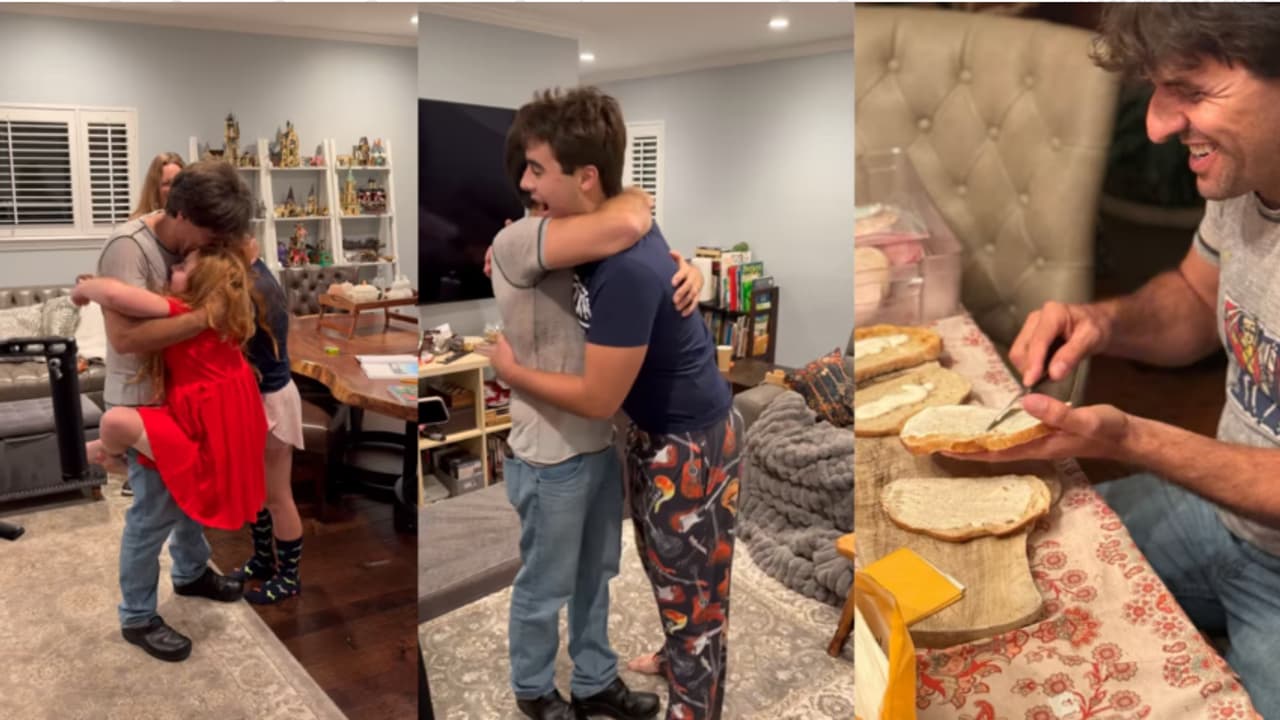
Stanford professor Karl Deisseroth won the 2026 Nobel Prize in Physiology or Medicine alongside two German researchers for their shared discoveries in optogenetics. This technique uses light to control nerve cells.
Winning a Nobel Prize is usually the kind of achievement that calls for a grand celebration. But for Stanford University professor Karl Deisseroth, the extraordinary morning also came with a very ordinary parenting responsibility — making school lunches for his children.
Deisseroth, 54, was awarded the 2026 Nobel Prize in Physiology or Medicine alongside German researchers Peter Hegemann and Georg Nagel for discoveries leading to optogenetics, a technique that allows scientists to use light to control the activity of individual nerve cells in a living brain.
The Stanford professor was asleep after working late when he received the life-changing call from the Nobel Assembly in Stockholm. Recalling the moment, he told the Associated Press, “I almost felt as if I’d lost the power of forming words,” before adding, “but I recovered after a minute or two.” He later admitted, “No real sleep was achieved.”
As congratulations and media calls poured in, Deisseroth also shared the news with his children. His 10-year-old daughter Sophie reacted with the delighted remark, “Dad, you’ve won all the prizes!” His 16-year-old son Hudson described his father as “relentless”, saying he was one of the hardest-working people he knew.
Watch the viral video here:
His eldest son Alexander, an 18-year-old Stanford freshman, recalled receiving a message from his mother before calling his father. After hearing that Deisseroth had received a call from Stockholm, he immediately understood what had happened and cycled home to celebrate with the family. “We’re insanely proud of him,” he said.
But amid the Nobel excitement, Deisseroth still had one task waiting. His children would soon wake up and head to school, so he took a break from interviews to prepare their lunches. Stanford reported that he made six sandwiches for the three children still at home, with different fillings for each child.
Even after receiving one of science’s highest honours, Deisseroth’s answer about how he planned to celebrate was remarkably simple: “Get back to work. We have a lot of things still to discover, and a lot of people to help.”