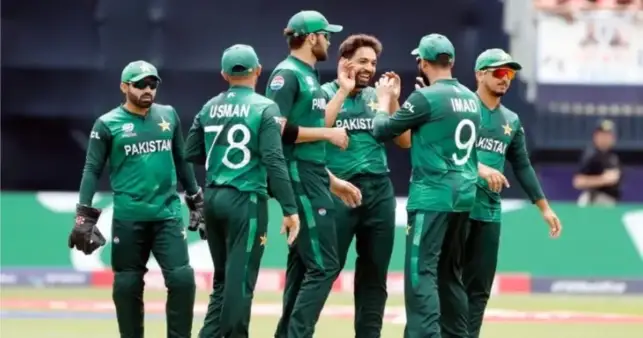
Former India wicketkeeper-batter Parthiv Patel has taken a light-hearted dig at the Pakistan cricket team following the International Cricket Council’s announcement of the schedule and groups for the 2027 Men’s Cricket World Cup.
The comments came during a television discussion analysing the newly revealed structure of the tournament, which will be co-hosted by South Africa, Zimbabwe and Namibia. Speaking about how different sides might view the draw, Patel suggested that teams approach the schedule according to their own expectations and recent form.
“Teams think differently according to their mindset. India must be thinking that they will at least reach the semi-finals. Meanwhile, after looking at this schedule, Pakistan must be thinking, ‘We will surely reach the Super 7 stage, and then we will see what happens from there’. Pakistan must be happy to see this schedule. They must be thinking that they will make it to the second round,” he said. The remark was delivered in a tongue-in-cheek tone that highlighted the long-standing rivalry between the two neighbouring cricket nations.
The ICC confirmed that the main stage of the 2027 World Cup will feature 12 teams divided into two groups of six. Group A comprises India, Australia, Pakistan, Afghanistan, co-hosts Zimbabwe and the side that advances as Qualifier A from a preliminary stage. Group B includes New Zealand, South Africa, Sri Lanka, England, Bangladesh and Qualifier B. The top three teams from each group will progress to a Super 7 phase, joined by the best fourth-placed team across both groups to complete the seven-team second round. Points earned in the group stage will not be carried forward, meaning every side starts the Super 7 with a clean slate and will play six additional matches between late October and mid-November.
The structure has already attracted attention because India and Pakistan have been placed in the same group, guaranteeing at least one high-profile encounter. The India-Pakistan match is scheduled for 10 October in Johannesburg. Should both sides advance to the Super 7, the format would automatically produce a second meeting later in the tournament. Defending champions Australia are also in Group A, making the section particularly competitive. India’s other group fixtures include matches against Afghanistan, the qualifier and Zimbabwe, while Pakistan open against Afghanistan before facing India and the remaining sides in the pool.
Patel’s comments reflect a broader conversation that accompanies any major tournament draw involving the two teams. India have been among the strongest limited-overs sides in recent years and will approach the event as one of the favourites, while Pakistan’s form has fluctuated and their supporters will be looking for signs of consistency. The former India player’s observation that Pakistan might view qualification for the Super 7 as a realistic target underscores the differing levels of expectation that surround the two squads. At the same time, the competitive nature of Group A means that progression is by no means guaranteed for any side.
The full tournament begins with a short Super Series involving the three lowest-ranked qualifiers, with only the winner advancing to the main 12-team stage. Group matches then run through October, followed by the Super 7 and the knockout rounds culminating in the final in Johannesburg on 21 November. For fans of both India and Pakistan, the group allocation has already generated anticipation around the October 10 clash and the possibility of a further meeting later in the competition. Patel’s light-hearted assessment has added an early note of banter to the discussion as the countdown to the 2027 World Cup begins in earnest.