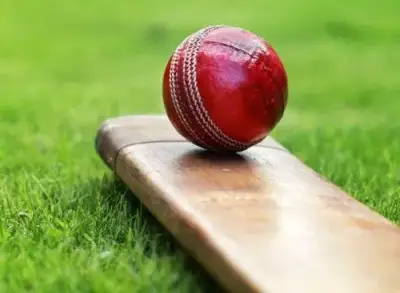
Dubai, October 1. The International Cricket Council (ICC) has approved the use of pink balls in day Test matches on a trial basis.
The aim is to reduce the impact of diminishing light in the final session of the day, which often leads to fewer overs being bowled.
The new playing conditions will apply to all international series starting on or after October 1. This means that the upcoming Border-Gavaskar Trophy match between India and Australia in Guwahati may be played with a pink ball due to the early sunset in the city.
The ICC stated that the decision to use pink balls before a Test match should be made by mutual agreement and will apply throughout the series. The ICC mentioned that the use of pink balls in day Test matches can be utilized on a trial basis to minimize disruptions caused by poor light. There should be an agreement on the use of the pink ball before the start of the Test match, and once agreed upon, it will remain in effect for the entire match.
The ICC clarified that the decision cannot be changed once the match has started, and changing from a red ball to a pink ball will not be permitted after the match begins. Former Indian cricket team captain and chairman of the ICC Men’s Cricket Committee, Sourav Ganguly, stated that several steps have been taken to help the game adapt to current times. He noted that significant changes have been made to the playing conditions, including provisions related to cricket balls, greater clarity on certain aspects of fielding, and measures aimed at improving the pace of the game.
According to the new conditions, the game will not automatically end if a wicket falls in the last over of the day. The old rule did not save time as the remaining balls had to be bowled the next day. Currently, female cricketers are using balls made for junior cricket, but from now on, different sized balls will be used for this category.
According to the new rules, the weight of the new ball should not be less than five ounces (142 grams) and not more than 5.25 ounces (149 grams). Its circumference should not be less than 8.46 inches (21.5 centimeters) and not more than 8.66 inches (22 centimeters). The new playing conditions will also crack down on time-wasting batsmen.
A batsman doing so will be warned twice, but on the third occasion, the fielding team will be awarded five runs. Changes have also been made to the rules regarding overthrows.
Now, an overthrow will be considered only if the ball is aimed at the wicket. A fielding error made while attempting to stop the ball or pass it to another fielder will not be considered an overthrow.
Publish with Us: Wish to feature your personal or organizational milestones, success stories, or press releases in Loktej English? Contact us, and we will guide you through our publication process.
Feedback & Corrections: We strive for accuracy. If you spot an error, have feedback, or object to the content of this article/press release, please notify us at loktejonline [at] gmail [dot] com. We will review the matter and rectify it at the earliest.