Your core does more work than you may realize. When it isn’t functioning well, the rest of your body can pay the price. For example, lower back pain is linked to poor core stability and is one of the most common health complaints worldwide.
If you also struggle with balance or have difficulty with everyday movements, such as getting up from a chair or reaching overhead, your core may not be as stable as it could be.
While many people focus on developing visible abs with endless crunches and sit-ups, comes from training the entire system, including your deep-core stabilizers, lower back, glutes, hips and pelvis, to work together as a unit.
If you’re looking to add more intentional core work to your routine, experts say these three exercises are worth trying.
1. Dead Bug

Credit: Josh Seong
“Dead bug trains deep-core stabilizers, mainly focusing on the transverse abdominis, along with the rectus abdominis, the internal and external obliques and your hip flexors,” says . The exercise also trains you to resist trunk rotation, which is exactly the kind of stability your core needs to protect your spine during everyday movement.
How to Do It
-
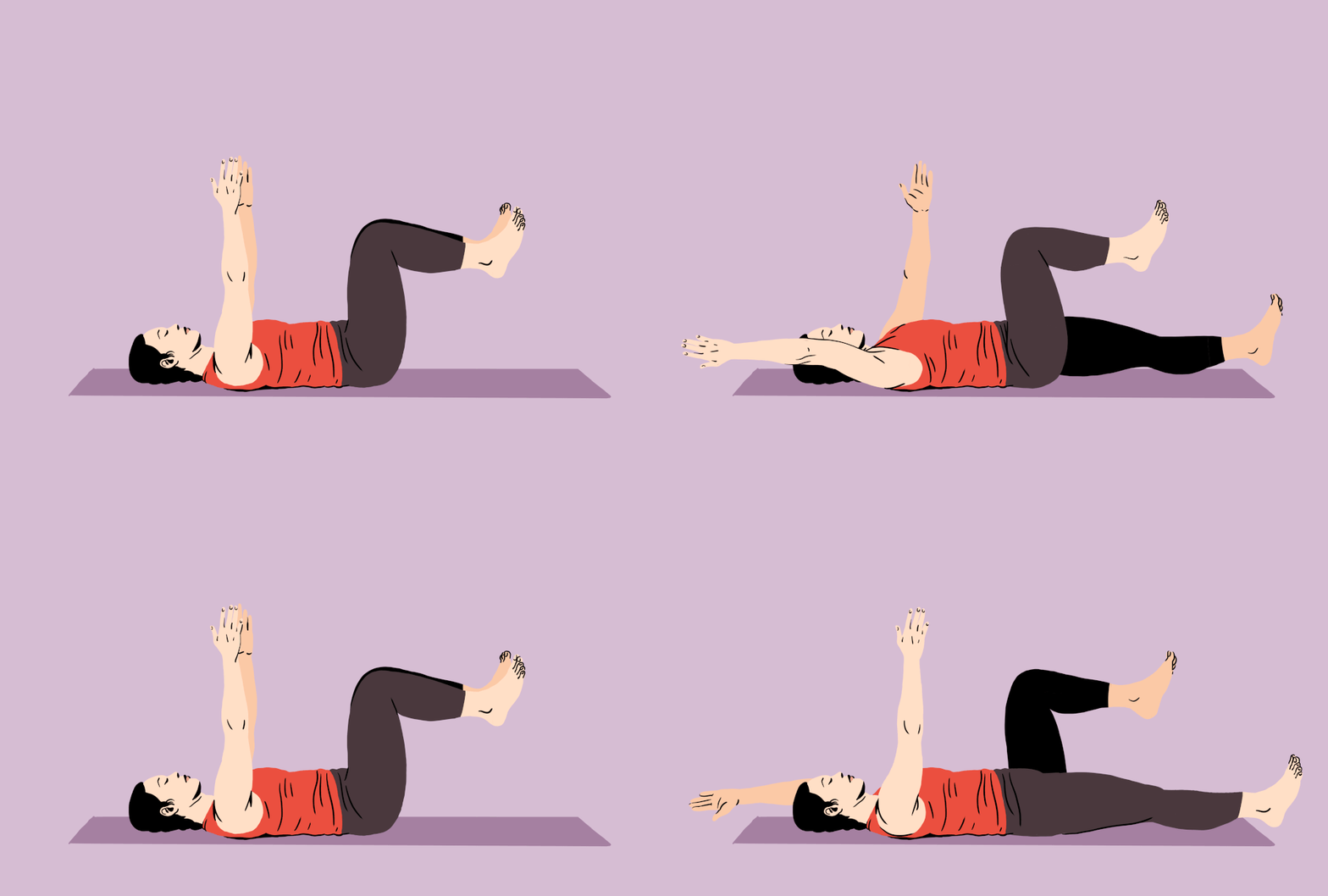
Lie on your back with your arms extended straight toward the ceiling, with your hands directly above your shoulders.
-
Lift your legs into a tabletop position, bending your knees to 90 degrees so your shins are parallel to the floor.
-
Brace your core and take a deep breath. Slowly lower your right arm overhead while extending your left leg straight out in front of you.
-
Lower your arm and leg until they are just above the floor, without letting them touch it. Keep your lower back gently pressed into the floor.
-
Return your arm and leg to the starting position, then repeat with your left arm and right leg.
-
Continue alternating sides for 8 to 10 repetitions per side. Complete 2 to 3 sets.
-
Rest for 45 to 60 seconds between sets.
Modifications: “To make it easier, move only the arm first, then move the leg—do not move them at the same time,” says McDowell. “To make it harder, hold a stretchy band.” If lower back support is needed, placing a small rolled towel underneath your lower back can help.
2. Forearm Plank

Credit: Josh Seong
Unlike ab exercises that involve movement, the forearm plank requires your core to resist it, which more closely reflects how your core functions during many everyday activities.
“The forearm plank is a great core-stability exercise because it builds endurance throughout the muscles responsible for stabilizing the spine,” says . “In addition to the abdominal muscles, the plank engages the shoulders, chest, back, glutes and legs, making it an effective full-body stabilization exercise.”
How to Do It
-
Kneel on a mat or soft surface and place your forearms flat on the floor with your elbows directly underneath your shoulders.
-
Step your feet back one at a time and lift your knees off the floor, balancing on the balls of your feet. Keep your feet about hip-width apart for stability.
-
Brace your core and squeeze your glutes. Keep your neck neutral and your head aligned with your spine, with your gaze directed toward the floor.
-
Maintain a straight line from the top of your head to your heels. Avoid letting your hips sag toward the floor or lifting them too high.
-
Hold the position for 20 to 60 seconds for 3 sets. Rest for 60 to 90 seconds between sets.
Modifications: “To make it easier, go to your knees so only your knees and elbows touch the floor,” says McDowell. “To make it harder, try rocking forward and back like a saw cutting through a tree.”
3. Bird Dog

Credit: Josh Seong
“The bird dog trains joint stability and weight-bearing tolerance in the hip and shoulder, as well as core co-contraction while the spine muscles are stabilizing,” explains McDowell. “This also trains your frontal plane stability, which is very important for movements like single-leg balancing, walking or running.” The bird dog also helps develop proprioception (the ability for your body to sense itself in space), which is crucial for balance and overall stability.
How to Do It
-
Get down on your hands and knees with your hands under your shoulders and your knees directly under your hips.
-
Keep your spine neutral and your gaze directed toward the floor.
-
Brace your core and slowly extend your right arm straight in front of you while extending your left leg straight behind you at the same time.
-
Hold the extended position for 2 to 3 seconds, then slowly return your arm and leg to the starting position.
-
Repeat with your left arm and right leg. Continue alternating sides for 8 to 12 repetitions per side. Complete 2 to 3 sets.
-
Rest for 45 to 60 seconds between sets.
Modifications: “To make it easier, move only the arm first, then move the leg—do not move them at the same time,” says McDowell. “To make it harder, pulse the arm or leg while you are in the extended position.”
Safety & Precautions
If you have a history of , a herniated disc, recent abdominal surgery or any injury affecting your spine, hips or shoulders, get clearance from your doctor or physical therapist before starting new core exercises.
“A physical therapist can help assess your current abilities, address any limitations and develop a personalized core-strengthening program that supports your goals,” says Arguelles.
During any of these exercises, stop and rest if you experience sharp or worsening pain in your back, hips or joints, or if you notice any numbness or tingling in your limbs.
Our Expert Take
Core stability is an essential but often overlooked part of a well-rounded fitness routine, and it becomes increasingly important as you age. Exercises like the dead bug, forearm plank and bird dog can help improve core stability by training your muscles to resist movement and support your body during everyday activities.
Rather than isolating a single muscle, these exercises train your core to work as a coordinated system. If you’re unsure where to start, working with a physical therapist or certified trainer can help you build a safe program that improves your core stability.