As India won the one-off T20I against Japan by two runs in a five-over contest in Sano, the decision by the on-field umpire to overturn a wide decision caused plenty of stir. While it did mean India benefited and Japan narrowly missed out on a tie, according to one of the ICC umpires, the decision to overturn the initial wide call was indeed the right decision.
“It shouldn’t have been a wide in first place because the batsman had attempted a reverse-sweep. There ends the discussion, ” the umpire said.
What happened in the final over?
Japan needed eight runs from the last over to chase down India’s 33. After Axar Patel conceded a single off the second ball, Alexander Shirai-Patmore attempted a reverse sweep to a delivery down the leg side, which was called wide. This was a wrong call as well, but one India didn’t contest.
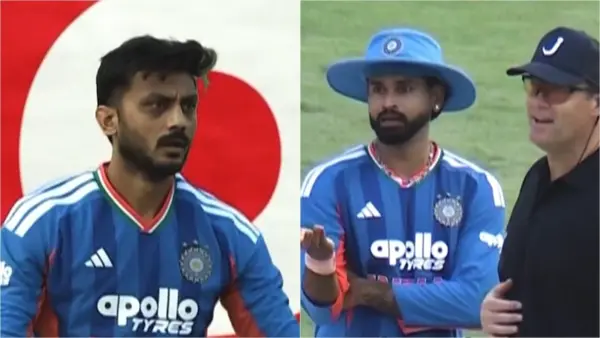
Axar then bowled another delivery down the leg side as Shirai-Patmore again attempted the reverse sweep. It was initially called wide too. Axar and Sanju Samson questioned the decision before captain Shreyas Iyer spoke to square-leg umpire Chris Brown. Brown and the other umpire, Chris Thurgate, then discussed the call before it was reversed and the delivery counted as a dot ball. And speaking to the Indian Express, one of the ICC umpires revealed the right call was made in the end.
“It should not have been a wide because, as per the laws of the game, be it a switch-hit or reverse-sweep, once you attempt or abort or even end up playing it, both sides become off-side. So the 17-inch mark for wide deliveries will be accounted for. So unless the ball goes past that mark, it will remain a legal delivery,” the umpire said.
That meant the ball going down what would normally have been the batsman’s leg side was not enough for it to be called wide.
What happens to the wide line when a batsman attempts a reverse sweep?
According to the umpire, once a batsman attempts a reverse sweep or switch hit, both sides are treated as the off side for deciding a wide. The relevant reference point then becomes the 17-inch mark. Unless the delivery passes outside that mark, it remains a legal delivery.
“Whether the batter changes the grip or alters the position doesn’t matter. Once he attempts any of these shots, both the sides become off-side,” the umpire said.
Does it matter if the batsman does not complete the reverse sweep?
No. According to the umpire, the same interpretation applies once the batsman attempts the shot, even if he later aborts it.
In Shirai-Patmore’s case, he had already attempted the reverse sweep when Axar’s delivery went past him. The umpires therefore had to judge the delivery using the wide line applicable to the reverse sweep.
Could the umpires change the decision after signalling a wide?
Yes. MCC Law 2.12 allows an umpire to change a decision as long as it is done promptly. So the original wide signal did not make the decision final. Axar and Samson questioned the call immediately, after which Iyer spoke to Brown. The two umpires then discussed the delivery and reversed the decision.
Was the final decision to reverse the wide correct?
Yes. Since Shirai-Patmore had attempted a reverse sweep, both sides were treated as the off side for judging the wide. The delivery had not passed the relevant 17-inch mark and should therefore have been considered legal.
Japan eventually needed four runs from the final ball but managed only a leg bye, allowing India to win by two runs.