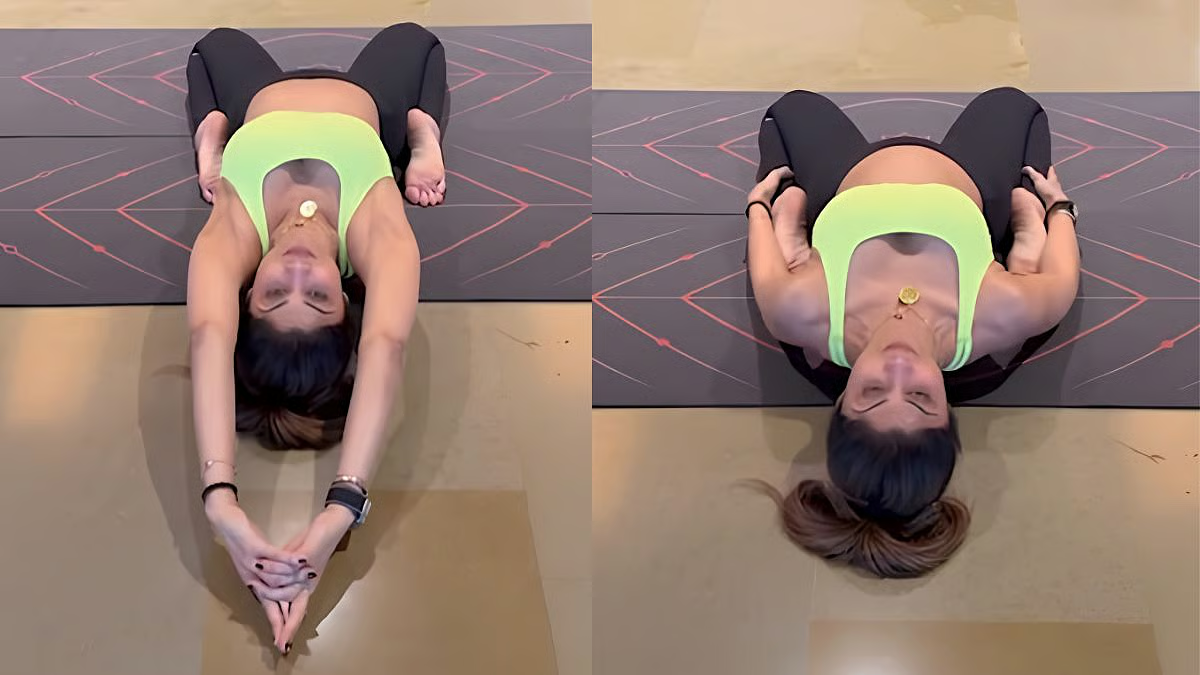
Monday has arrived, and Shilpa Shetty is back with another yoga-inspired fitness reminder. This time, the actress is keeping things slow and focused with a reclining yoga posture that she says offers benefits beyond simply stretching the body.
Sharing her latest Monday fitness video, Shilpa described it as “A slow stretch with benefits that go deeper.” She demonstrated Supta Vajrasana, also known as the Reclining Thunderbolt Pose.
Shilpa Shetty demonstrates Supta Vajrasana, knows benefits
In the video, Shilpa moves from Vajrasana into the reclined version of the posture, gradually lowering her upper body backwards until her head reaches the floor. The pose creates a deep stretch across the front of the body while working on flexibility.
According to the benefits shared alongside her post, Supta Vajrasana can stretch the quadriceps, hip flexors and psoas muscles, helping release tension through the lower body. It also works on flexibility in the spine, knees and ankles.
The posture can further expand the ribcage and support deeper, more comfortable breathing by encouraging greater chest and lung expansion. Shilpa also highlighted its potential role in supporting digestion.
Watch the video below:
How to do Supta Vajrasana
If you are familiar with Vajrasana and want to try the reclining variation, follow these steps:
Begin by sitting in Vajrasana.
Slowly lean your torso backwards from the waist.
Use your arms for support as you gradually recline.
Continue lowering yourself until your head reaches the floor.
You can bring your palms together and use them to support your head if comfortable.
Keep only the upper part of your spine in contact with the floor.
Close your eyes and maintain an even breath.
Start by holding the posture for around 30 seconds.
With regular practice, the duration can gradually be increased to up to three minutes.
Who should avoid the pose?
Shilpa specifically noted that Supta Vajrasana should be avoided by people experiencing knee or ankle pain. Since the posture places the joints in a deep flexed position, it is important not to force the movement or push through discomfort.
As with any yoga posture, beginners can focus on controlled movement, comfortable breathing and proper support rather than trying to hold the pose for longer immediately.