In January this year, External Affairs Minister S Jaishankar and his Japanese counterpart, Toshimitsu Motegi, exchanged cricketing gifts.
Motegi’s gift was the Japan cricket team’s pink jersey, while Jaishankar handed him a bat autographed by Indian cricketers.
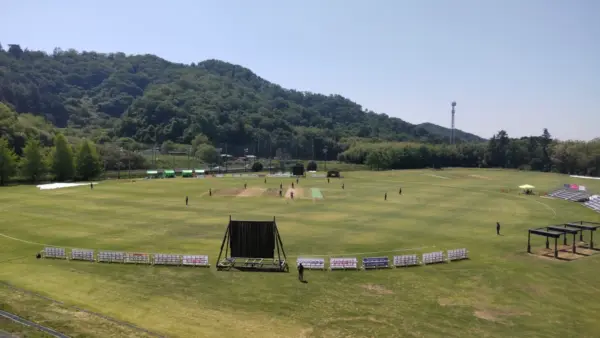
That proved to be a harbinger of sorts. The two countries are now set to play their first bilateral match at the Sano International Cricket Ground, about 100 kilometres from Tokyo, on September 22. Team India led by Shreyas Iyer will face the Japan team captained by Kendel Kadowaki-Fleming in the T20 International.
The match is part of the celebrations to mark 75 years of diplomatic relations between the two countries. Following a meeting between Prime Minister Narendra Modi and Japanese Prime Minister Sanae Takaichi in July, the two sides had announced 2027 as the ‘India-Japan Year of Shared Horizons’ to mark the milestone.
“Suddenly, this wasn’t just us wanting to attract a full member (of the International Cricket Council) to inspire a new audience — it became a key event in the 75th anniversary celebration of friendship between the two countries. We were suddenly able to get the support of both governments in talking to our Indian counterparts,” Japan Cricket Association (JCA) CEO Naoki Alex Miyaji told The Indian Express. Japan is an associate member of the ICC.
For a baseball-obsessed country trying to take cricket to the masses, the T20 International, ahead of the cricket matches at the Asian Games, has come as a shot in the arm. Sponsor and spectator interest has been high, according to Miyaji, with Suzuki coming on board as title sponsor.
“Of course, you cannot talk about 75 years of friendship between India and Japan without talking about Suzuki. We also approached MUFG, the biggest bank in Japan, State Bank of India, and TCS, none of whom were JCA partners. We had really good responses,” Miyaji said.
While a chunk of the JCA budget is being invested in the India-Japan match, Miyaji pointed to long-term benefits. “Our annual budget is somewhere between 200 and 300 million yen. This match is costing us about 100 million yen. The BCCI has supported this event. But more than the money, it is about bringing new audiences, giving everyone an opportunity to see the impact a match can have, and also showcase what the Japan team can do,” Miyaji said.
“It feels real now. There is still some disbelief that we’ve managed to get this game together,” said Japan captain Kadowaki-Fleming.
Anticipating a large crowd, the Sano cricket ground’s capacity has been increased from 500 to 2,000. “We put tickets on sale about two weeks before the event… even before we were able to send out the emails announcing the sale, the tickets started going,” Miyaji said.
Not wanting to risk the quality of the cricket pitch, the JCA reached out to Sri Lanka Cricket (SLC) for assistance. SLC sent their groundsmen and clay for the pitches, not only for the ground in Sano but also for the stadium in Nisshin City, Aichi Prefecture, where the Asian Games matches will be played.
“We were going to re-lay the Sano International Cricket Ground anyway, but we brought that plan forward and decided to lay pitches in Aichi at the same time. Same clay, same pitches, so teams at the Asian Games can train in Sano too,” Miyaji said.
A regular at the ICC Under-19 World Cups, the Japan team narrowly missed out on making it to the T20 World Cup hosted by India earlier this year.
But Japan’s cricketing landscape is widening beyond Sano, which is the hub of cricket in the country. JCA’s City of Cricket programme aims to develop the sport, including in schools, in hubs outside Tokyo. It started in Sano, over a decade ago, and now covers Watari, 300-350 kilometres north of Tokyo, Kaizuka in Osaka, and Nisshin.
“We’re also working in Hamamatsu, the home of Suzuki’s headquarters,” Miyaji said. JCA has introduced cricket as a subject in some schools.
The Chennai-born Sabaorish Ravichandran, who plays as an all-rounder for Japan, has seen the game grow during his decade-long stay there. “In Japan, everyone has a day job. Nobody gets paid to play. But on the weekends, you will see hundreds heading to Sano to play cricket. There are a couple of them who even take the bullet train to travel to play. Players like Makoto Taniyama and Wataru Miyauchi, who came through the school cricket system, moved cities just to play cricket,” he said.
JCA is also asking its players to learn the game’s terminology in Japanese, so that it isn’t viewed as a foreign sport. “We’ve been developing the Japan way. We do want to be distinctly Japanese in the way that we do things in cricket, on and off the field,” said Kadowaki-Fleming.
He added that baseball is also being tapped for cricketing talent. “I want cricket to be a genuine option for baseball players in schools. Once that happens, cricket will have its own Shohei Ohtani (baseball superstar) in a few years,” he said.