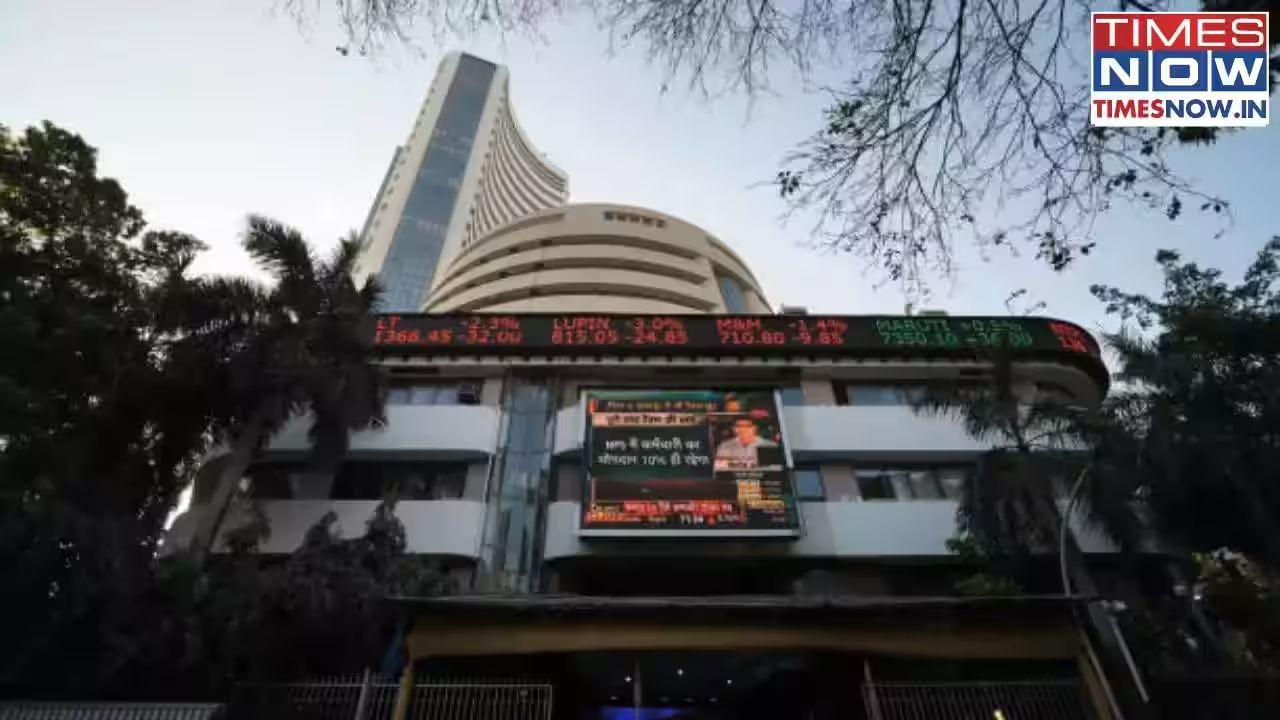
Indian equity markets ended lower on Monday, September 7, with benchmark indices coming under pressure as investors grappled with a combination of higher crude oil prices, worsening geopolitical tensions and renewed concerns over US monetary policy. The Sensex closed at 76,132.81, losing 382.62 points, or 0.5 per cent. The Nifty50 finished at 23,779.15, down 118.55 points, or 0.5 per cent.
The weakness was not restricted to large-cap stocks. The broader market also remained under pressure, with both the small-cap and mid-cap indices declining around 0.2 per cent. Rising oil prices and heightened tensions between the US and Iran reduced investors’ willingness to take on risk.
Oil prices continued to be one of the biggest factors influencing investor sentiment. Brent crude, the international benchmark, was trading 0.78 per cent higher at around USD 97 a barrel, adding to concerns over inflation and India’s import bill.
The latest escalation in US-Iran tensions around the strategically important Strait of Hormuz has increased worries about possible disruptions to global energy supplies. Any prolonged disruption could keep crude prices elevated and create additional pressure for oil-importing economies such as India.
Higher crude prices can have wider implications for Indian markets, particularly through their potential impact on inflation, the country’s trade deficit and corporate costs.
Global Market Signals Remain Mixed
Overseas cues offered little relief to domestic investors. Asian markets presented a mixed picture during the session. South Korea’s Kospi surged 3.36 per cent, while Japan’s Nikkei 225 advanced 1.83 per cent.
In contrast, China’s Shanghai SSE Composite and Hong Kong’s Hang Seng were trading lower. US equities had also finished in negative territory on Friday, adding to the cautious mood at the start of the Indian trading week.
The divergence across global markets reflected uncertainty around the direction of interest rates and the economic impact of elevated energy prices.
FII Selling Adds To Pressure
Foreign institutional investors also remained a source of weakness for Indian equities. FIIs continued to withdraw money from the domestic market, remaining net sellers for a second consecutive session.
They sold equities worth Rs 3,111.94 crore on Friday, signalling continued caution among overseas investors.
At the same time, India’s volatility gauge moved higher. The India VIX climbed more than 3 per cent to around the 11 level. An increase in the volatility index generally indicates that traders are anticipating greater market swings and adopting a more cautious stance.
IT Stocks Bear The Brunt Of Selling
Technology stocks were among the biggest drags on the benchmarks, with the IT sector witnessing selling pressure of nearly 3 per cent.
Major IT companies including Infosys and Tata Consultancy Services (TCS) featured among the key laggards. The Nifty IT index declined 2 per cent during the session.
The pressure on technology stocks was linked partly to expectations that the US Federal Reserve could consider an interest rate increase in September. Stronger-than-anticipated US jobs data has strengthened bets on a possible rate hike.
For Indian IT companies, a higher US interest-rate environment could become a concern if it leads American businesses to tighten technology budgets. Since the US accounts for a substantial portion of the revenues of India’s major IT services companies, any moderation in client spending could weigh on earnings expectations.