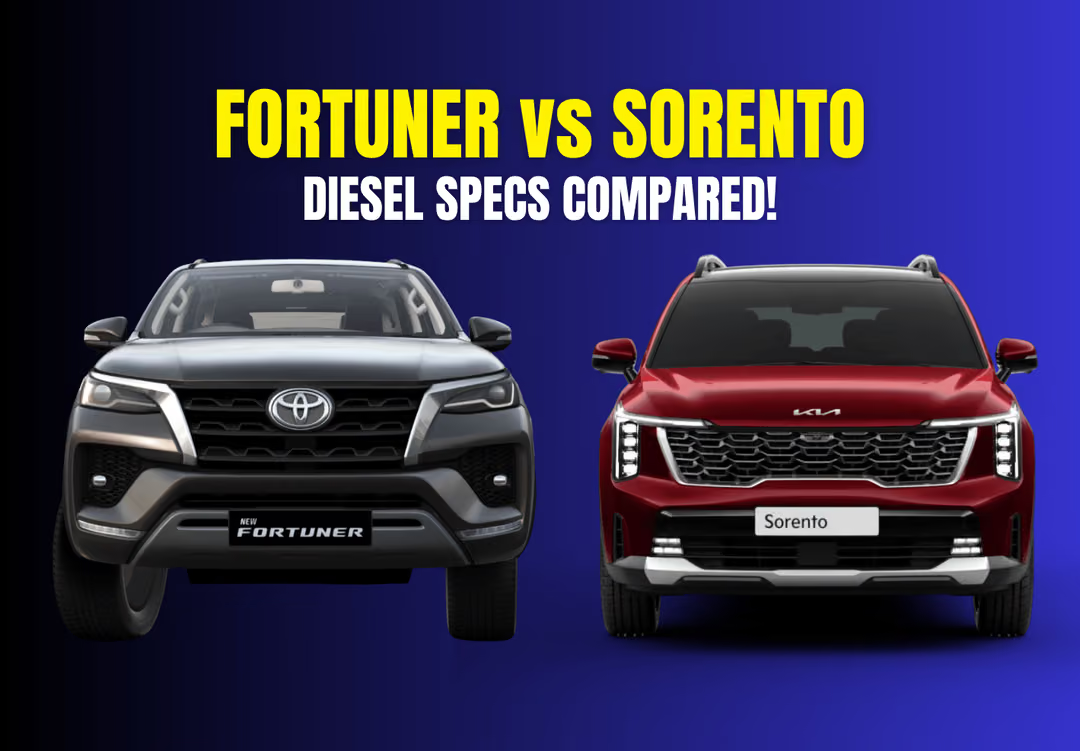
Kia has entered the premium three-row SUV segment with the new Sorento, with strong hybrid and diesel engine options. However, in the seven-seater SUV market, one model has always seemed to float around in many buyers’ minds: the Toyota Fortuner. On paper, the Fortuner is clearly the more rugged of the two – sitting on a ladder-frame chassis, unlike the Kia’s monocoque and featuring a rugged 4×4 system to the Sorento’s all-wheel-drive. So how do the two SUVs stack up on paper? Let’s see.
Dimensions
| Kia Sorento | Toyota Fortuner | |
| Length | 4815 mm | 4795 mm |
| Width | 1900 mm | 1855 mm |
| Height | 1785 mm | 1835 mm |
| Wheelbase | 2815 mm | 2745 mm |
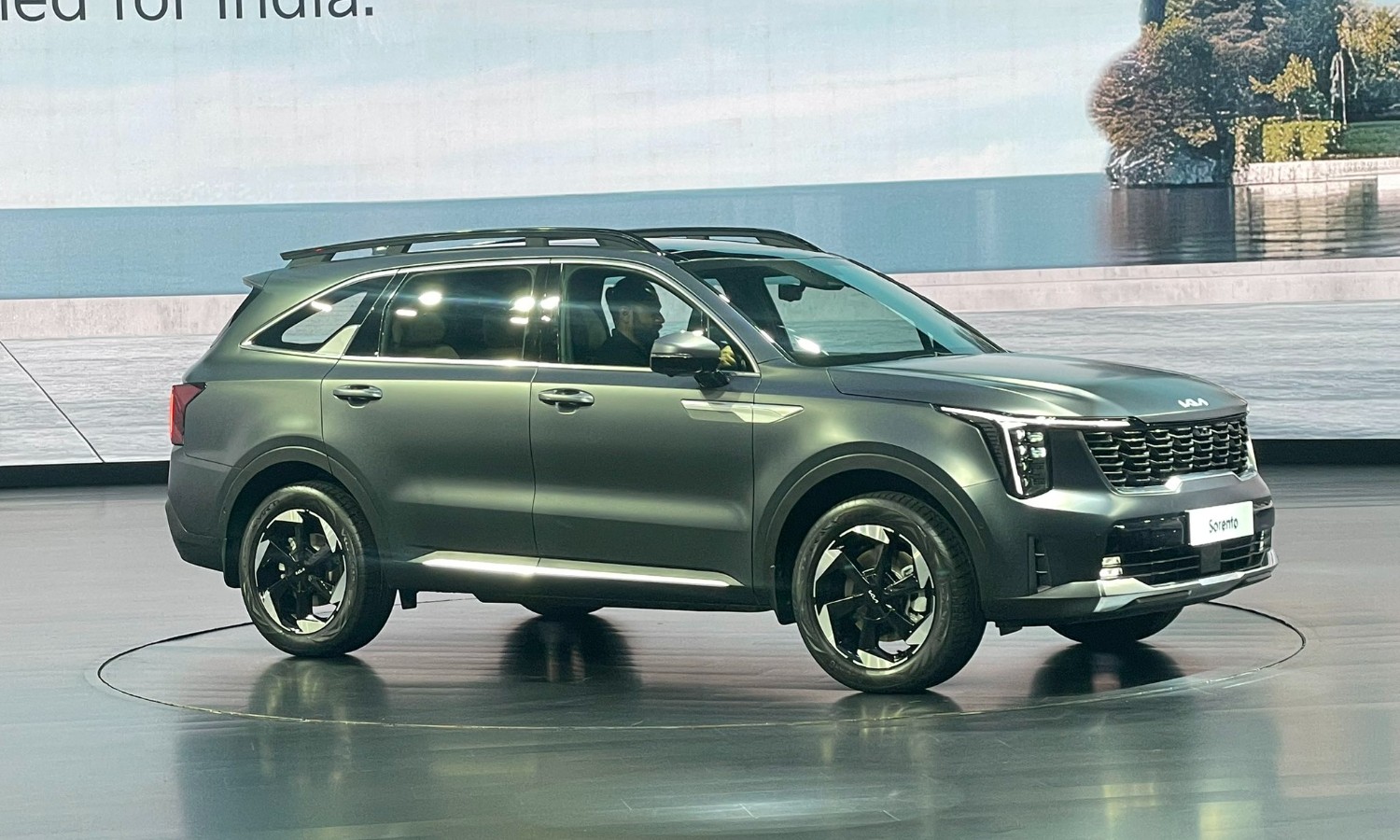
On paper, the Sorento outdoes the Fortuner in almost every metric when it comes to size. It’s longer, wider and sits on a longer wheelbase, though it’s not quite as tall as the Toyota. The Sorento is 20 mm longer, 45 m wider and sits on a 70 mm longer wheelbase. This should equate to a more spacious cabin and more room to seat passengers across all three rows. The Fortuner, however, is 50 mm taller than the Sorento. Ground clearance figures for both SUVs are not available.
Diesel Powertrain
| Kia Sorento | Toyota Fortuner | |
| Engine | 2151 cc, 4 cyls, turbo-diesel | 2755 cc, 4 cyls, turbo-diesel / turbo-diesel mild hybrid |
| Power | 190 bhp | 201 bhp |
| Torque | 442 Nm | 420 Nm (MT) / 500 Nm (AT) |
| Gearbox | 8-speed DCT | 6-speed MT / 6-speed AT |
| Drive System | 2WD/AWD | 2WD/4WD |

On paper, the Fortuner has the power advantage thanks to its larger displacement engine – 2.8 litres to Kia’s 2.2 litres. The Toyota SUV develops 11 bhp more than the Sorento, though in terms of torque, the Fortuner diesel manual is 22 Nm down. The diesel automatic, meanwhile, makes a meaty 500 Nm of torque and also gets the option of a 48V mild hybrid system featuring an electric motor developing an additional 11.4 bhp. The Sorento is unique in the price range to offer a dual-clutch automatic gearbox with the diesel, while the Fortuner is offered with either a 6-speed manual or a 6-speed torque converter automatic.
The two SUVs also get differing drive systems, with the Fortuner getting rear-wheel drive as standard with the option of four-wheel drive, while the Sorento is offered in either front-wheel drive or all-wheel drive configurations.
Features
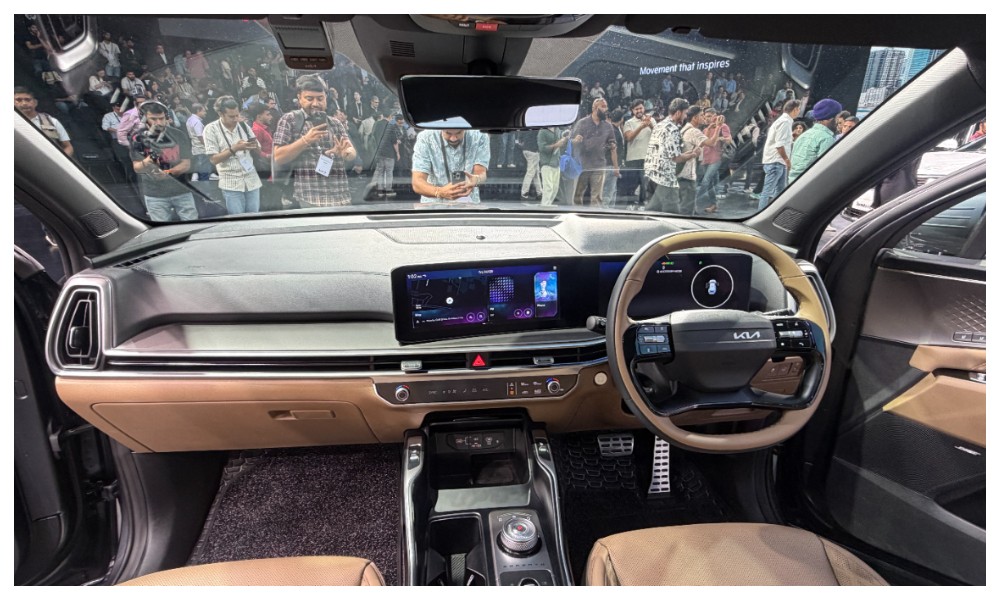
When it comes to the features, it’s the Kia that holds almost all the cards. In its fully-loaded guise, the Sorento packs in a lot of tech, including twin 12.3-inch displays for the touchscreen and digital instrument cluster, ventilated seats in the first and second rows, dual-zone climate control, powered front seats with driver seat memory, a panoramic sunroof, captain seats in the second row (option), powered tailgate, 360 degree cameras, Bose audio system, wireless phone charger and Level 2+ ADAS with 30 driver assistance functions.
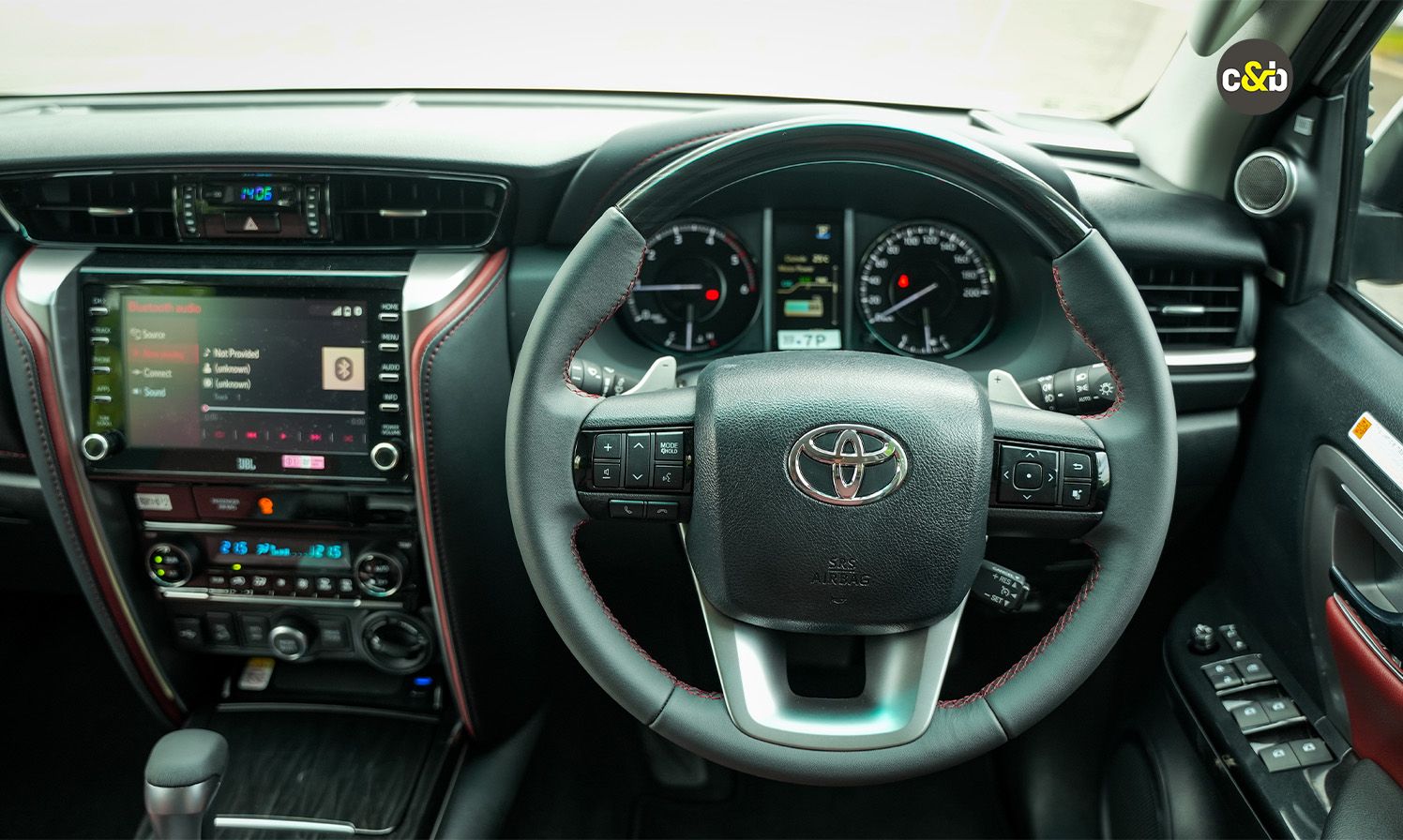
The Fortuner is a bit more utilitarian in comparison, with features such as ventilated front seats (not available on 48V mild hybrid), dual-zone climate control, JBL sound system (4×4 only), power-adjustable front seats, an 8.0-inch touchscreen, powered tailgate, and wireless phone charger (48V mild hybrid only) and 360-degree cameras (48V mild hybrid only).
Price
| Kia Sorento | Toyota Fortuner | |
| Price (ex-showroom) | Rs 27.99 – 38.89 lakh | Rs 35.40 – 50.46 lakh |
In terms of pricing, the Sorento diesel range starts from Rs 27.99 lakh (ex-showroom), with the fully-loaded HTX(A) Black Line AWD 7-seater priced at Rs 38.69 lakh (ex-showroom). The captain seat option adds Rs 20,000 to the price. The Fortuner diesel, in comparison, is priced from Rs 35.40 lakh for the 4×2 MT and goes up to Rs 50.46 lakh (ex-showroom) for the GR-S 4×4 AT (equipped with parts from Toyota’s GR Sport catalogue).