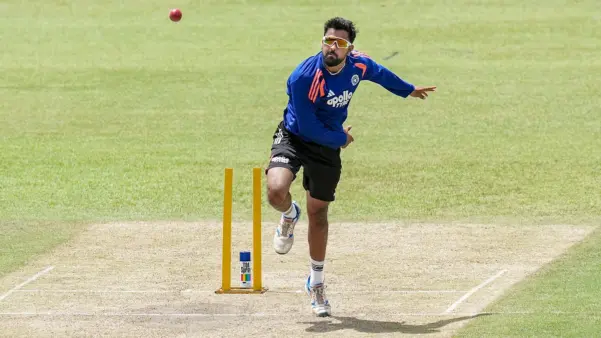
Bengaluru: One of the agendas at the recent review meeting of the Board of Control for Cricket in India (BCCI) was reportedly to discuss the dearth of quality red-ball off-spinners following R Ashwin’s retirement in December 2024. With Washington Sundar injured, India had to pick 33-year-old Saransh Jain from Madhya Pradesh for Sri Lanka tour, and the BCCI honchos apparently wanted to know why there has been no worthy replacement for Ashwin, a bona fide off-spinning great.
Whether deliberations took place on this issue remained under wraps, but India’s spin-bowling concerns are out in the open.
Washington is good and, with time and a more consistent run, has all the attributes to become a genuine match-winner in Tests, but he is no Ashwin. That’s a false equivalence. But even in his current avatar, he is India’s best bet, and that’s the damning indictment of the country’s spin resources, particularly off-spin. That should concern Indian cricket deeply. Apart from the fact that Ashwin and Washington come from the same state and practise the same craft, there is little else they have in common.
Let’s draw a simple comparison that should help put things in the right perspective. Washington has 41 wickets from 18 Tests so far, with one 10-wicket haul in a match and a lone five-wicket haul in an innings. At the same stage, Ashwin had 104 wickets, with nine five-wicket hauls in an innings and two 10-wicket hauls in a match. The gulf is too wide and by anointing him as Ashwin’s heir, we would perhaps be putting more pressure on him. The fact is Ashwin was more of a bowling all-rounder, whereas Washington is a batting all-rounder. In his 18 Tests, India haven’t won a single Test that can be ascribed to his bowling, while India have either won or drawn crucial matches because of his batting.
So, in Washington’s injury-forced absence, Jain was flown to Sri Lanka where he replaced an indisposed Kuldeep Yadav in the second Test in Colombo.
The domestic veteran, harsh as it may sound, clearly looked out of his depth operating at that level. Maybe it was the nerves and/or the conditions, but Jain didn’t look inspiring enough to invest in.
Manav Suthar, in his three Tests, has shown enough promise to be a worthy replacement for Ravindra Jadeja, who is pushing 38 and increasingly looking less menacing with the ball. Kuldeep Yadav, a left-arm wrist spinner, continues to be an enigma, exciting one day and frustrating the next.
So, how did we reach this situation? How did a fertile ground for spin magicians arrive at the brink of losing its core identity? Is the fault line in domestic cricket? Is too much T20 cricket killing red-ball skills and encouraging white-ball smarts?
“I think the deceiving part of spin bowling — I mean, the deception — is something that I think is lacking when you see modern-day spin bowling,” begins former Maharashtra batter Surendra Bhave, who has been involved in domestic cricket for decades as a coach.
So what does he attribute it to? Bhave, a former member of the senior national selection panel, believes multiple factors are at play here: the pitch-making style, the proliferation of T20 cricket and captaincy style in domestic cricket.
“The pitch-making style all over the world has changed because it is sort of standardised now,” he tells DHoS. “It’s only in certain places, like if you go to Chennai and have that red-soil pitch, you get that bite in the pitch. Or if the Mumbai guys decide to give a typical red-soil pitch, then it has turn and bounce.
“But the fact is, you seldom get a wicket in the Ranji Trophy like that now — with turn and bounce — which won’t be reported. If the match finishes in two and a half days, there is every chance the pitch will get reported. So that line is very thin — whether it was a good turning track or an unsporting pitch. That’s also a very grey area. I don’t blame curators either. Now, if any state wants results, it goes for a seaming track. So the spinner’s role is already marginalised.”
The increasing speed, which could be a by-product of playing too many T20s, has also contributed to spinners being used more as a restrictive option rather than as wicket-taking weapons.
“The bowlers are always having this pressure at the back of their minds that if they bowl a little slower than normal, they’ll go out of the park. The batting styles have changed, and that has also contributed a lot to spinners becoming ineffective because, no matter how much you say, ‘These guys don’t flight the ball,’ if you just flight it without effect, then you disappear for too many runs. It’s not good for you anyway.”
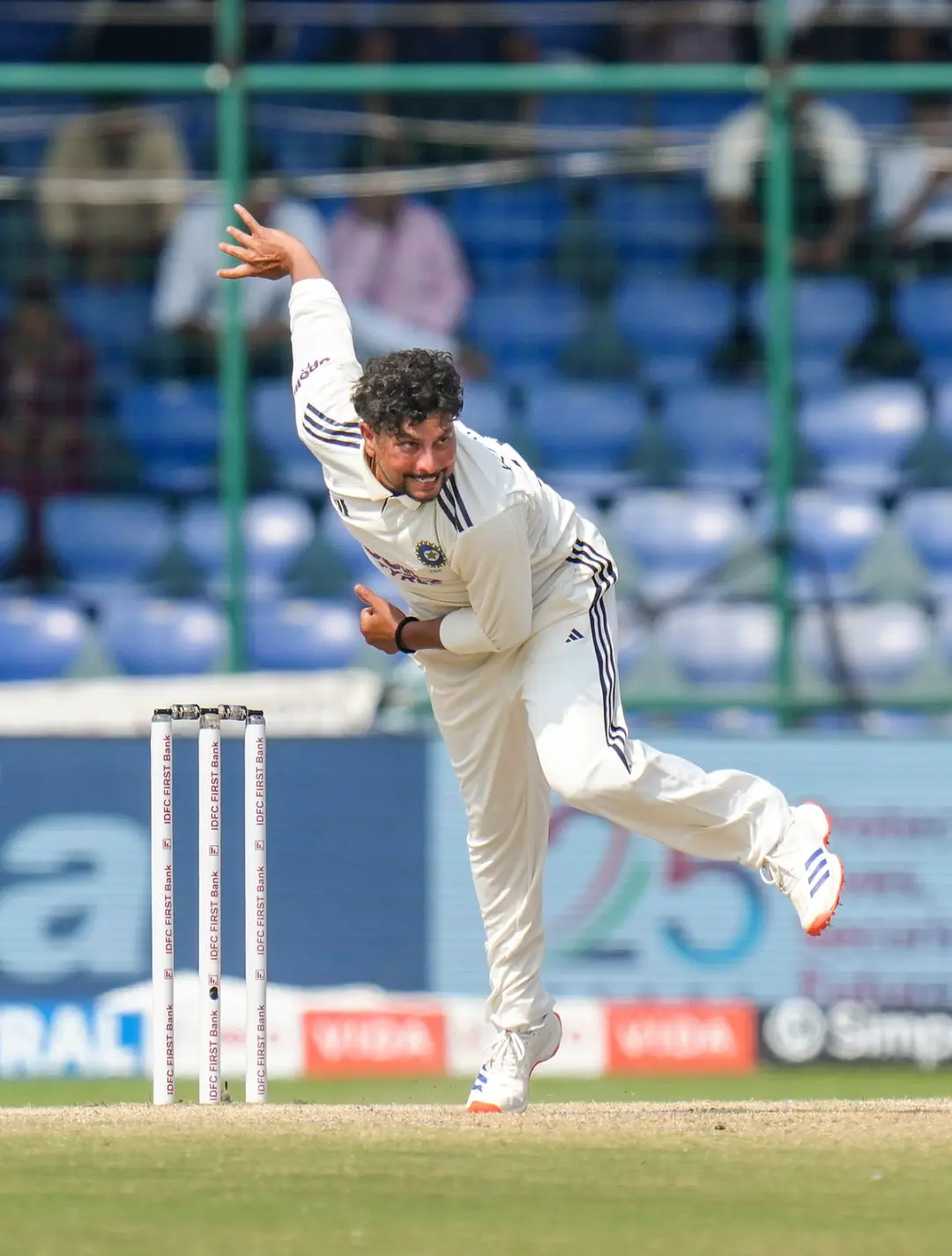 Kuldeep Yadav
Bhave, in the same breath, also points out the paradox — the batters’ diminishing defensive technique against spin.
“So a spinner’s job, even in the changing times, should not be all that difficult,” he offers.
“If you see domestic cricket, you bowl two maidens or two quiet overs to any batter, and he will try to slog you. The preconditioning of the batters is that if they step out, they have to hit a six. Either he wins the battle or he gets out. So the patience part, the deception part in spin bowling… that is what is probably lacking. If you are a good spinner these days in India, you can easily take 30-40 wickets in a season.”
That brings us to the role of captains in domestic cricket, where spinners in the last decade or so have been employed to bottle up one end rather than used as attacking weapons.
 Manav Suthar
“I feel great captains do sort of have a role in developing spinners,” he notes. “They play a role in making great spinners also. It’s that confidence part, the right field sets. It’s about putting an arm around their shoulder and saying, ‘No matter what, even if you go for 20-25, over the next five or so overs, just give me one wicket.’ So, aggressive spin bowling will have to be encouraged. That kind of captaincy and encouragement will definitely change the situation,” he explains.
Bhave calls spin “our forte.” In fact, it’s much more than that. It’s a part of our cricketing folklore — a tradition that needs to be not just preserved but nurtured as well. While one can’t emphasise the significance of pacers enough if India are to become a Test superpower, it should not come at the expense of spin. One of cricket’s most fascinating arts, spin bowling is much more than just a weapon to win matches at home.