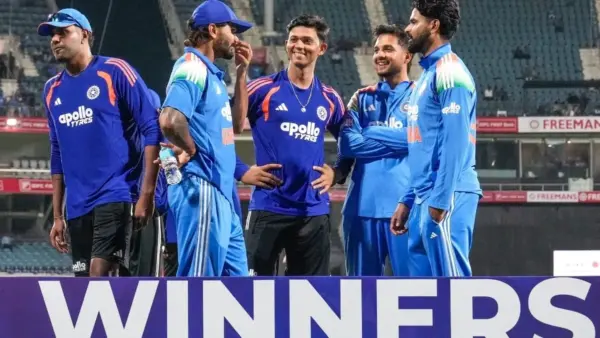
The Indian Olympic Association (IOA) has drawn a clear line over the Board of Control for Cricket in India’s concerns regarding accommodation at the 2026 Asian Games, insisting that cricket will not receive special treatment compared to the other sports in India’s contingent.
The development leaves the BCCI with a choice ahead of the Aichi-Nagoya Games: accept the accommodation arranged by the organisers or make independent arrangements and take responsibility for the additional costs and logistics.
The IOA’s position comes after the BCCI raised concerns over the facilities allocated to India’s cricket teams, including room-sharing arrangements. The board has also indicated that it is prepared to step in if the existing facilities do not meet the requirements of the players and support staff.
Why has the IOA rejected special arrangements for cricket?
IOA CEO Raghuram Iyer said the BCCI is free to assess the accommodation and make its own decision, but the Olympic body will not seek separate facilities for cricket at the expense of the wider Indian contingent.
The BCCI CEO Hemang Amin has discussed the matter with the IOA, with the board understood to be considering sending an advance team to Japan to inspect the accommodation and other facilities.
Iyer said the BCCI could subsequently choose between the organisers’ arrangements and a separate setup.
The central issue for the IOA is uniformity. Cricket is among 36 sports represented by India at the Games, and the association has maintained that athletes, coaches and delegations must be treated equally.
What accommodation has been allocated to India’s cricket teams?
The organisers have allocated different hotels to the Indian men’s and women’s teams.
The men’s team has reportedly been assigned the three-star APA Hotel Nagoya Ekimae, while the women’s team has been allocated the four-star Meitetsu Grand Hotel.
Both arrangements involve twin-sharing rooms, which has been one of the BCCI’s principal concerns.
The board had earlier appealed to the IOA against putting two players in the same room. Reports also suggested concerns over room sizes and the overall logistics of accommodation at an Asian Games that does not have a conventional Athletes’ Village.
The Games are using a decentralised accommodation model, with athletes spread across hotels, temporary facilities and a cruise ship rather than being housed in one central village. More than 17,000 athletes and officials are registered for the event.
What happens if the BCCI rejects the official hotels?
The BCCI can make its own arrangements, but that would transfer a significant logistical responsibility to the cricket board.
If it chooses to house the teams separately, the BCCI would have to cover accommodation, food and transport while also ensuring that players reach the venues on time.
That distinction is important because the IOA is not preventing the BCCI from providing facilities it considers more suitable. It is simply refusing to arrange a separate accommodation package specifically for the cricket contingent.
The Japan Cricket Association has also said participating cricket teams are free to arrange their own hotels if they do not wish to use the accommodation provided by the organisers. ([India Today4])
Why is the decision significant for Indian cricket?
Cricket carries a different financial and logistical ecosystem from most of the sports in India’s Asian Games contingent, but the IOA’s stance makes clear that its status will not translate into preferential treatment within the Games’ accommodation framework.
For the BCCI, the decision now comes down to balancing player comfort and preparation against the additional cost and responsibility of operating its own setup.
There is also an anti-doping consideration if the cricket teams stay separately from the official Games accommodation. Any independent arrangement would therefore need to remain properly coordinated with the IOA and Games organisers.
India enter the Aichi-Nagoya Asian Games as defending champions in both men’s and women’s T20 cricket. The women’s competition begins on September 17, while the men’s tournament gets underway later in the Games.
With the IOA now making its position explicit, the next step rests with the BCCI: accept the official arrangements or take full control of the cricket teams’ accommodation and logistics in Japan.